Silent Film Calendar
Silentfilmcalendar.org
The silent film listing site

About/Contact
Silentfilmcalendar.org
Your guide to what’s on, when and where, across the United Kingdom.
 If
you’ve got this far, you probably like silent cinema, just like us.
And just like us, you’ve probably been looking for a website that told
you what silent films were showing, when and where. We got so fed up of
looking that we started pulling our own listing together. Then it
struck us that other silent film enthusiasts might find this list
useful. Hence Silentfilmcalendar.org
If
you’ve got this far, you probably like silent cinema, just like us.
And just like us, you’ve probably been looking for a website that told
you what silent films were showing, when and where. We got so fed up of
looking that we started pulling our own listing together. Then it
struck us that other silent film enthusiasts might find this list
useful. Hence Silentfilmcalendar.org
 And while Silentfilmcalendar.org
lists every forthcoming silent film event we’re aware of we make no
claims for it being fully comprehensive. For that, we could do with a
little help. If you are aware of additional silent film events, please
let us know, so that we can add them to the site and share with other
enthusiasts.
And while Silentfilmcalendar.org
lists every forthcoming silent film event we’re aware of we make no
claims for it being fully comprehensive. For that, we could do with a
little help. If you are aware of additional silent film events, please
let us know, so that we can add them to the site and share with other
enthusiasts.
 We’d also welcome any other views on or suggestions for the site that you may have.
E-mail us at: silentfilmcalendar@gmail.com or find us on twitter @silentfilmcal
What’s New


Listings updates
Below we highlight recent additions made to silentfilmcalendar.org listings since;
24 August
See the relevant monthly page for more details.
NB. With screening venues beginning to re-open we have started to update our listings but some events remain unconfirmed and others may be cancelled at short notice so be sure to check with the venue before you attend
1 September
 Battleship Potemkin (Dir. Sergei Eisenstein, 1925) With recorded score. BFI Southbank, London Link
12 September
Battleship Potemkin (Dir. Sergei Eisenstein, 1925) With recorded score. BFI Southbank, London Link
Check out our latest reviews;
Kennington Bioscope Live Stream Broadcast #2 – Click here
The Whipping Boss (1924) + The Best Man (1919) + Pruning The Movies (1914) – Click here
Another Evening of 9.5mm Gems With Kevin Brownlow – Click here
Review of the Year 2019 – Click here
British Silent Film Festival 2019 – Click here
Catch up on all the latest silent film news;
1 April – There’s Gold In Them There On-Line Silent Film Resources .
14 March – Coronavirus Hits Silent Film Festivals
12 March 2020 – Crowd Funding – Will It Work For Silent Film Releases In The UK
To have a read Click here
NB Whilst every effort has been taken to ensure that the information contained in these listings is accurate, silentfilmcalendar.org can take no responsibility for any errors or inaccuracies. You are strongly advised to confirm with the venue that the event remains as detailed, particularly if traveling any distance to attend.
News
A page devoted to news items, snippets of (mainly) silent film information, unfounded rumours and the occasional moan!
22 July
 Extra! Extra! Silent Film Festival To Go Ahead! Amid
a seemingly never-ending string of pandemic driven cancellations and
postponements for silent film screenings and festivals around the world
it comes as something of a pleasant change to report one going ahead as
planned. So its very welcome news to hear that the 36th Bonn International Silent Days Film Festival, Germany’s largest festival of silent film, will go ahead as planned on 6th to 16th August. Screenings at the festival are traditionally held in the open courtyard of the University of Bonn
with live musical accompaniment from many of the world’s leading silent
film accompanists. That remains the intention this year but covid-19
restrictions mean that attendance at these live events will be limited
to 500 people.
Extra! Extra! Silent Film Festival To Go Ahead! Amid
a seemingly never-ending string of pandemic driven cancellations and
postponements for silent film screenings and festivals around the world
it comes as something of a pleasant change to report one going ahead as
planned. So its very welcome news to hear that the 36th Bonn International Silent Days Film Festival, Germany’s largest festival of silent film, will go ahead as planned on 6th to 16th August. Screenings at the festival are traditionally held in the open courtyard of the University of Bonn
with live musical accompaniment from many of the world’s leading silent
film accompanists. That remains the intention this year but covid-19
restrictions mean that attendance at these live events will be limited
to 500 people.
However, there is a major up side to this audience limit as the festival organisers have decided to stream each evening’s film on-line via the festival website, shortly after the live screening in Bonn concludes. Each film will be accompanied by a recording of the event’s live accompaniment and the films will remain on-line for 48 hours for people to watch on ‘catch-up’ should they choose. It is hoped also to stream at least part of each day’s supporting programme.
The festival programme has now been released and includes some great screenings;
 August 6 – East And West (Dir.Sidney M. Goldin, Au, 1923). One of the few surviving examples of Yiddish cinema, East And West
is also a delightful comedy detailing the exploits of the daughter of a
rich Jewish American businessman who travels to the wedding of her
demure cousin who lives in a traditional Polish shtetl.
August 6 – East And West (Dir.Sidney M. Goldin, Au, 1923). One of the few surviving examples of Yiddish cinema, East And West
is also a delightful comedy detailing the exploits of the daughter of a
rich Jewish American businessman who travels to the wedding of her
demure cousin who lives in a traditional Polish shtetl.
August 7 – Looping the Loop (German: Die Todesschleife) (Dir.Arthur Robison, Ger, 1928) Circus and variety films were a popular genre in the silent film era. This late silent era thriller starring Robert Reinert (who died before it was completed) tells the story of a clown who, while disguising his identity, woos a young artist.
 August 8 – L’Argent
(Dir Marcel L’Herbier, Fr, 1928). L’Herbier’s classic is a
spectacular large-scale production that describes the world of
financial markets and speculators, focusing on two rival bankers, both
of whom have a love affair with the beautiful Baroness Sandorf, played
of course by the wonderful Brigitte Helm
August 8 – L’Argent
(Dir Marcel L’Herbier, Fr, 1928). L’Herbier’s classic is a
spectacular large-scale production that describes the world of
financial markets and speculators, focusing on two rival bankers, both
of whom have a love affair with the beautiful Baroness Sandorf, played
of course by the wonderful Brigitte Helm
August 9 – Mälarpirater (Dir. Gustaf Molander, Swe, 1928) Gustaf Molander, who had worked closely with Sjostrom and Stiller, began to direct films and quickly showed that he was something more than an apt pupil. His Malarpirater was a fresh and spontaneous piece about three boys who steal a boat and sail away for a summer adventure on Lake Mälaren. Based on Sigfrid Siwertz’s novel it is well acted by Einar Hansson and Inga Tidblad.
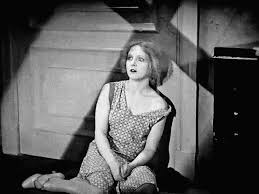 August 10 – Mädchen am Kreuz (Girl
On THe Cross) (Dir. Luise and Jakob Fleck, Ger, 1929) Young student
Mary spends her vacation starting with boat trips, visits to her wealthy
groom, and gardening. In fast-paced, rhythmic cuts, Louise and Jakob
Fleck draw their audience into a light-hearted, urban comedy of love
that transforms itself into a melodrama about sexual violence, shame and
perpetrator-victim reversal with a single scene.
August 10 – Mädchen am Kreuz (Girl
On THe Cross) (Dir. Luise and Jakob Fleck, Ger, 1929) Young student
Mary spends her vacation starting with boat trips, visits to her wealthy
groom, and gardening. In fast-paced, rhythmic cuts, Louise and Jakob
Fleck draw their audience into a light-hearted, urban comedy of love
that transforms itself into a melodrama about sexual violence, shame and
perpetrator-victim reversal with a single scene.
August 11 – Peg o’ the Mounted (Dir. Alfred J Goulding, US, 1924) When an injured and exhausted Mountie collapses outside her cabin, it falls to Baby Peggy to take up the challenge and track down the illegal moonshiners + Wolf Lowery (Dir. William S Hart, US, 1917) The only surviving example of Hart’s directorial work, Wolf Lowery sees him as the owner of the Bar Z Ranch. He gets worked up when he finds a squatter on his land, but after he discovers that the settler is a woman, Margery Wilson, his attitude changes.
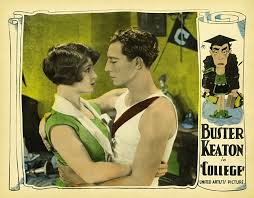 August 12 – Duck Soup (Dir. Fred Guoil, US, 1927) Playing together in this film although not yet the famous duo, Stan Laurel and Oliver Hardy are vagrants who wreak havoc in an abandoned villa + College (Dir. James W Horne/ Buster Keaton, US, 1927) which sees Buster Keaton having to master sporting activities and competitions in order to win his beloved. College
is one of the best sports parodies in film history, in whose
breathtaking finale Keaton did without doubles and camera tricks and
brilliantly demonstrated his athletic skills.
August 12 – Duck Soup (Dir. Fred Guoil, US, 1927) Playing together in this film although not yet the famous duo, Stan Laurel and Oliver Hardy are vagrants who wreak havoc in an abandoned villa + College (Dir. James W Horne/ Buster Keaton, US, 1927) which sees Buster Keaton having to master sporting activities and competitions in order to win his beloved. College
is one of the best sports parodies in film history, in whose
breathtaking finale Keaton did without doubles and camera tricks and
brilliantly demonstrated his athletic skills.
August 13 – The Student of Prague (Dir. Henrik Galeen, Ger, 1926) This darkly romantic tale, with echoes of the Faust legend and Poe’s William Wilson, is a superbly crafted remake of Stellan Rye’s supernatural chiller of 1913. An impoverished student (Conrad Veidt) sells his mirror reflection to a moneylender and is subsequently stalked by a Doppelgänger over whom he has no control. Veidt’s virtuosic portrayal of a split personality plumbs terrifying depths.
 August 14 – Phantom of the Moulin Rouge (aka Le fantôme du Moulin Rouge)(Dir Rene Clair, Fr, 1925) The Phantom of the Moulin Rouge continues
with the same mischievously surreal themes of Clair’s first two short
films with the story of a man, frustrated in his romantic ambitions, who
becomes the victim for a scientific experiment in which a strange
doctor separates the soul of the man from his body.
August 14 – Phantom of the Moulin Rouge (aka Le fantôme du Moulin Rouge)(Dir Rene Clair, Fr, 1925) The Phantom of the Moulin Rouge continues
with the same mischievously surreal themes of Clair’s first two short
films with the story of a man, frustrated in his romantic ambitions, who
becomes the victim for a scientific experiment in which a strange
doctor separates the soul of the man from his body.
August 15 – Storm Over Asia (Dir. Vsevolod Pudovkin, USSR, 1928) A classic of Soviet revolutionary film, Storm Over Asia
opens with an ethnographic study of the everyday life of the Mongols
before moving on to present a picture of their struggle against British
colonial rule.
 August 16 – Le Moulin Maudit (Dir.Alfred
Machin, Bel, 1910) In this exquisitely coloured short melodrama Dutch
girl Johanna loves poor Joachim, but marries the wealthy miller instead.
When the miller finds the two lovers together he takes an awful revenge
+ Maudite soit la Guerre
(War Is Hell) (Dir,Alfred Machin,Bel, 1914) Made just before the
outbreak of The Great War, this is a startling masterpiece of early
cinema, The film shows how war destroys love and friendship through the
story of two friends obliged to fight each other as pilots in the
airforce of their respective (unnamed) countries.
August 16 – Le Moulin Maudit (Dir.Alfred
Machin, Bel, 1910) In this exquisitely coloured short melodrama Dutch
girl Johanna loves poor Joachim, but marries the wealthy miller instead.
When the miller finds the two lovers together he takes an awful revenge
+ Maudite soit la Guerre
(War Is Hell) (Dir,Alfred Machin,Bel, 1914) Made just before the
outbreak of The Great War, this is a startling masterpiece of early
cinema, The film shows how war destroys love and friendship through the
story of two friends obliged to fight each other as pilots in the
airforce of their respective (unnamed) countries.
All the films will have live musical accompaniment from noted silent fill accompanists including Stephen Horne, Elizabeth-Jane Baldry, Neil Brand and Günter A. Buchwald. Find out more about the festival here
25 May
Live On-Line Silent Film Event Update Lock-down may be preventing us from getting out to see silent film events ‘in the flesh’. But don’t forget that there are still opportunities to see films at live On-Line screenings. Forthcoming events include;
 – Wednesday 27 May The Kennington Bioscope present the third of their Live Stream Broadcasts on the KBTV channel on You Tube. In an impressively high tech format they present silent films introduced by Michelle Facey (@best2vilmabanky) and accompanied live by pianists Cyrus Gabrysh and John Sweeney and this week also Colin Sell. This evenings they present 3 films courtesy of The Eye Film Museum’s Jean Desmet Collection, including Lois Weber starring in & directing TWINS (1911) + one rare DW Griffith Biograph film FATE (1913). Check out our review here of the previous episode to get an idea of the format. Further details of the event can be found here and you can watch here . Or why not subscribe here for future event details delivered straight to your In-Box. (NB This event will be available to watch live but will also remain available on You Tube to watch later.)
 – Friday 29 May – The Netherlands Silent film Festival present their second silent film with live accompaniment event. Pianist Daan van den Hurk
will once again accompany five silent comedy shorts live! We are also
promised a few other surprises, but you have to tune in to find out what
they are. The event kicks off at 7pm UK time. Further details here. (NB And remember, this is a one-time event, you can only watch live, there is no option to catch it later.)
– Friday 29 May – The Netherlands Silent film Festival present their second silent film with live accompaniment event. Pianist Daan van den Hurk
will once again accompany five silent comedy shorts live! We are also
promised a few other surprises, but you have to tune in to find out what
they are. The event kicks off at 7pm UK time. Further details here. (NB And remember, this is a one-time event, you can only watch live, there is no option to catch it later.)
 – Sunday 31 May – Organ virtuoso Donald McKenzie will be providing live accompaniment to a screening of Harold Lloyd classic Speedy (1928) on the mighty Willis Organ at London’s Alexandra Palace. Speedy was
Lloyd’s final silent film and sees him reprise his ‘glasses character’
as a baseball-obsessed New Yorker who is determined to save the city’s
last horse-drawn streetcar, motivated in no small part by its owner
being the grandfather of his love interest. Filled with Lloyd’s
trademark rapid-fire visual humour and elaborate set-ups, it’s a fine
example of his innovative approach to comedy. Find out more at allmovie.com. The film will be available on You Tube here at 7pm (NB Not clear if this is purely a live event or if you can catch up later.)
– Sunday 31 May – Organ virtuoso Donald McKenzie will be providing live accompaniment to a screening of Harold Lloyd classic Speedy (1928) on the mighty Willis Organ at London’s Alexandra Palace. Speedy was
Lloyd’s final silent film and sees him reprise his ‘glasses character’
as a baseball-obsessed New Yorker who is determined to save the city’s
last horse-drawn streetcar, motivated in no small part by its owner
being the grandfather of his love interest. Filled with Lloyd’s
trademark rapid-fire visual humour and elaborate set-ups, it’s a fine
example of his innovative approach to comedy. Find out more at allmovie.com. The film will be available on You Tube here at 7pm (NB Not clear if this is purely a live event or if you can catch up later.)
 – Sunday 31 May – Now up to Episode 11 of the Silent Comedy Watch Party, live from New York and hosted by accompanist Ben Model and silent film historian Steve Massa.
The usual format will be three silent comedies introduced by Steve and
with Ben doing live piano accompaniment from his Upper West Side
apartment. Film details are not yet available but as always they should
be worth watching. The event streams at 20:00 UK time on You Tube. Further details here. (NB This event will be available to watch live but will also remain available on You Tube to watch later.)
– Sunday 31 May – Now up to Episode 11 of the Silent Comedy Watch Party, live from New York and hosted by accompanist Ben Model and silent film historian Steve Massa.
The usual format will be three silent comedies introduced by Steve and
with Ben doing live piano accompaniment from his Upper West Side
apartment. Film details are not yet available but as always they should
be worth watching. The event streams at 20:00 UK time on You Tube. Further details here. (NB This event will be available to watch live but will also remain available on You Tube to watch later.)
19 May
A Quick Update On Live On-Line Silent Film Events In May Lockdown may be preventing us from getting out to see silent film events ‘in the flesh’. But don’t forget that there are still opportunities to see films at live On-Line screenings. Forthcoming events include;
 – Tonight (19 May) the Sands Films Cinema Club in Rotherhithe will be screening Russian director Boris Barnet’s Girl With A Hat Box
(1927) starring the incredible Anna Sten. If you’ve not seen it this
is a delightful romantic-comedy about the complications that ensue when a
young country milliner (Sten) pretends to marry a drifter so he can
stay in the room in the city apartment which she pretends to rent but
which is in fact the lounge of her employers apartment which they in
turn claim to rent out. I’m not quite sure the format of the event but
think that there will be an introduction to the film although it will
then come with recorded rather than live accompaniment. The event
starts at 19:45 for 20:00 on Facebook and You Tube. Further details here
– Tonight (19 May) the Sands Films Cinema Club in Rotherhithe will be screening Russian director Boris Barnet’s Girl With A Hat Box
(1927) starring the incredible Anna Sten. If you’ve not seen it this
is a delightful romantic-comedy about the complications that ensue when a
young country milliner (Sten) pretends to marry a drifter so he can
stay in the room in the city apartment which she pretends to rent but
which is in fact the lounge of her employers apartment which they in
turn claim to rent out. I’m not quite sure the format of the event but
think that there will be an introduction to the film although it will
then come with recorded rather than live accompaniment. The event
starts at 19:45 for 20:00 on Facebook and You Tube. Further details here
 – Wednesday 20 May. The Kennington Bioscope presents a pre-recorded talk by film historian David Trigg,
illustrating how Charlie Chaplin drew upon his childhood haunts in
South London when seeking ideas for locations and building his film sets
in Hollywood. The talk will be on the Kennington Bioscope’s newly
established KBTV Channel on You Tube. The event starts at 19:30 and further details can be found here
– Wednesday 20 May. The Kennington Bioscope presents a pre-recorded talk by film historian David Trigg,
illustrating how Charlie Chaplin drew upon his childhood haunts in
South London when seeking ideas for locations and building his film sets
in Hollywood. The talk will be on the Kennington Bioscope’s newly
established KBTV Channel on You Tube. The event starts at 19:30 and further details can be found here
– Sunday 24 May Amazingly we are now up to Episode 10 of the Silent Comedy Watch Party, live from New York and hosted by accompanist Ben Model and silent film historian Steve Massa.
The usual format will be three silent comedies introduced by Steve and
with Ben doing live piano accompaniment from his Upper West Side
apartment. Film details are not yet available but as always they should
be worth watching. The event streams at 20:00 UK time on You Tube. Further details here
 – Wednesday 27 May The Kennington Bioscope present the third of their Live Stream Broadcasts on the KBTV channel on You Tube. In an impressively high tech format they present silent films introduced by Michelle Facey (@best2vilmabanky) and accompanied live by pianists Cyrus Gabrysh and John Sweeney. There are no details yet on the films being screened but to give you an idea of the format check out our review here of the previous episode. Further details of the event can be found here or subscribe here for future event details delivered straight to your In-Box.
1 April
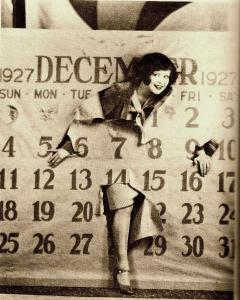 There’s Gold In Them There On-Line Silent Film Resources
. The value of an on-line listing site for silent film screenings is
somewhat diminished when no screenings are actually taking place, as is
currently the case with the nationwide Corona Virus lock-down. So, in
order both to justify our own continued existence and hopefully help
ease the silent film withdrawal symptoms that are no doubt setting in we
have been having a look at some on-line silent film resources which you
might be interested in.
There’s Gold In Them There On-Line Silent Film Resources
. The value of an on-line listing site for silent film screenings is
somewhat diminished when no screenings are actually taking place, as is
currently the case with the nationwide Corona Virus lock-down. So, in
order both to justify our own continued existence and hopefully help
ease the silent film withdrawal symptoms that are no doubt setting in we
have been having a look at some on-line silent film resources which you
might be interested in.
The obvious setting out point is the British Film Institute’s own BFI-player, here, which contains a wealth of material, much of it free to watch. But what of on-line resources further afield?
Well, if your interested in Man With A Movie Camera’s Dziga  Vertov then the Austrian Film Museum has a good collection of his earliest work. First up are 18 editions of the Kino-Nedelya (Film-Week) newsreels (Click here),
produced between May 1918 and June 1919, which were Vertov’s first
involvement in film making. Vertov started in the role of a secretary
but by late 1918 he was effectively in charge of compiling the newsreels
from footage shot by cameramen
Vertov then the Austrian Film Museum has a good collection of his earliest work. First up are 18 editions of the Kino-Nedelya (Film-Week) newsreels (Click here),
produced between May 1918 and June 1919, which were Vertov’s first
involvement in film making. Vertov started in the role of a secretary
but by late 1918 he was effectively in charge of compiling the newsreels
from footage shot by cameramen  travelling
the length of the country charting the progress of the Red Army in the
civil war together with key events and individuals from the earliest
days of the newly established Soviet state. Compared to Vertov’s later
work, the newsreels exhibit something of a staid conservatism in their
compilation and are somewhat idealistically focused but they do also
serve to provide a valuable picture of life during the earliest days of
Soviet Union.
travelling
the length of the country charting the progress of the Red Army in the
civil war together with key events and individuals from the earliest
days of the newly established Soviet state. Compared to Vertov’s later
work, the newsreels exhibit something of a staid conservatism in their
compilation and are somewhat idealistically focused but they do also
serve to provide a valuable picture of life during the earliest days of
Soviet Union.
 After
going on to make three three feature length documentaries from this
newsreel footage between 1919 and 1921 Vertov then embarked upon a more
significant newsreel series, Kino-Pravda (Film-Truth). Comprising 23 films made between 1922 and 1925, the Austrian Film Museum has a complete set excluding number 12 which is sadly lost (Click here). Although the first few Kino-Pravdas are shot in a similar
After
going on to make three three feature length documentaries from this
newsreel footage between 1919 and 1921 Vertov then embarked upon a more
significant newsreel series, Kino-Pravda (Film-Truth). Comprising 23 films made between 1922 and 1925, the Austrian Film Museum has a complete set excluding number 12 which is sadly lost (Click here). Although the first few Kino-Pravdas are shot in a similar  style
to the earlier Kino-Nedelya series, Vertov was already trying to
establish a theme for each newsreel in contrast to the somewhat random
subject matter of the earlier series. But as the series progressed it
also became evident that Vertov was experimenting with and developing
his ‘Kino-Glaz’ (Film-Eye) theories of film editing and
production. As such, the films present not just a valuable historical
record of the era but also a useful guide to the evolution of Vertov’s
style which reached its epitome in 1929 with Man With A Movie Camera, which can be viewed Here with superb accompaniment by the Alloy Orchestra.
style
to the earlier Kino-Nedelya series, Vertov was already trying to
establish a theme for each newsreel in contrast to the somewhat random
subject matter of the earlier series. But as the series progressed it
also became evident that Vertov was experimenting with and developing
his ‘Kino-Glaz’ (Film-Eye) theories of film editing and
production. As such, the films present not just a valuable historical
record of the era but also a useful guide to the evolution of Vertov’s
style which reached its epitome in 1929 with Man With A Movie Camera, which can be viewed Here with superb accompaniment by the Alloy Orchestra.
Both the Kino-Nedelya and the Kino-Pravda newsreel series are accompanied by a superb collection of informative background notes from the Austrian Film Museum and are well worth a look.
 If documentary news-reels aren’t your cup of tea, how about film travelogues? In which case have a look at what Italy’s National Museum of Cinema in Turin has to offer via Vimeo. There are lots of images of Italian locations,such as
 this stunning but sadly damaged footage of Venice. But there is so much more, with incredible footage from multiple European locations including Spain, here (but watch out for the gruesome cock fighting scenes!) and Switzerland, here. However, this site is about much more than just travelogues. There is some amazing footage of an Italian submarine squadron here, filmed in the Mediterranean in 1912 together with equally impressive footage here of the Italian navy,
  filmed in the same year. But the National Museum of Cinema also has what is undoubtedly my silent film discovery of the day, the truly incredible La Guerra e il Sogno di Momi (The War and the Dream of Momi) (watch here) made in 1917 by early pioneering Spanish film director, cinematographer and
  screenwriter Segundo de Chomón along with
  Giovanni Pastrone (of Cabiria
fame). The film is an incredible mix of realistic live action and
amazing animation as a child, told of her father’s exploits in the war,
then dreams of her toys coming to life and continuing the battle. There
is something of the Brothers Quay here as the toys come
to life and the re-enacted battle scenes are hugely impressive,
featuring both land and air warfare and which never hesitate in
depicting the true savagery of modern warfare.
Giovanni Pastrone (of Cabiria
fame). The film is an incredible mix of realistic live action and
amazing animation as a child, told of her father’s exploits in the war,
then dreams of her toys coming to life and continuing the battle. There
is something of the Brothers Quay here as the toys come
to life and the re-enacted battle scenes are hugely impressive,
featuring both land and air warfare and which never hesitate in
depicting the true savagery of modern warfare.
 If you are after a slightly gentler silent film experience then you couldn’t do much better than director Maurice Tourneur’s (somewhat overwrought) melodrama Broken Butterfly (1919) available here via The Film Foundation in
 a beautifully restored version with a wonderfully sympathetic
soundtrack. Unseen for nearly a century until its recent restoration,
the film tells the story of composer Darrell Thorne (Lew Cody) who meets
Marcene Elliot (Pauline Starke) in a Canadian forest and is so
lovestruck that he titles his next symphony after her. But hopes that
she will accompany him to New York are dashed when the young woman’s
a beautifully restored version with a wonderfully sympathetic
soundtrack. Unseen for nearly a century until its recent restoration,
the film tells the story of composer Darrell Thorne (Lew Cody) who meets
Marcene Elliot (Pauline Starke) in a Canadian forest and is so
lovestruck that he titles his next symphony after her. But hopes that
she will accompany him to New York are dashed when the young woman’s  aunt (Mary Alden) sends them on diverging paths.. Created by Martin Scorsese in 1990, The Film Foundation
aims to protect and preserve motion picture history. To date, the
Foundation has aided the restoration of 40 films from 24 countries,
celebrating and preserving the rich diversity of global cinema. Watch
out for the possibility of other silent films becoming available from
this source.
aunt (Mary Alden) sends them on diverging paths.. Created by Martin Scorsese in 1990, The Film Foundation
aims to protect and preserve motion picture history. To date, the
Foundation has aided the restoration of 40 films from 24 countries,
celebrating and preserving the rich diversity of global cinema. Watch
out for the possibility of other silent films becoming available from
this source.
 Next up, those ever more ambitious South West Silents guys in Bristol are offering access to the Thomas H Ince produced (and co-written) film The Italian (viewed here, with some informative words from SWS’s James Harrison) and with excellent accompaniment by Ben Model. Almost forgotten now, Ince has been compared to Griffith and De Mille
as a film pioneer and this story of an Italian immigrant to New York
and he and his family’s harsh introduction to life amongst the city’s
slum tenement population shows Ince at his best with one of the more
realistic social issue films of the era.
Next up, those ever more ambitious South West Silents guys in Bristol are offering access to the Thomas H Ince produced (and co-written) film The Italian (viewed here, with some informative words from SWS’s James Harrison) and with excellent accompaniment by Ben Model. Almost forgotten now, Ince has been compared to Griffith and De Mille
as a film pioneer and this story of an Italian immigrant to New York
and he and his family’s harsh introduction to life amongst the city’s
slum tenement population shows Ince at his best with one of the more
realistic social issue films of the era.
 For those after an even more obscure silent film product, how about Finland. finna.fi is
an information retrieval service that provides free access to digital
collections of about a hundred Finnish archives, libraries and
museums and includes a huge collection of Finnish films (here) including many from the silent era. I chose to watch Meren Kasvojen Edessä (Before the Face of the Sea, here ) made in 1926, an eerie melodrama, verging on a
For those after an even more obscure silent film product, how about Finland. finna.fi is
an information retrieval service that provides free access to digital
collections of about a hundred Finnish archives, libraries and
museums and includes a huge collection of Finnish films (here) including many from the silent era. I chose to watch Meren Kasvojen Edessä (Before the Face of the Sea, here ) made in 1926, an eerie melodrama, verging on a  ghost
story, about a sailor who decides to stay on a barren island after he
meets and is attracted to the local fisherman’s daughter. But over time
he becomes aware of the tensions between father and daughter which
leads to a dramatic denouement. The film is beautifully shot and has
been superbly restored. Its somewhat slowly paced, in true
Bergman/Scandi style, but this just adds to the tension and the dramatic
conclusion. There is a beautifully realised and wonderfully
appropriate accompaniment to the film which only at the final credits
ghost
story, about a sailor who decides to stay on a barren island after he
meets and is attracted to the local fisherman’s daughter. But over time
he becomes aware of the tensions between father and daughter which
leads to a dramatic denouement. The film is beautifully shot and has
been superbly restored. Its somewhat slowly paced, in true
Bergman/Scandi style, but this just adds to the tension and the dramatic
conclusion. There is a beautifully realised and wonderfully
appropriate accompaniment to the film which only at the final credits  did I realise had been recorded live during a screening. This is a film well worth a look, especially as it starred Heidi Korhonen,
a leading Finnish stage star of her day who puts in an impressively
ethereal performance as the fisherman’s daughter. Korhonen made only
six film appearances before her untimely death aged just 31, one of
which was in The Village Shoemakers (Nummisuutarit,
1923) a beautifully understated comedy which I was lucky to catch up
with last year. This film also features in the Finna.fi collection (here) but without sound or English inter-title
did I realise had been recorded live during a screening. This is a film well worth a look, especially as it starred Heidi Korhonen,
a leading Finnish stage star of her day who puts in an impressively
ethereal performance as the fisherman’s daughter. Korhonen made only
six film appearances before her untimely death aged just 31, one of
which was in The Village Shoemakers (Nummisuutarit,
1923) a beautifully understated comedy which I was lucky to catch up
with last year. This film also features in the Finna.fi collection (here) but without sound or English inter-title  translations (but if time is no object then Google Translate can help fill in the gaps). Sadly, only a limited number of the films have English translations (and many thanks to Fritzi Kramer from Moviessilently.com for coming up with the search term which identifies the translated films here)
But even if you can’t always puzzle out what is going on, some of these
films are just stunning to look at. I particularly liked Polyteekkarifilmi (1924) (here),
about Finnish preparations for the Paris Olympics (I think!) but check
out the amazing aeroplane, overhead shots of Helsinki (?) and propeller
driven sledge around the 36 minute mark.
translations (but if time is no object then Google Translate can help fill in the gaps). Sadly, only a limited number of the films have English translations (and many thanks to Fritzi Kramer from Moviessilently.com for coming up with the search term which identifies the translated films here)
But even if you can’t always puzzle out what is going on, some of these
films are just stunning to look at. I particularly liked Polyteekkarifilmi (1924) (here),
about Finnish preparations for the Paris Olympics (I think!) but check
out the amazing aeroplane, overhead shots of Helsinki (?) and propeller
driven sledge around the 36 minute mark.
 Slightly closer to home but equally impressive is the Danish Film Institute’s new streaming site for silent feature films, Stumfilm.dk. This is another superb collection of films, intended to highlight the significance of the Danish silent film
  industry
in the 1910s and 20s. Although the films lack musical accompaniment
quite a few have English inter-title translations. Amongst their
selection, it was nice to get another chance to see Asta Nielsen’s first film appearance in The Abyss (1910, here), which was shown recently at the Kennington Bioscope.
In an interesting aside, the film has suffered some nitrate damage
throughout, but Nielsen’s sexy stage dance is of much better quality,
apparently through using a segment of the film which was edited out
industry
in the 1910s and 20s. Although the films lack musical accompaniment
quite a few have English inter-title translations. Amongst their
selection, it was nice to get another chance to see Asta Nielsen’s first film appearance in The Abyss (1910, here), which was shown recently at the Kennington Bioscope.
In an interesting aside, the film has suffered some nitrate damage
throughout, but Nielsen’s sexy stage dance is of much better quality,
apparently through using a segment of the film which was edited out  by the Swedish Censor’s Bureau on the film’s original release in that country. Hot stuff indeed! Also great fun (despite, or
  perhaps because of, some of the worst ‘ham’ acting) is A Trip To Mars (1918, here )
which has some impressive production values and huge cast. And already
setting the trend for earth men in space, “We come in peace” but we have
pistols tucked in our belts!! Nevertheless, the film had, for its
time, some forward looking views on crime, punishment, international
peace and even vegetarianism!! Well worth a look.
perhaps because of, some of the worst ‘ham’ acting) is A Trip To Mars (1918, here )
which has some impressive production values and huge cast. And already
setting the trend for earth men in space, “We come in peace” but we have
pistols tucked in our belts!! Nevertheless, the film had, for its
time, some forward looking views on crime, punishment, international
peace and even vegetarianism!! Well worth a look.
 But if all you will settle for is silent film with live musical accompaniment then the place to be must be New York (via the internet of course) on Sunday evenings when film accompanist Ben Model and silent film historian Steve Massa host the next instalment of The Silent Comedy
  Watch Party.
OK, it may not be high tech, with the movies projected on a wall and
filmed with a webcam while Ben acompanies on piano and Steve provides
remote film info via Facetime, but its great fun and the films being
screened are often real rarities. The next episode is at 20:00 UK time
on Sunday 5th April, right here.
Watch Party.
OK, it may not be high tech, with the movies projected on a wall and
filmed with a webcam while Ben acompanies on piano and Steve provides
remote film info via Facetime, but its great fun and the films being
screened are often real rarities. The next episode is at 20:00 UK time
on Sunday 5th April, right here.
Anyway, that’s all for now. If there is interest in doing a further selection of on-line silent film resources let me know @silentfilmcal and we’ll do a Part 2.
14 March
 Coronavirus Hits Silent Film Festivals Amidst
the chaos and disruption being caused by the continued spread of the
Coronavirus, Silent Film Festivals are sadly not proving immune. The
latest casualty is Scotland’s Hippodrome Silent Film Festival (HippFest). This year celebrating its tenth anniversary HippFest 2020
promised a programme packed with both new discoveries as well as old
favourites, all screened with top flight live accompaniment. However,
the
Coronavirus Hits Silent Film Festivals Amidst
the chaos and disruption being caused by the continued spread of the
Coronavirus, Silent Film Festivals are sadly not proving immune. The
latest casualty is Scotland’s Hippodrome Silent Film Festival (HippFest). This year celebrating its tenth anniversary HippFest 2020
promised a programme packed with both new discoveries as well as old
favourites, all screened with top flight live accompaniment. However,
the  festival has now been postponed until late October with precise dates yet to be decided.
Unfortunately HippFest is not the only silent film festival to fall victim to Coronavirus. The Toronto Silent Film Festival scheduled for 3-6 April has been postponed until 12-15 June. The San Francisco Silent Film Festival scheduled for 29 April – 3 May has been put back until 11-15 November while the Denver Silent Film Festival has been postponed until a  date yet to be announced.
 Thoughts
are with all of those involved in arranging these festivals and the
hard work they have put in to setting them up, only now having to go
back to square one and start all over. Hope also that they don’t take
too hard a financial hit given the usual parlous state of funding for
silent film events. Keep an eye on our Festivals 2020 page for rescheduling details.
Thoughts
are with all of those involved in arranging these festivals and the
hard work they have put in to setting them up, only now having to go
back to square one and start all over. Hope also that they don’t take
too hard a financial hit given the usual parlous state of funding for
silent film events. Keep an eye on our Festivals 2020 page for rescheduling details.
12 March
 Crowd Funding – Will It Work For Silent Film Releases In The UK Fans of the British silent film comedian Lupino Lane are no doubt delighted at the success of an ongoing Kickstarter
appeal to raise money to fund the release on disc of restored versions
of a whole host of Lane’s comedies from the late 1920s. This project,
launched by silent film collectors and historians Dave Glass and Dave Wyatt,
has raised almost double its original target of £5,000 thanks to more
than 250 subscribers. There is still time to contribute, if you are
quick, as the project is open until 11:00 tomorrow (Friday 13th Mar), just Click here.
This will be your one and only chance to acquire these films on disc.
Because of the various different film archives involved the discs will
only be available to contributors.
Crowd Funding – Will It Work For Silent Film Releases In The UK Fans of the British silent film comedian Lupino Lane are no doubt delighted at the success of an ongoing Kickstarter
appeal to raise money to fund the release on disc of restored versions
of a whole host of Lane’s comedies from the late 1920s. This project,
launched by silent film collectors and historians Dave Glass and Dave Wyatt,
has raised almost double its original target of £5,000 thanks to more
than 250 subscribers. There is still time to contribute, if you are
quick, as the project is open until 11:00 tomorrow (Friday 13th Mar), just Click here.
This will be your one and only chance to acquire these films on disc.
Because of the various different film archives involved the discs will
only be available to contributors.
Crowd funding the restoration and release of silent films has become increasingly popular in the United States, thanks to the efforts of people such as film accompanist Ben Model and his own Undercrank Productions label which has used crowd funding to release films by, amongst others, Alice Howell, Marion Davies and, most recently, Douglas MacLean. However, such crowd funded projects remain very much a rarity in the UK.
But why should this be? Well film licensing issues clearly seem to be less onerous in the ‘States than they are here, particularly if the film originates from the Library of Congress archive. But invariably if you ask about the possibility of crowd funding a release here, the response is likely to be “Oh, there are licensing issues” or “We couldn’t afford the accompanist/studio time” or “There wouldn’t be the interest” or even “Oh, its just too difficult”. But if 250 people are interested enough to raise nearly £9,000 to fund the release of the films of what is, in all honesty, a fairly obscure British silent film comedian, then clearly there is the interest and there is the money to achieve it.
It remains deeply frustrating that there are hundreds of silent films sitting, for example, in the BFI archives, a 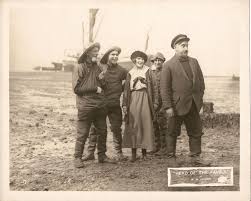 few screened occasionally but most largely forgotten. What could crowd funding achieve here? What about the H Manning-Haynes/Lydia Hayward adaptions of the stories of WW Jacobs (The Skippers Wooing, The Head of the Family, A Will and a Way,
etc). I’ve yet to meet anyone who didn’t find these films a total
delight on first viewing and long to see them again and to see more of
the series. What a great box set they would make. Or what about the Stoll Company’s 1924 adaptions of P G Woodhouse stories (including The Clicking of
few screened occasionally but most largely forgotten. What could crowd funding achieve here? What about the H Manning-Haynes/Lydia Hayward adaptions of the stories of WW Jacobs (The Skippers Wooing, The Head of the Family, A Will and a Way,
etc). I’ve yet to meet anyone who didn’t find these films a total
delight on first viewing and long to see them again and to see more of
the series. What a great box set they would make. Or what about the Stoll Company’s 1924 adaptions of P G Woodhouse stories (including The Clicking of 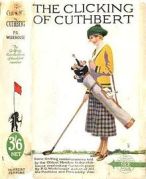 Cuthbert, Rodney Fails To Qualify and Chester Forgets Himself) which were such a hit when screened at the 2017 British Silent Film Festival. Another potentially delightful box set.
So what is holding us back. As the Lupino Lane Kickstarter has shown, its not for any lack of interest or money (with the level of subscribers and money raised being on a par with that achieved by Ben Model in the US). OK, so licensing might be an issue, but is it really insurmountable? Or is it because nobody has addressed the issue? Would a ‘subscribers only’ basis with no further retail sales address the issue? So is it just down to the dedication of people like Dave Glass and Dave Wyatt with their willingness to launch a project and see it through.
In writing this I’ll freely admit to having little more than the simple desire to see more silent film rarities reach a wider audience, with little practical insight into the potential difficulties to be overcome. But for those who do understand more of the processes involved, do you believe that crowd funding offers a way forward in Britain and, if so, how do we best go about it?
7 October
 A Rare Big Screen Outing For Napoleon How
many of us have got a favourite silent film that we’d go almost to any
length to see. You know, the one that gets an outing on the big screen
all too infrequently, and then in some far distant venue. And how often
do we
A Rare Big Screen Outing For Napoleon How
many of us have got a favourite silent film that we’d go almost to any
length to see. You know, the one that gets an outing on the big screen
all too infrequently, and then in some far distant venue. And how often
do we 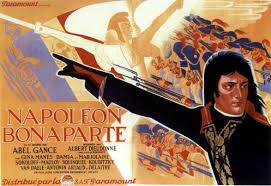 think ‘Why don’t I just arrange my own screening?’. And that’s usually about as far as that idea ever gets! But not Paul Strickland.
Having travelled far and wide to catch rare screenings of his
favourite, he’s now arranged a screening of his own. But his favourite
isn’t just your run-of-the-mill 90 minute silent feature. No, his
favourite is Abel Gance’s 1927 classic Napoleon, all five and a half hours of it and with that breathtaking triptych finale.
think ‘Why don’t I just arrange my own screening?’. And that’s usually about as far as that idea ever gets! But not Paul Strickland.
Having travelled far and wide to catch rare screenings of his
favourite, he’s now arranged a screening of his own. But his favourite
isn’t just your run-of-the-mill 90 minute silent feature. No, his
favourite is Abel Gance’s 1927 classic Napoleon, all five and a half hours of it and with that breathtaking triptych finale.
But clearly relishing a challenge Paul, along with the Valley Film Society, have successfully arranged for a  screening to take place at the Walwyn Hall in Lambourn, Berkshire on Sunday 24 November. The screening will be accompanied by the tremendous Carl Davis
recorded score. Sadly there wasn’t room for a live orchestra but the
DTS-HD 7.1 Surround Sound will ensure top notch audio. Additionally,
three screen polyvision should do justice to the triptych finale. And
all of this for the miserly sum of just £15, which also includes a
complimentary supper during the film’s main interval.
screening to take place at the Walwyn Hall in Lambourn, Berkshire on Sunday 24 November. The screening will be accompanied by the tremendous Carl Davis
recorded score. Sadly there wasn’t room for a live orchestra but the
DTS-HD 7.1 Surround Sound will ensure top notch audio. Additionally,
three screen polyvision should do justice to the triptych finale. And
all of this for the miserly sum of just £15, which also includes a
complimentary supper during the film’s main interval.
Further details of the screening are on our November listings page here. You can find out more by emailing direct to napoleon.walwyn@mail.com or book tickets at www.seaty.co.uk/napoleon. So, congratulations to Paul on arranging this ambitious screening. Lets hope its a big success. And if anyone else out there wants to do something similar for their own favourite, let us know and we’ll be happy to promote it.
17 September
A Silent Film Autumn To Look Forward To – Feeling a little blue now that the British Silent Film Festival
has ended? Don’t think that there is much silent-film-wise coming up in
the next few months? Well, how wrong could you be! Both the Kennington Bioscope and South West Silents  recently
kicked off their Autumn programmes which means that there is a lot to
look forward to in both London and Bristol. The Ken Bio’s next
presentation is Ingeborg Holm(1913), an early social drama from Swedish director Victor Sjostrom. They then have an H G Wells adaption, Wheels of Chance (1922), a virtually unknown German silent Claire (1924), a bittersweet love story, King on Main Street (1925) with Adolphe Menjou and Bessie Love and
recently
kicked off their Autumn programmes which means that there is a lot to
look forward to in both London and Bristol. The Ken Bio’s next
presentation is Ingeborg Holm(1913), an early social drama from Swedish director Victor Sjostrom. They then have an H G Wells adaption, Wheels of Chance (1922), a virtually unknown German silent Claire (1924), a bittersweet love story, King on Main Street (1925) with Adolphe Menjou and Bessie Love and  their season ends with one of the most lavish British films of the silent era in both budget and scope, Moulin Rouge (1928) directed by the great E A Dupont. And then of course there is their much anticipated DeMille Day, a whole day of films directed by Cecil B himself, including the wonderful Gloria Swanson (plus lion) in Male and Female (1919).
Meanwhile, down in Bristol, South West Silents
goes from strength to strength with what must be their most ambitious
season so far. They are presenting a series of Weimar classics on
Sunday afternoons at the Watershed Cinema, including sensationalist silent drama Opium (1919), Abwege (1928) starring Teutonic ice maiden Brigitte Helm, a fine  example of that unusual German genre the Alpine drama, Der Kampf ums Matterhorn (1928) and a landmark of realist filmmaking Menschen am Sonntag (1930). There are new restorations of Der Golem (192o) at the Curzon Clevedon and The Man Who Laughs (1928) at Bristol Cathederal and director Julien Duvivier’s long-forgotten
  masterpiece Au Bonheur des Dames (1930) also at the Watershed. Meanwhile, SWS’s free screenings at the Lansdown Public House continue with evenings devoted to the careers of IT girl Clara Bow and Czech star Anny Ondra. Coincidently, SWS’s Autumn season also concludes with a screening of Moulin Rouge (1928).
Around he rest of the country, People on Sunday (1929) also screens in Sheffield along with Antarctic survival epic The Great White Silence (1924). Accompanists Minima are touring around the Midlands with The Lodger: A Story of the London Fog ( 1927) and around Cumbria with Nosferatu (1922) while Paul Robinson’s HarmonieBand get several opportunities to accompany Berlin: Symphony of a Great City (1927). Meanwhile, in Scotland accompanist David Allison begins a tour  with his acclaimed score for Rob Roy (1922).
Back in London, there are one or two Autumn disappointments. The BFI seems to have sadly reverted to their earlier habit of just a single silent film per month, giving us The Phantom of the Moulin Rouge in September and an illustratrd talk on the life of early film pioneer R W Paul in October. Surely they can do better than this. And a couple of  months ago we remarked upon the apparent demise of the Barbican
as a silent film venue. While not yet quite dead, it certainly appears
on life support with just a single film scheduled this Autumn, the
almost completely unknown Alraune ( aka Unholy Love, Mandrake, or A Daughter of Destiny)
(1928), an everyday story of artificial insemination, genetic
engineering and test tube babies together with another starring role for
the glacial Brigitte Helm, making it somewhat unmissable.
months ago we remarked upon the apparent demise of the Barbican
as a silent film venue. While not yet quite dead, it certainly appears
on life support with just a single film scheduled this Autumn, the
almost completely unknown Alraune ( aka Unholy Love, Mandrake, or A Daughter of Destiny)
(1928), an everyday story of artificial insemination, genetic
engineering and test tube babies together with another starring role for
the glacial Brigitte Helm, making it somewhat unmissable.
So, don’t
despair, there is a lot coming your way silent-film-wise this Autumn.
Full details for all of these events are of course in our regular
monthly listings pages.
10 June
 End of the line for silent film at the Barbican? London’s
Barbican Centre is a long established venue for the discerning silent
film viewer. Programming has covered not just established classics but
also many rarities, rediscoveries and recently restored prints,
End of the line for silent film at the Barbican? London’s
Barbican Centre is a long established venue for the discerning silent
film viewer. Programming has covered not just established classics but
also many rarities, rediscoveries and recently restored prints, 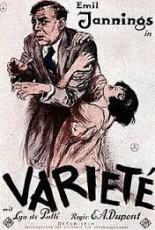 particularly from Europe and Asia.
Highlights from last year included the beautifully restored Variety (Dir. E A Dupont, Ger, 1925), stylish Polish melodrama The Call Of The Sea (aka Zew Morza) (Dir. Henryk Szaro, Pol, 1927) silent film diva Asta Nielsen in The Suffragette (Dir. Urban Gad, Ger, 1913) the wistfully beautiful L’Hirondelle et la Mésange (Dir. Andre Antoine, Fr, 1920) and a mighty Czech epic St Wenceslas (Dir. Jan S Kolar, Cz, 1929).
Barbican
screenings have also been notable for the quality of their musical
accompaniment, from a diverse pool of hugely talented  musicians
offering the broadest range of musical styles ranging from the more
traditional to wildly avant-garde. The Barbican is noteworthy for being a
high quality venue not just in terms of customer comfort but also for
its superior projection and sound equipment and its
musicians
offering the broadest range of musical styles ranging from the more
traditional to wildly avant-garde. The Barbican is noteworthy for being a
high quality venue not just in terms of customer comfort but also for
its superior projection and sound equipment and its  always been reassuring to see that silent film screenings at the venue have attracted a respectably sized audience.
However,
since mid-2018 there has been a notable down shift in the number of
silent film screenings at the Barbican. According to our listings,
there were 15 silent screenings there in 2016, 20 in 2017 but just 11 in
2018. The downturn has continued into 2019 with just 4 screenings in
the first half of the year and no further scheduled events. We can but
hope that this current downturn is but a temporary glitch because to
loose the Barbican as a venue for silent film would be a major blow to
the silent film scene in London and beyond.
13 May
 Another Action Packed Weekend Beckons At The KenBio Barely has the mirth from their Silent Laughter Weekend died away than those good people at the Kennington Bioscope are busy preparing for their next two day spectacular. This will be their fifth annual Silent Film Weekend, due to take place on 1-2 June at the usual venue, the Cinema Museum in Lambeth.
As always with the KenBio,
the emphasis will be on the rarities, the rarely screened and the
occasional downright obscure elements of the silent film pantheon.
Don’t expect to find here the likes of Caligari, Metropolis, Potemkin or The General.
Sure, these films all have great merit but you can get to see them
almost any time or any where. Instead, what the KenBio offers is an
opportunity to broaden your silent film horizons, to see something
you’ve likely never seen before and very probably leave you pleasantly
surprised. And this year’s Silent  Film Weekend will be no exception, featuring a particularly strong programme of events.
The highlight of Saturday’s programme, for me at least, will be Laila, a late Norwegian silent from 1929 written and directed by George Schnéevoigt (cameraman on several C T Dreyer films) and without doubt one of the highlights when screened at this year’s Hippodrome Festival of Silent Film (HippFest) Part romantic melodrama, part action-adventure and part ethnographic picture it focuses upon the pressures upon a young woman of Norwegian origin who was raised within the indigenous Sami community of northern Scandinavia. Featuring some wonderfully authentic performances from the mixed professional and amateur cast as well as some stunning action scenes filmed on location amidst Norway’s icy wilderness this is a film that really is unmissable. For just a sample of one of the superbly realised action scenes click here.
 Other likely must see screenings s on this first day include The Stone Rider (Der Steinerne Reiter (1923), a German fantasy-horror based upon an idea suggested by Metropolis script writer Thea van Harbou and starring that film’s male lead Rudolf Klein-Rogge. This
  screening also dovetails neatly in with the BFI’s ongoing Weimar Cinema season. Then there is another chance to sample the comedic talent of Marion Davis, this time in Beauty’s Worth (1922). There is more Hollywood comedy in the form of the Cruise of the Jasper B (1926) with Rod La Rocque before a change of pace and a helping of melodrama with The Price of Pleasure (1925) starring Virginia Valli and Norman Kerry,
 The ‘big ticket’ item on Sunday‘s programme is an appearance by heartthrob Rudolf Valentino in Monsieur Beaucaire (1924) strutting his stuff across 18th
century England and France in the company of Bebe Daniels and Lois
Wilson. I can’t help but think that this film should always be screened
along side Stan Laurel’s Monsieur Don’t Care (1924), a glorious parody featuring ‘ Rhubarb Vaselino’. But, hey ho, you can’t have everything.
The ‘big ticket’ item on Sunday‘s programme is an appearance by heartthrob Rudolf Valentino in Monsieur Beaucaire (1924) strutting his stuff across 18th
century England and France in the company of Bebe Daniels and Lois
Wilson. I can’t help but think that this film should always be screened
along side Stan Laurel’s Monsieur Don’t Care (1924), a glorious parody featuring ‘ Rhubarb Vaselino’. But, hey ho, you can’t have everything.
 Also of particular interest on Sunday is Souls For Sale
( 1923) starring Eleanor Boardman as a woman escaping her new husband
who has murder in mind and finding herself in Hollywood where we are
offered a behind the scenes look at the film making industry itself,
with notable stars putting in an appearance including Charlie Chaplin and Erich von Stroheim. Then there is Charles Ray in The Old Swimmin’ Hole (1921), something of a slice of hillbilly hokum with not a lot going on but charming all the same
Also of particular interest on Sunday is Souls For Sale
( 1923) starring Eleanor Boardman as a woman escaping her new husband
who has murder in mind and finding herself in Hollywood where we are
offered a behind the scenes look at the film making industry itself,
with notable stars putting in an appearance including Charlie Chaplin and Erich von Stroheim. Then there is Charles Ray in The Old Swimmin’ Hole (1921), something of a slice of hillbilly hokum with not a lot going on but charming all the same  and interesting as an early starring vehicle for Laura LaPlante and also as a film devoid of inter-titles. Then there is On To Reno
(1928) and what sounds like a wild farce of mistaken and concealed
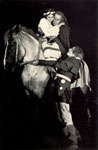
identity. Lastly, a film I’m particularly looking forward to seeing, Common Ground (1916) a legal thriller with Thomas Meighan but but more notable as one of the few surviving films starring Marie Doro (right),
by all accounts a hugely talented and stunningly attractive stage
actress who quit the business when she got religion and ended her days a
forgotten recluse.
and interesting as an early starring vehicle for Laura LaPlante and also as a film devoid of inter-titles. Then there is On To Reno
(1928) and what sounds like a wild farce of mistaken and concealed
identity. Lastly, a film I’m particularly looking forward to seeing, Common Ground (1916) a legal thriller with Thomas Meighan but but more notable as one of the few surviving films starring Marie Doro (right),
by all accounts a hugely talented and stunningly attractive stage
actress who quit the business when she got religion and ended her days a
forgotten recluse.
And there we have it. What looks like another unmissible weekend from the KenBio. Tickets are on sale now here for the whole event or just one day or even just part of a day and full details of the programme are in our June listings page here. So, see you there !
4 April
 Silent Feast Or Famine At BFI There is something of a schizophrenic attitude towards silent film at the British Film Institute
(BFI). Most of the time, silent films (which still account for a
quarter of all cinema history) are just a small adjunct to the regular
‘proper’ film programming, rarely comprising more than a tiny proportion
of BFI screenings. As a case in point, with something like 200 BFI film
screenings each month, in January there were only seven silents shown,
two in February, four in March and just one in April. Famine indeed.
Yet in May we will move into feast territory at BFI with no less than
39 silent film events during the month.
Silent Feast Or Famine At BFI There is something of a schizophrenic attitude towards silent film at the British Film Institute
(BFI). Most of the time, silent films (which still account for a
quarter of all cinema history) are just a small adjunct to the regular
‘proper’ film programming, rarely comprising more than a tiny proportion
of BFI screenings. As a case in point, with something like 200 BFI film
screenings each month, in January there were only seven silents shown,
two in February, four in March and just one in April. Famine indeed.
Yet in May we will move into feast territory at BFI with no less than
39 silent film events during the month.
Accounting in large part for this very welcome package of cinematic goodies is the first half of  what looks like a pretty comprehensive retrospective of Weimar cinema. Starting right from the outset of the Republic there is outrageous comedy from Lubitsch, I Don’t Want To Be A Man (1918) and The Oyster Princess (1919). There is sensational drama with Opium (1919), old dark house melodrama with The Chronicles of the Grey House (1925) and an example of that
 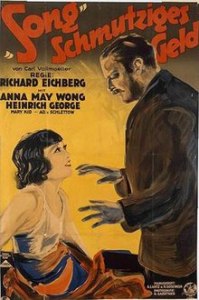 unique Weimar genre, the alpine drama, with The Fight For The Matterhorn (1928). Then there is the added delight of Pola Negri in Madame Dubarry (1919) not to mention Anna May Wong in Song (1928). Less obscure but still most welcome are Variety (1925), Waxworks (1924) and The Last Laugh (1924). Most of these films rarely get a screening and nearly all come with live musical accompaniment. As a result,
  we
can forgive BFI for a bit of padding out in the season by including
some excellent but oh so regularly screened Weimar classics such as Caligari (1920), Nosferatu (1922) and The Golem (1920), mainly with just their recorded scores.
we
can forgive BFI for a bit of padding out in the season by including
some excellent but oh so regularly screened Weimar classics such as Caligari (1920), Nosferatu (1922) and The Golem (1920), mainly with just their recorded scores.
But Weimar is not just the only silent delight in May. The BFI is also putting on a weekend of Victorian cinema. Pride of place goes to a second screening of The Great Victorian Moving Picture Show, a compilation of 60mm and 68mm films from the Victorian era, presented by  the
BFI’s Bryony Dixon, with John Sweeney and his Biograph Band – reprising
their spectacular sell-out event at the 2018 London Film Festival. But
there is
the
BFI’s Bryony Dixon, with John Sweeney and his Biograph Band – reprising
their spectacular sell-out event at the 2018 London Film Festival. But
there is  also an experts forum, Heroes of Victorian Film,
who will champion the British Victorian era filmmaker they think
deserves to be better known throughout the land, not to mention a
collection of London focused films, Six Stories About London in Victorian Film.
also an experts forum, Heroes of Victorian Film,
who will champion the British Victorian era filmmaker they think
deserves to be better known throughout the land, not to mention a
collection of London focused films, Six Stories About London in Victorian Film.
So, all in
all, May is a great month for silent film at BFI. Tis only a pity it
doesn’t happen every month. Details of all of these screenings can be
found in the ‘May Listings‘ page of silentfilmcalendar.org.
18 March
 Rare Michael Curtiz Silent Film Screening in SW7 Director Michael Curtiz (image, right)
was certainly one of the most prolific and probably also one of the
most accomplished directors to have worked in Hollywood. Able to turn
his hand to almost any genre, his most recognised film is probably Casablanca (1942, image, left) for which he won one of his two Academy Awards. But other classic examples of his
Rare Michael Curtiz Silent Film Screening in SW7 Director Michael Curtiz (image, right)
was certainly one of the most prolific and probably also one of the
most accomplished directors to have worked in Hollywood. Able to turn
his hand to almost any genre, his most recognised film is probably Casablanca (1942, image, left) for which he won one of his two Academy Awards. But other classic examples of his 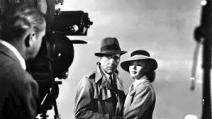 work include The Adventures of Robin Hood (1938) with Errol Flynn, Angels With Dirty Faces (1938) and Yankee Doodle Dandy (1942) with Jimmy Cagney, Mildred Pierce (1945) with Joan Crawford, and White Christmas (1954) with Bing Crosby. He even made a film with Elvis Presley, King Creole (1958). But before he took up Warner Brothers’ invitation to travel to Hollywood, Curtiz (then known as Mihaly Kertesz)
was an equally prolific director in Europe, making over sixty films in
Hungary, Denmark, Germany and Austria. However, this early work is
work include The Adventures of Robin Hood (1938) with Errol Flynn, Angels With Dirty Faces (1938) and Yankee Doodle Dandy (1942) with Jimmy Cagney, Mildred Pierce (1945) with Joan Crawford, and White Christmas (1954) with Bing Crosby. He even made a film with Elvis Presley, King Creole (1958). But before he took up Warner Brothers’ invitation to travel to Hollywood, Curtiz (then known as Mihaly Kertesz)
was an equally prolific director in Europe, making over sixty films in
Hungary, Denmark, Germany and Austria. However, this early work is 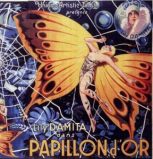 much less widely known and very rarely screened. The good people at Kennington Bioscope are doing their best to put this situation right, screening two Curtiz films last year, Cab No.13
 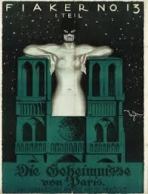 (Fiaker Nr. 13) and The Golden Butterfly ( Der Goldene Schmetterling), both made in 1926 and both starring Curtiz’s then wife, Lila Damita.
But there is
now a chance to catch a rare screening of another Curtiz silent, one
which can genuinely claim to rival not only earlier Italian
blockbusters such as Quo Vadis (1913) or Cabiria (1914) but also the work of Griffith and DeMille in Hollywood. The film is Sodom and Gomorrah: The Legend of Sin and Punishment (1922). Regarded as the grandest, most monumental film of the  Austrian
silent film era some estimates number the cast and crew as high as
14,000 people and a main set towering 230 feet high. Then there was the
pyrotechnician, missing fingers from both hands and part of his nose
due to earlier accidents, but who still handled explosives with an air
of casualness….and with a lighted cigar in his mouth. In charge of all
this, director Curtiz apparently had little regard
Austrian
silent film era some estimates number the cast and crew as high as
14,000 people and a main set towering 230 feet high. Then there was the
pyrotechnician, missing fingers from both hands and part of his nose
due to earlier accidents, but who still handled explosives with an air
of casualness….and with a lighted cigar in his mouth. In charge of all
this, director Curtiz apparently had little regard  for
the money he was spending or the well being of cast and crew, not to
mention being in the process of divorcing his first wife, Lucie Doraine,
who was also the star of the film. The end result was a three hour
monster, eventually cut down as a result of marketing and censorship
pressures to little more than 90 minutes. Long thought to have survived
in
for
the money he was spending or the well being of cast and crew, not to
mention being in the process of divorcing his first wife, Lucie Doraine,
who was also the star of the film. The end result was a three hour
monster, eventually cut down as a result of marketing and censorship
pressures to little more than 90 minutes. Long thought to have survived
in  just fragments, a recently restored version of the film now runs to around 140 minutes.
And it will be screened on 2 April at the Austrian Cultural Forum
in Knightsbridge in London. This, along with other recent screenings,
is helping to establish the Forum as an increasingly important (albeit  little
known) venue for Austrian themed silent film screenings with live
musical accompaniment. Last year, for example, they screened a trio of
von Stroheim classics, Blind Husbands (1919), Foolish Wives (1922).and Queen Kelly (1929), while this year they have already screened G W Pabst’s superlative Joyless Street (1925) and further silent screenings are promised.
little
known) venue for Austrian themed silent film screenings with live
musical accompaniment. Last year, for example, they screened a trio of
von Stroheim classics, Blind Husbands (1919), Foolish Wives (1922).and Queen Kelly (1929), while this year they have already screened G W Pabst’s superlative Joyless Street (1925) and further silent screenings are promised.
Full details of this screening of Sodom and Gomorrah are on Silentfimcalendar.org‘s ‘April Listings’ page and watch out for details of further silent film screenings at the Austrian Cultural Forum.
8 February
Silent Film Festival Frenzy Nationwide There are an awful lot of silent films cropping up in various film festivals across the UK over the next couple of months so if you fancy getting out ‘on the road’, read on for details of some quite exceptional films around the country.
 Early March sees the return of the annual Borderlines Film Festival in the Herefordshire area. This year they are working with the ever more ambitious
  South West Silents team to screen a couple of films from the long underrated director Lois Weber, The Blot (1921) and Suspense (1913). Silent London’s
Pamela Hutchinson will be along to introduce the films and talk about
Weber’s influence on film development while live musical accompaniment
for the films will come from the excellent Lillian Henley . There will
also be a rare screening of the long-thought-
South West Silents team to screen a couple of films from the long underrated director Lois Weber, The Blot (1921) and Suspense (1913). Silent London’s
Pamela Hutchinson will be along to introduce the films and talk about
Weber’s influence on film development while live musical accompaniment
for the films will come from the excellent Lillian Henley . There will
also be a rare screening of the long-thought- lost 1924 version of Oliver Twist, starring ‘man of a thousand faces’ Lon Chaney as Fagin and, fresh from his role in Chaplin’s The Kid, Jackie Coogan as Oliver. Live piano accompaniment for this film comes from Meg Morley.
 Then in late March comes the Hippodrome Silent Film Festival (HippFest)
in Bo’Ness, Scotland’s only festival of silent film, and this year they
have a particularly strong programme. Particular personal highlights
we’re looking forward to include the wonderful Pola Hegri in Lubitsch’s Forbidden Paradise (1924), the
Then in late March comes the Hippodrome Silent Film Festival (HippFest)
in Bo’Ness, Scotland’s only festival of silent film, and this year they
have a particularly strong programme. Particular personal highlights
we’re looking forward to include the wonderful Pola Hegri in Lubitsch’s Forbidden Paradise (1924), the  oldest surviving Chinese martial arts film The Red Heroine (1929), a rare foray into comedy for Swedish director C T Dreyer with The Parson’s Widow (1920) and E A Dupont’s early take on Moulin Rouge (1928). Bringing a touch of ‘local’ interest, the programme opens with an early version of the story of
 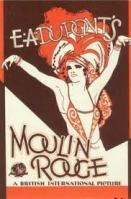 Scottish outlaw Rob Roy (1922). There are also some old favourites such as Maurice Elvey’s delightful Hindle Wakes (1927) and Laura La Plante in some scary goings on with The Cat and the Canary (1927). As always with HippFest, there will be a stellar cast of silent film musicians on hand to accompany all of the screenings.
Just south of the border at around the same time the Tyne Valley Film Festival
kicks off centered around Hexham in Northumberland. Amongst the silent
film offerings are a collection of shorts from the irrepressible  Mabel Normand, another example of the directorial skills of Lois Weber in Shoes (1916), again introduced by Pam Hutchinson, and the moving story of an old soldier and his equally old war horse in A Couple of Down and Outs (1923). There
also looks to be a fascinating film compendium looking at the earliest
known representations of LGBT people on screen….with clips going back as
far as 1904!
Mabel Normand, another example of the directorial skills of Lois Weber in Shoes (1916), again introduced by Pam Hutchinson, and the moving story of an old soldier and his equally old war horse in A Couple of Down and Outs (1923). There
also looks to be a fascinating film compendium looking at the earliest
known representations of LGBT people on screen….with clips going back as
far as 1904!
Then in April, back in London we have the Kennington Bioscope’s annual Silent Comedy Weekend
to look forward. Although details have yet to be released you can be
sure this will be two days packed with cinematic rarities and delights.
And if that wasn’t enough to be getting on with, just two months later
the same people will be hosting The Kennington Bioscope 5th Silent Film Weekend.
So surely all of this is reason enough to ‘get on yer bike’ and get around the country to catch up with some of these silent film treasures.
Full details of all of these screenings are of course in the monthly listing pages of Silentfilmcalendar.org.
20 January
 A Silent Film Mess At The BFI The BFI’s
relationship with silent film has, in recent years, been somewhat
schizophrenic to say the least. On the one hand, they have been willing
to screen some films multiple times in order to promote their own
Blu-ray/DVD release of these titles. Last year, for example, Pandora’s Box (1929) and Shiraz (1928) each had 30+ screenings to push new releases of both films. Perhaps not
A Silent Film Mess At The BFI The BFI’s
relationship with silent film has, in recent years, been somewhat
schizophrenic to say the least. On the one hand, they have been willing
to screen some films multiple times in order to promote their own
Blu-ray/DVD release of these titles. Last year, for example, Pandora’s Box (1929) and Shiraz (1928) each had 30+ screenings to push new releases of both films. Perhaps not  surprisingly,
after an initial spark of interest, many of these multiple screenings
appeared to be very poorly attended. Yet at other times, silents are
viewed by the BFI as little more than programme gap-fillers, with a few well-worn mainstream titles (Metropolis, Sunrise, Phantom, Potemkin
etc) wheeled out time and again, often with just the recorded
soundtrack rather than with the infinitely superior pleasure of live
accompaniment.
surprisingly,
after an initial spark of interest, many of these multiple screenings
appeared to be very poorly attended. Yet at other times, silents are
viewed by the BFI as little more than programme gap-fillers, with a few well-worn mainstream titles (Metropolis, Sunrise, Phantom, Potemkin
etc) wheeled out time and again, often with just the recorded
soundtrack rather than with the infinitely superior pleasure of live
accompaniment.
In early 2018
there was a glimmer of hope when a regular Sunday afternoon slot was
set aside for less well known silents. It may only have been one film a
month and not, perhaps, the most convenient time slot but we could at
least get to enjoy some silent rarities such as Blighty (1927), Adjutant of the Czar (1929), Mothers of Men (1917) and The Woman Under Oath (1919) as well as rarely screened classics such as The Racket (1928). But here again there was still an element of ‘gap-filling’ with an episode of David Brownlow’s Hollywood
series one month (OK, it is a great series, and not available on disc,
but it can be viewed any time, albeit illicitly, on-line) and a somewhat
tired collection of early silent female comedy double acts. When 2019
opened with a Sunday screening of A Modern Dubarry
(1927) it looked like this regular programming slot would continue into
the new year. However, the absence of a Sunday silent in February does
not bode well!!
(1927), Adjutant of the Czar (1929), Mothers of Men (1917) and The Woman Under Oath (1919) as well as rarely screened classics such as The Racket (1928). But here again there was still an element of ‘gap-filling’ with an episode of David Brownlow’s Hollywood
series one month (OK, it is a great series, and not available on disc,
but it can be viewed any time, albeit illicitly, on-line) and a somewhat
tired collection of early silent female comedy double acts. When 2019
opened with a Sunday screening of A Modern Dubarry
(1927) it looked like this regular programming slot would continue into
the new year. However, the absence of a Sunday silent in February does
not bode well!!
Yet just as you are about to give up on the BFI when it comes to silent film screenings, they  come up with a gem. On 7 February, to open a series on early Korean cinema they are screening Crossroads Of Youth (Dir.
Ahn Jong-hwa, Korea, 1934) the oldest surviving Korean-made film and a
tale of love, desire, betrayal and revenge following a young man as he
seeks his fortune on the streets of Seoul. Even more enticingly they are
screening the film with live accompaniment from Korean musicians,
live ‘byeonsa’ narration and live supplementary actors in a recreation
of how the film would have been screened when it first premiered in
1934.
come up with a gem. On 7 February, to open a series on early Korean cinema they are screening Crossroads Of Youth (Dir.
Ahn Jong-hwa, Korea, 1934) the oldest surviving Korean-made film and a
tale of love, desire, betrayal and revenge following a young man as he
seeks his fortune on the streets of Seoul. Even more enticingly they are
screening the film with live accompaniment from Korean musicians,
live ‘byeonsa’ narration and live supplementary actors in a recreation
of how the film would have been screened when it first premiered in
1934.
However, unless you’ve booked already, you won’t be able to see any of this. Because, in another example of the BFI’s somewhat less than consummate programming skill, this unique and hugely tempting event is being screened in the smallest of their three main auditoriums and is already completely sold out!! Was no consideration given to the possibility that this event could, shock horror, prove quite popular and merit a screening at the BFI’s large auditorium. And what of the two events screening that same evening in the large auditorium? The first, admittedly quite well booked, is something on an anomaly for a venue calling itself the British FILM Institute because it isn’t a film at all, its the first two episodes of a new TV series which are due to screen shortly on Netflix so its not as if it won’t get a wider audience in due course. The second is a screening of Antonioni’s Blow Up (1966) which, if we’re being honest, is probably the most regularly wheeled out of his films and which is also getting two other screenings at BFI in the month. But the end result is that Crossroads of Youth, probably a unique, never to be repeated, event has sold out a 130 seat venue presumably leaving many others disappointed at being unable to see it, while on the same night the BFI’s 500 seat venue is being used for a couple of episodes of a TV series that everyone will get to see eventually and for a well known and regularly screened feature which has, to date, sold barely 50 of the 500 seats in this auditorium!!
10 January
 Forthcoming Attractions at the KenBio The Kennington Bioscope’s
2019 silent film season kicked off last week. A pleasingly full house
at the venerable Cinema Museum (itself looking increasingly free from
the threat of closure) got to see Douglas Fairbanks swash, buckle and
mug his way through a couple of great roles as only he could. OK, the
films weren’t exactly as billed but it didn’t really matter when both
proved so eminently
Forthcoming Attractions at the KenBio The Kennington Bioscope’s
2019 silent film season kicked off last week. A pleasingly full house
at the venerable Cinema Museum (itself looking increasingly free from
the threat of closure) got to see Douglas Fairbanks swash, buckle and
mug his way through a couple of great roles as only he could. OK, the
films weren’t exactly as billed but it didn’t really matter when both
proved so eminently  enjoyable. And there are a lot more delights to come as the KenBio’s new season rolls out. Next up is Mother,
Soviet director Pudovkin’s epic 1926 drama set against the backdrop of
the 1905 Russian revolution with Vera Baranovskaya as the increasingly
politicised mother of the title. On a lighter note, February sees the screening of the virtually unknown Czech slapstick comedy The Lovers of an Old Criminal (Dir. Svatopluk Innemann, Cz, 1927) starring Anny Ondra (left), perhaps better known for her
enjoyable. And there are a lot more delights to come as the KenBio’s new season rolls out. Next up is Mother,
Soviet director Pudovkin’s epic 1926 drama set against the backdrop of
the 1905 Russian revolution with Vera Baranovskaya as the increasingly
politicised mother of the title. On a lighter note, February sees the screening of the virtually unknown Czech slapstick comedy The Lovers of an Old Criminal (Dir. Svatopluk Innemann, Cz, 1927) starring Anny Ondra (left), perhaps better known for her  appearances in early Hitchcock dramas such as Blackmail and The Manxman (both 1929). The comedy continues into March, albeit tinged with horror, with The Cat and the Canary (Dir. Paul Leni, US, 1927), a film which virtually invented the ‘old dark house’ horror genre. Starring Laura La Plante (right), the film was remade in 1939 with Bob Hope in the lead role, but this is the version which has best stood the test of time.
 April sees
another evening of 9.5mm vitagraph films (edited versions of cinema
releases aimed at the home market) from the collection of acclaimed film
historian Kevin Brownlow. May brings Hungarian Rhapsody (Dir.
Hanns Schwarz, Ger, 1928) a romantic comedy set in 19th century
Hungary starring Lil Dagovar and apparently with something of the
Lubitsch touch about it. Also in May comes City Girl (Dir. F W Murnau, US,
April sees
another evening of 9.5mm vitagraph films (edited versions of cinema
releases aimed at the home market) from the collection of acclaimed film
historian Kevin Brownlow. May brings Hungarian Rhapsody (Dir.
Hanns Schwarz, Ger, 1928) a romantic comedy set in 19th century
Hungary starring Lil Dagovar and apparently with something of the
Lubitsch touch about it. Also in May comes City Girl (Dir. F W Murnau, US, 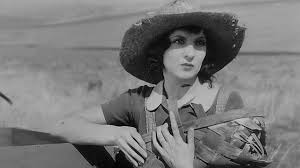 1930). Less well known than the same director’s Sunrise (1927) but an equally beautiful film which was in many ways an inspiration for Terrence Malick’s Days of Heaven (1978). Lastly, in June we have Lady Windermere’s Fan (Dir.
Ernst Lubitsch, US, 1925), an actual Lubitsch plus Ronald Colman in one
of his first important screen roles in this early adaption of one of
Oscar Wilde’s classics.
1930). Less well known than the same director’s Sunrise (1927) but an equally beautiful film which was in many ways an inspiration for Terrence Malick’s Days of Heaven (1978). Lastly, in June we have Lady Windermere’s Fan (Dir.
Ernst Lubitsch, US, 1925), an actual Lubitsch plus Ronald Colman in one
of his first important screen roles in this early adaption of one of
Oscar Wilde’s classics.
So, all in
all, just what you’d expect from the KenBio, a varied mix of high
quality films and not one that you’d want to miss! Details of all of
these screenings are available on the pages of silentfilmcalendar.org.
5 December
 Silent Film Delights For The New Year in Bristol With
silent film screenings winding down as year-end approaches, it seems an
appropriate time to cheer ourselves up by having a look at what
delights are on the horizon in the new year. And in early 2019 the focus
certainly appears to be on Bristol. January is of course Slapstick Festival time in the city and as usual there is a varied
Silent Film Delights For The New Year in Bristol With
silent film screenings winding down as year-end approaches, it seems an
appropriate time to cheer ourselves up by having a look at what
delights are on the horizon in the new year. And in early 2019 the focus
certainly appears to be on Bristol. January is of course Slapstick Festival time in the city and as usual there is a varied  selection of silent films. Classic slapstick comes in the form of Buster Keaton in The Battling Butler (Dir. Buster Keaton, US, 1926), Charlie Chaplin in The Pilgrim (Dir. Charles Chaplin, US, 1923) and Harold Lloyd in For Heaven’s Sake (Dir. sam Taylor, US, 1926). The festival also looks at the careers of Chaplin’s older
  brother Sydney, a star in his own right, and comedienne Alice Howell (image, right), once hailed by Noel Coward as ‘the funniest woman of our civilisation’ but now almost completely forgotten.
Looking beyond Hollywood, and changing the pace somewhat, there is the  gentle French classic Les Deux Timides (Dir.
Rene Clair, Fr, 1928). Also from France, will the mystery be solved of
who played the female star of a string of long forgotten comedies
featuring a main character called Cunégonde. There is even a rare example of Russian slapstick with Happiness (Dir. Aleksandr
gentle French classic Les Deux Timides (Dir.
Rene Clair, Fr, 1928). Also from France, will the mystery be solved of
who played the female star of a string of long forgotten comedies
featuring a main character called Cunégonde. There is even a rare example of Russian slapstick with Happiness (Dir. Aleksandr  Medvedkin, USSR, 1935)which apparently prompted none other than Sergei Eisenstein
to the admiring tribute: ‘Today I saw how a Bolshevik laughs.’. Other
screenings focus on Chaplin for kids, early silent animation and a look a
some recently rediscovered gems. Introducing various sessions will be
acclaimed film historians David Robinson and Kevin Brownlow, TV presenter Chris Serle, standup comedian and writer Lucy Porter and Curator of Amsterdam’s EYE Filmmuseum, Elif Rongen-Kaynakçi while all of the screenings will be accompanied live by some of Europe’s top silent film accompanists.
Medvedkin, USSR, 1935)which apparently prompted none other than Sergei Eisenstein
to the admiring tribute: ‘Today I saw how a Bolshevik laughs.’. Other
screenings focus on Chaplin for kids, early silent animation and a look a
some recently rediscovered gems. Introducing various sessions will be
acclaimed film historians David Robinson and Kevin Brownlow, TV presenter Chris Serle, standup comedian and writer Lucy Porter and Curator of Amsterdam’s EYE Filmmuseum, Elif Rongen-Kaynakçi while all of the screenings will be accompanied live by some of Europe’s top silent film accompanists.
 But looking beyond the Slapstick Festival, those industrious types at South West Silents have lined up some top notch screenings. These kick off in January with Valentino classic The Sheik (Dir. George Melford, US, 1921), the film that secured his place as one of the first
  iconic Hollywood legends. February brings The Beloved Rogue (Dir. Alan Crosland, US, 1927) in which Hollywood star John Barrymore
sought to out-swash buckle Douglas Fairbanks in this star studded
action packed roller coaster which perfectly captures the true greatness
of Hollywood in the silent era. Then in March there is a rare screening
of the recently restored German drama The Ancient
iconic Hollywood legends. February brings The Beloved Rogue (Dir. Alan Crosland, US, 1927) in which Hollywood star John Barrymore
sought to out-swash buckle Douglas Fairbanks in this star studded
action packed roller coaster which perfectly captures the true greatness
of Hollywood in the silent era. Then in March there is a rare screening
of the recently restored German drama The Ancient  Law (aka Das Alte Gesetz)
(Dir. E A Dupont, Ger, 1923)following a son’s efforts to pursue his
dream of becoming an actor in the face of opposition from his father,
an orthodox rabbi. All three films will be screened at Bristol’s Cube Cinema, all with live musical accompaniment.
Law (aka Das Alte Gesetz)
(Dir. E A Dupont, Ger, 1923)following a son’s efforts to pursue his
dream of becoming an actor in the face of opposition from his father,
an orthodox rabbi. All three films will be screened at Bristol’s Cube Cinema, all with live musical accompaniment.
4 December
Whose Film Is It Anyway In our December listings (Here) you’ll find details of a short tour of Scottish venues by composer and musician Graham Stephen accompanying a screening of  American silent film The Penalty (Dir. Wallace Worsley, US, 1920) with a score commissioned by the Hippodrome Silent Film Festival. The score was first performed at HippFest
in March to generally warm approval. While the film itself, the story
of a legless master criminal and gang leader, may not exactly qualify as
a classic of the silent film era it does feature a bravura performance
by Lon Chaney as the aforementioned limbless villain. So far so good
and its always
American silent film The Penalty (Dir. Wallace Worsley, US, 1920) with a score commissioned by the Hippodrome Silent Film Festival. The score was first performed at HippFest
in March to generally warm approval. While the film itself, the story
of a legless master criminal and gang leader, may not exactly qualify as
a classic of the silent film era it does feature a bravura performance
by Lon Chaney as the aforementioned limbless villain. So far so good
and its always  encouraging to see a relatively less well-known silent getting a little more exposure.
But what really caught our eye was the publicity material for the 1st December screening at the Queen’s Hall in Edinburgh (shown here). Here, the film is described as “Graham Stephen’s The Penalty”!
But in what way can this claim of ‘ownership’ be justified. Certainly
no one would doubt the potential benefit an accompanist brings to a
silent film and we’ve seen any number of films improved, often quite
dramatically, by good accompaniment. But no matter how good the
accompaniment, the star of the show,  metaphorically
speaking, remains the film itself. To ignore this convention in effect
sees the film itself being relegated to a mere backdrop for the
accompanist’s music. Perhaps one of the worst examples of this was the
butchery of Fritz Lang’s Metropolis in the 1980s to fit Giorgio Moroder’s cacophonous electronic score which
metaphorically
speaking, remains the film itself. To ignore this convention in effect
sees the film itself being relegated to a mere backdrop for the
accompanist’s music. Perhaps one of the worst examples of this was the
butchery of Fritz Lang’s Metropolis in the 1980s to fit Giorgio Moroder’s cacophonous electronic score which  all
but drowned out the film’s visuals. But similar instances of ‘the tail
wagging the dog’ when it comes to silent film accompaniment persist.
This year we have been to live screenings of Fantomas
(Dir. Louis Feuillade, Fr, 1913-14) where the accompanists opted to
screen the film without English translations of the French inter-titles
and of Salome (Dir. Charles Bryant, US, 1923) where the accompanists dispensed with the film’s inter-titles
all
but drowned out the film’s visuals. But similar instances of ‘the tail
wagging the dog’ when it comes to silent film accompaniment persist.
This year we have been to live screenings of Fantomas
(Dir. Louis Feuillade, Fr, 1913-14) where the accompanists opted to
screen the film without English translations of the French inter-titles
and of Salome (Dir. Charles Bryant, US, 1923) where the accompanists dispensed with the film’s inter-titles 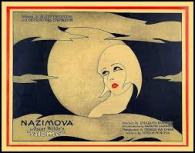 altogether!
In both of these screenings, the musicians appeared to take the view
that knowing what was going on in the film was unnecessary because it
was little more than background to the music.
altogether!
In both of these screenings, the musicians appeared to take the view
that knowing what was going on in the film was unnecessary because it
was little more than background to the music.
Now, having seen the HippFest screening of The Penalty with Graham Stephen’s score there was no indication that he was in any  way
seeking to understate the significance of the film in comparison to the
music. In fact, his score clearly set out to be a sympathetic and
complementary accompaniment the film. Additionally, amongst the
publicity material for his accompaniment to the film at the various
other venues this month there is no sign of it being headlined elsewhere
as “Graham Stephen’s The Penalty”. So perhaps this is all down to an over-zealous PR department at the Queen’s Theatre. Because if The Penalty is anybody’s film then it is either director Wallace Worsley’s or star Lon Chaney’s.
way
seeking to understate the significance of the film in comparison to the
music. In fact, his score clearly set out to be a sympathetic and
complementary accompaniment the film. Additionally, amongst the
publicity material for his accompaniment to the film at the various
other venues this month there is no sign of it being headlined elsewhere
as “Graham Stephen’s The Penalty”. So perhaps this is all down to an over-zealous PR department at the Queen’s Theatre. Because if The Penalty is anybody’s film then it is either director Wallace Worsley’s or star Lon Chaney’s.
4 September
KenBio Pulling Out All The Stops This Autumn Its now less than a week until the 4th annual Kennington Bioscope Silent Film Weekend kicks off (8-9th Sept) at the historic Cinema Museum
in Lambeth. The weekend promises a veritable cinematic smorgasbord of
little known or rarely screened silent film delights, with something to
meet all tastes. Amongst the many rare screenings, we are looking
forward to seeing Lili Damita in Micheal Curtiz’s last European film
before he departed for Hollywood, The Golden Butterfly (1926). Then there is the now almost forgotten Constance  Talmadge in a delicious comedy, Her Night of Romance (D. Sidney Franklin, 1924). Other rarities we’re interested in seeing for the first time include social melodrama The Garden of Resurrection (Dir. Arthur Rooke, UK, 1919) and small town drama Miss Lulu Bett (Dir. William C De Mille, US, 1921). But our own particular ‘must see’ has to be the BFI’s Bryony Dixon, presenting a collection of silent British comedies, because amongst these is Sam’s
  Boy (1922),
another in the delightful series of films directed by W Manning Haynes,
scripted by Lydia Hayward and based upon the stories of W W Jacobs. If
you’ve seen The Head of the Family (1922), A Will and a Way (1922) or The Skipper’s Wooing (1922) from the same series you’ll know just what we mean. If you haven’t, then you are in for a treat.
Boy (1922),
another in the delightful series of films directed by W Manning Haynes,
scripted by Lydia Hayward and based upon the stories of W W Jacobs. If
you’ve seen The Head of the Family (1922), A Will and a Way (1922) or The Skipper’s Wooing (1922) from the same series you’ll know just what we mean. If you haven’t, then you are in for a treat.
But there is so much more going on at KenBio than just the weekend festival. Their newly announced Autumn programme includes some knock-out screenings. First off is Au Bonheur  des Dames (Dir. Julien Duvivier, Fr, 1930). At an earlier event renowned cinema historian Kevin Brownlow
showed just a brief clip of this film which left the audience stunned.
But now he’s back with the complete film, to enjoy in all its Parisian
glory. Plus, the live musical accompaniment is from Stephen Horne which makes it wholly
des Dames (Dir. Julien Duvivier, Fr, 1930). At an earlier event renowned cinema historian Kevin Brownlow
showed just a brief clip of this film which left the audience stunned.
But now he’s back with the complete film, to enjoy in all its Parisian
glory. Plus, the live musical accompaniment is from Stephen Horne which makes it wholly  unmissable. Next up is The Lost World
(Dir. Harry Hoyt, US, 1925). Perhaps a little ‘main stream’ for the
KenBio but its a newly restored and more complete version, so probably
worth a look. Then there is another evening of 9.5mm delights from the personal archive of Kevin Brownlow,
edited versions of silent cinema releases aimed at the home market,
which in some cases are now the only versions that survive. Expect a
fascinating collection of the weird and the wonderful.
unmissable. Next up is The Lost World
(Dir. Harry Hoyt, US, 1925). Perhaps a little ‘main stream’ for the
KenBio but its a newly restored and more complete version, so probably
worth a look. Then there is another evening of 9.5mm delights from the personal archive of Kevin Brownlow,
edited versions of silent cinema releases aimed at the home market,
which in some cases are now the only versions that survive. Expect a
fascinating collection of the weird and the wonderful.
 As if that wasn’t enough there are two further silent gems
  coming up. First is The Whispering Chorus (Dir.
Cecil B. DeMille, USA 1918) about a humble employee who absconds with
$1000 of company money and is described as a sort of proto-proto-noir. Then there is The Virgin of Stamboul (Dir. Tod Browning, USA, 1920)a somewhat bizarre melodrama set around a Turkish harem.
coming up. First is The Whispering Chorus (Dir.
Cecil B. DeMille, USA 1918) about a humble employee who absconds with
$1000 of company money and is described as a sort of proto-proto-noir. Then there is The Virgin of Stamboul (Dir. Tod Browning, USA, 1920)a somewhat bizarre melodrama set around a Turkish harem.
Last but by no means least there is a real labour of love from KenBio programmer Michelle Facey (aka @best2vilmabanky). After a lot of hard work not only has she  secured a screening of the spellbinding documentary Dawson City – Frozen Time (Dir.
Bill Morrison, US, 2016), piecing together the bizarre true story of a
collection of some 500 films dating from 1910s – 1920s, which were lost
for over 50 years until discovered buried in a sub-arctic swimming pool
deep in the Yukon Territory, in Dawson City, located about 350 miles
south of the Arctic Circle, but she has also managed to arrange an
almost unique screening of the 35mm version of the film. But even
better than that, director Bill Morrison will also be present in person, discussing his work with Kevin Brownlow
and, hopefully, taking some questions from the audience. This promises
to be a truly one-off evening and makes a fitting high-point for the
KenBio’s Autumn season.
secured a screening of the spellbinding documentary Dawson City – Frozen Time (Dir.
Bill Morrison, US, 2016), piecing together the bizarre true story of a
collection of some 500 films dating from 1910s – 1920s, which were lost
for over 50 years until discovered buried in a sub-arctic swimming pool
deep in the Yukon Territory, in Dawson City, located about 350 miles
south of the Arctic Circle, but she has also managed to arrange an
almost unique screening of the 35mm version of the film. But even
better than that, director Bill Morrison will also be present in person, discussing his work with Kevin Brownlow
and, hopefully, taking some questions from the audience. This promises
to be a truly one-off evening and makes a fitting high-point for the
KenBio’s Autumn season.
Full details of all of the Kennington Bioscope screenings can be found here or on silentfilmcalendar.org ‘s regular monthly listings pages.
25 July
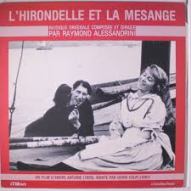 An Un-missable Start to the Barbican’s Autumn Silent Film Programme. Details
are now out of the London Barbican’s silent film programme for the
Autumn. And could there really be a better film to kick off the
season. L’Hirondelle et la Mésange (aka The Swallow and the Titmouse)
(Dir. Andre Antoine, Fr, 1920) is a truly fascinating film on so many
levels. Shot in 1920 on the canals of Belgium and Northern France the
film was deemed by distributor Charles Pathé not to be commercially
viable and so the unedited footage lay in the archives of Cinémathèque
Française until the early 1980s when the perfectly preserved material
was edited into a completed film using Gustave Grillet’s script and the
An Un-missable Start to the Barbican’s Autumn Silent Film Programme. Details
are now out of the London Barbican’s silent film programme for the
Autumn. And could there really be a better film to kick off the
season. L’Hirondelle et la Mésange (aka The Swallow and the Titmouse)
(Dir. Andre Antoine, Fr, 1920) is a truly fascinating film on so many
levels. Shot in 1920 on the canals of Belgium and Northern France the
film was deemed by distributor Charles Pathé not to be commercially
viable and so the unedited footage lay in the archives of Cinémathèque
Française until the early 1980s when the perfectly preserved material
was edited into a completed film using Gustave Grillet’s script and the  director’s
detailed notes as a guide. The end result is one of the most beautiful
silent films ever made. Yet as well as its ethereal beauty, the film
also has a dark side as emotions build between the barge captain
(engaged in a little contraband smuggling) and the pilot whom he has
hired to steer the coal-bearing ships through areas in France devastated
by the war, but who sullenly lusts after first the captain’s
sister-in-law and then his wife. But what makes this screening so
special is the live accompaniment from pianist Stephen Horne and harpist Elizabeth Jane Baldry. Their accompaniment to this film was the high-point of last year’s British Silent Film Festival and was probably the best silent film with live accompaniment I was privileged to see in 2017. Miss this one at your peril!
director’s
detailed notes as a guide. The end result is one of the most beautiful
silent films ever made. Yet as well as its ethereal beauty, the film
also has a dark side as emotions build between the barge captain
(engaged in a little contraband smuggling) and the pilot whom he has
hired to steer the coal-bearing ships through areas in France devastated
by the war, but who sullenly lusts after first the captain’s
sister-in-law and then his wife. But what makes this screening so
special is the live accompaniment from pianist Stephen Horne and harpist Elizabeth Jane Baldry. Their accompaniment to this film was the high-point of last year’s British Silent Film Festival and was probably the best silent film with live accompaniment I was privileged to see in 2017. Miss this one at your peril!
But there is much else to recommend in the Barbican’s Autumn programme. In October, in collaboration with  the Czech National Film Archive, they are screening St Wenceslas (Dir. Jan S Kolar,
  Cz, 1929) an epic of Czech film-making, on a par with the work of Griffith or Lange,
telling of the tenth century legend of Vaclav Duke of Bohemia (St
Wenceslas), who successfully defeated his enemies but who was murdered
by his own brother and who later became the patron saint of
Czechoslovakia. In November they are screening The City Without Jews (aka Die Stadt ohne Juden)
(Dir. Hans Karl Breslauer, Aus, 1924) a dystopian prophecy of
intolerance, in which a city expels its Jewish population. It
is disturbingly prophetic in its depiction of the murderous
anti-semitism in Vienna in the inter-war years. The story of the film
is almost as remarkable as its content. Lost during the Second World
War, this version was only rediscovered in a Paris flea market in 2015.
Also in November is a screening of an episode from the Fantomas series, Juve
Cz, 1929) an epic of Czech film-making, on a par with the work of Griffith or Lange,
telling of the tenth century legend of Vaclav Duke of Bohemia (St
Wenceslas), who successfully defeated his enemies but who was murdered
by his own brother and who later became the patron saint of
Czechoslovakia. In November they are screening The City Without Jews (aka Die Stadt ohne Juden)
(Dir. Hans Karl Breslauer, Aus, 1924) a dystopian prophecy of
intolerance, in which a city expels its Jewish population. It
is disturbingly prophetic in its depiction of the murderous
anti-semitism in Vienna in the inter-war years. The story of the film
is almost as remarkable as its content. Lost during the Second World
War, this version was only rediscovered in a Paris flea market in 2015.
Also in November is a screening of an episode from the Fantomas series, Juve  Versus Fantomas (Dir.
Louis Feuillade, Fr, 1913-14) in which Fantomas, the master criminal,
is pursued by his arch-nemesis Inspector Juve with live musical
accompaniment by Icelandic neo-classical quartet Amiina. This has the
makings of
Versus Fantomas (Dir.
Louis Feuillade, Fr, 1913-14) in which Fantomas, the master criminal,
is pursued by his arch-nemesis Inspector Juve with live musical
accompaniment by Icelandic neo-classical quartet Amiina. This has the
makings of  an
interesting experiment with the screening of just one mid-section of a
much longer serial, which begins and ends with a cliff-hanger.
an
interesting experiment with the screening of just one mid-section of a
much longer serial, which begins and ends with a cliff-hanger.
To bring the season to a close we have The Cohens And The Kellys (Dir. Henry A Pollard, US, 1926) This lively comedy of feuding Irish and Jewish families in 1920s New York was popular enough in its time to yield seven sequels featuring the Cohens and Kellys. All of the films in this Barbican season come with live musical accompaniment from a range of diverse and highly respected musicians. Its enough to make you wish that the Autumn was soon upon us.
Find out more details from the Barbican here or check out our Sept/Oct/Nov listings pages.
24 July
 September Silent Film Weekend at the KenBio Barely had the smoke and steam from their Silent Trains Day cleared than those great folk at the Kennington Bioscope announced details of their fourth annual Silent Film Weekend, due to take place at the Cinema Museum on 8-9 September.
As always with the KenBio,
the emphasis is on the rare, the little known and the seldom screened.
Right at the top of this list has to be their screening of When the Dead Are Living Again,
a German film directed by Erwin Baron and possibly made in 1919 about
which I can find absolutely no further information! Marginally less
obscure is The Silent Enemy (Dir. H P Carver, US, 1930) a dramatised documentary and early ethnographic  film in the style of Nanook of the North (1922), Grass (1925) or Chiang (1927) and featuring genuine native American tribal leaders. There is a first starring role for wonder-dog Rin Tin Tin in Where The North Begins (Dir. Chester M Franklin, US, 1923), social melodrama in The Garden of Resurrection (Dir.
Arthur Rooke, UK, 1919) with the story of a mixed race woman abandoned
after a mock marriage , and small town tension, gossip and meanness in Miss Lulu Bett (Dir. William C De Mille, US, 1921). Mary Pickford stars in Sparrows (Dir. William Beaudine, US, 1926) playing the eldest resident of a prison-like orphanage leading a group of
film in the style of Nanook of the North (1922), Grass (1925) or Chiang (1927) and featuring genuine native American tribal leaders. There is a first starring role for wonder-dog Rin Tin Tin in Where The North Begins (Dir. Chester M Franklin, US, 1923), social melodrama in The Garden of Resurrection (Dir.
Arthur Rooke, UK, 1919) with the story of a mixed race woman abandoned
after a mock marriage , and small town tension, gossip and meanness in Miss Lulu Bett (Dir. William C De Mille, US, 1921). Mary Pickford stars in Sparrows (Dir. William Beaudine, US, 1926) playing the eldest resident of a prison-like orphanage leading a group of  younger children to freedom. Film historians Glenn Mitchell and Michael Pointon take a look at the life and career of serial queen Pearl White. The now woefully under-rated Constance Talmadge appears in a cracking little comedy Her Night of Romance (Dir. Sidney Franklin, UK, 1924). There is a rare screening of the Maurice Elvey epic Balaclava
(UK, 1928) where the somewhat hackneyed plot is more than outweighed by
the wonderfully stirring shots of the charge of the Light Brigade and
younger children to freedom. Film historians Glenn Mitchell and Michael Pointon take a look at the life and career of serial queen Pearl White. The now woefully under-rated Constance Talmadge appears in a cracking little comedy Her Night of Romance (Dir. Sidney Franklin, UK, 1924). There is a rare screening of the Maurice Elvey epic Balaclava
(UK, 1928) where the somewhat hackneyed plot is more than outweighed by
the wonderfully stirring shots of the charge of the Light Brigade and  keeping with this Russian theme, Turksib (Dir
Victor A Turin, USSR, 1929) provides another opportunity to enjoy the
fantastic montage work of Soviet silent cinema in documenting the
construction of a railway linking the regions of Turkestan and Siberia.
But for my money, the most eagerly awaited presentation of the weekend
has to be The
keeping with this Russian theme, Turksib (Dir
Victor A Turin, USSR, 1929) provides another opportunity to enjoy the
fantastic montage work of Soviet silent cinema in documenting the
construction of a railway linking the regions of Turkestan and Siberia.
But for my money, the most eagerly awaited presentation of the weekend
has to be The  Golden Butterfly (Dir.
Michael Curtiz, Aust-Ger, 1926), the director’s last European film
before he left for Hollywood and also starring his then wife, the
vibrant and vivacious Lila Damita (seen only recently at the KenBio in The Road To Happiness (1926), another Curtiz directed film) in the story of a restaurant worker (Damita) with a secret passion for dance.
Golden Butterfly (Dir.
Michael Curtiz, Aust-Ger, 1926), the director’s last European film
before he left for Hollywood and also starring his then wife, the
vibrant and vivacious Lila Damita (seen only recently at the KenBio in The Road To Happiness (1926), another Curtiz directed film) in the story of a restaurant worker (Damita) with a secret passion for dance.
So, all in all, a packed, varied but always fascinating programme. Renowned film historian Kevin Brownlow will be on-hand introducing some of the screenings, most of which will be shown in 35 or 16mm formats and the KenBio’s regular cast of super talented musicians, including John Sweeney, Cyrus Gabyrusch, Lillian Henley and Meg Morley, will be there to provide live accompaniment. Looking forward to it already.
Details of all of the screenings are available from KenBio here or on the September pages of our listings.
21 June
 Silent Battleships in Portsmouth. In a welcome development, those adventurous types at South West Silents
are clearly expanding their global horizons with a short series of
silent films with a naval theme, to be screened in conjunction with Portsmouth’s No. 6 Cinema on 28-29 September. And could there really be a
Silent Battleships in Portsmouth. In a welcome development, those adventurous types at South West Silents
are clearly expanding their global horizons with a short series of
silent films with a naval theme, to be screened in conjunction with Portsmouth’s No. 6 Cinema on 28-29 September. And could there really be a  more
appropriate venue for films with such a naval theme than No. 6 Cinema,
located in the Grade II listed No. 6 Boathouse, built in 1846 in the
heart of Portsmouth’s historic naval dockyard.
more
appropriate venue for films with such a naval theme than No. 6 Cinema,
located in the Grade II listed No. 6 Boathouse, built in 1846 in the
heart of Portsmouth’s historic naval dockyard.
First up on 28th September is Sergei Eisenstein’s epic 1925 tale of mutiny and (failed) revolution, Battleship Potemkin.
Although something of a regular fixture on the silent film circuit, it
really matters little how many times you may have seen this film, it
still packs a punch, particularly the Odessa steps  sequence,
so frequently imitated but yet to be surpassed. The film may have been
intended as a propaganda piece and is of somewhat dubious historical
accuracy but its breathtaking stuff nevertheless. Battleship Potemkin will be accompanied by a recorded soundtrack of Edward Meisel’s 1926 specially commissioned score.
sequence,
so frequently imitated but yet to be surpassed. The film may have been
intended as a propaganda piece and is of somewhat dubious historical
accuracy but its breathtaking stuff nevertheless. Battleship Potemkin will be accompanied by a recorded soundtrack of Edward Meisel’s 1926 specially commissioned score.
 Of perhaps more interest on 29th September will be a screening of the little known British film Zeebrugge,
directed by A V Bramble and H Bruce Woolfe and telling of the daring
World War I raid by the Royal Navy on the Belgium port of the
Bruges-Zeebrugge, a key base for the Imperial German Navy. Made with
assistance from the British Admiralty and the Belgium Government and on a
budget of just £8,000, this now almost forgotten film combines
recreations of dramatic scenes, actual newsreel footage and model work
to tell the story of an heroic but ultimately unsuccessful attack. The
screening will be accompanied live by musicians Stephen Horne and Martin Pyne.
Of perhaps more interest on 29th September will be a screening of the little known British film Zeebrugge,
directed by A V Bramble and H Bruce Woolfe and telling of the daring
World War I raid by the Royal Navy on the Belgium port of the
Bruges-Zeebrugge, a key base for the Imperial German Navy. Made with
assistance from the British Admiralty and the Belgium Government and on a
budget of just £8,000, this now almost forgotten film combines
recreations of dramatic scenes, actual newsreel footage and model work
to tell the story of an heroic but ultimately unsuccessful attack. The
screening will be accompanied live by musicians Stephen Horne and Martin Pyne.
 Later
on the same day, we’re in for even more of a treat with a very rare
screening of British director Maurice Elvey’s masterful film biopic Nelson,
made in 1918. The film was a long cherished project for Elvey,
Britain’s most prolific film director, one of a series of silent film
biopics he made, with other subjects including David Lloyd George and
Florence Nightingale. Nelson was made with support and
assistance of the Admiralty who saw it as a useful recruiting tool with
The Great War still raging. Portraying Admiral Nelson as action hero,
the film celebrates his heroic status, expertly recreating some epic
moments in British naval history and includes scenes shot on HMS Victory
itself. Nelson will be introduced by Lucie Dutton
whose recently completed PhD on Maurice Elvey’s early directorial
career makes her an unrivaled authority on the film. Live musical
accompaniment for the screening will be provided by musicians Stephen Horne and Martin Pyne.
Later
on the same day, we’re in for even more of a treat with a very rare
screening of British director Maurice Elvey’s masterful film biopic Nelson,
made in 1918. The film was a long cherished project for Elvey,
Britain’s most prolific film director, one of a series of silent film
biopics he made, with other subjects including David Lloyd George and
Florence Nightingale. Nelson was made with support and
assistance of the Admiralty who saw it as a useful recruiting tool with
The Great War still raging. Portraying Admiral Nelson as action hero,
the film celebrates his heroic status, expertly recreating some epic
moments in British naval history and includes scenes shot on HMS Victory
itself. Nelson will be introduced by Lucie Dutton
whose recently completed PhD on Maurice Elvey’s early directorial
career makes her an unrivaled authority on the film. Live musical
accompaniment for the screening will be provided by musicians Stephen Horne and Martin Pyne.
So, all in all its looking like a great weekend to pop down to Portsmouth. Check out all the details here. But  over and above that, if you happen to be in town the day before, No. 6 Cinema is also showing Dawson City: Frozen Time,
a fabulous documentary on the unearthing of a huge cache of silent
films dating from 1910s – 1920s, which were lost for over 50 years until
discovered buried in a sub-arctic swimming pool in Canada’s frozen
north. The film presents a unique history of a Canadian gold rush town
by chronicling the life cycle of a singular film collection through its
exile, burial, rediscovery, and salvation. Find out more here. And if that isn’t enough, don’t forget back in Bristol, South West Silents more traditional stomping ground, they are presenting a whole day of silent films on 1st September at the city’s 20th Century Flicks store/cinema. There is no agenda, you’ll have to turn up to find out what they are screening. Intrigued? Further details here.
over and above that, if you happen to be in town the day before, No. 6 Cinema is also showing Dawson City: Frozen Time,
a fabulous documentary on the unearthing of a huge cache of silent
films dating from 1910s – 1920s, which were lost for over 50 years until
discovered buried in a sub-arctic swimming pool in Canada’s frozen
north. The film presents a unique history of a Canadian gold rush town
by chronicling the life cycle of a singular film collection through its
exile, burial, rediscovery, and salvation. Find out more here. And if that isn’t enough, don’t forget back in Bristol, South West Silents more traditional stomping ground, they are presenting a whole day of silent films on 1st September at the city’s 20th Century Flicks store/cinema. There is no agenda, you’ll have to turn up to find out what they are screening. Intrigued? Further details here.
20 June
 Silent Trains at the Kennington Bioscope Not content with their superb regular programming together with their weekend festivals the good people at KenBio
are now putting on a ‘special’, and a railway special to boot. On
Saturday 7 July, in conjunction with renowned silent film collector and
historian Kevin Brownlow, the Bioscope will be
Silent Trains at the Kennington Bioscope Not content with their superb regular programming together with their weekend festivals the good people at KenBio
are now putting on a ‘special’, and a railway special to boot. On
Saturday 7 July, in conjunction with renowned silent film collector and
historian Kevin Brownlow, the Bioscope will be  programming
a whole day of railway-associated silent films. Beginning at the very
dawn of the cinema age we can look forward to the Lumière brothers’
famous L’arrivée d’un train en gare de La Ciotat (1896), probably the first appearance of a train on film, share an all too brief moment of British railway passion with A Kiss in the Tunnel from 1899, take a fantastical trip When the Devil Drives (1907) using optical tricks and a combination of painted backdrops and models with a live cast, and ride along with the Railroad Raiders of ’62 (1911) – a precursor to Buster Keaton’s The General. Movie heroines Ruth Roland, Helen Holmes and Gloria Swanson will be on-hand, with
programming
a whole day of railway-associated silent films. Beginning at the very
dawn of the cinema age we can look forward to the Lumière brothers’
famous L’arrivée d’un train en gare de La Ciotat (1896), probably the first appearance of a train on film, share an all too brief moment of British railway passion with A Kiss in the Tunnel from 1899, take a fantastical trip When the Devil Drives (1907) using optical tricks and a combination of painted backdrops and models with a live cast, and ride along with the Railroad Raiders of ’62 (1911) – a precursor to Buster Keaton’s The General. Movie heroines Ruth Roland, Helen Holmes and Gloria Swanson will be on-hand, with  some railway related thrills while Jean Arthur appears in one of her earliest starring roles in The Block Signal (1926), a story of jealousy and chicanery on the tracks.
There will be an incredibly rare screening of the silent version of The Flying Scotsman
(1929), with a story that differs radically from the talkie version
shown at last year’s British Silent Film Festival but still features
Pauline Johnson clambering on the outside of the train in her high
heels! Also being screened is The Ghost Train (1927), a first film adaptation of the famous stage play by a (very) pre-Dad’s Army Arnold Ridley. Lastly but certainly not  least, Kevin Brownlow will be on hand to introduce The Runaway Express (1926) before conducting us through the making of another epic from Abel Gance, La Roue (1923).
Full details of the 7th July event, which takes place at Lambeth’s Cinema Museum, are available here. And don’t forget, on 4th July there will be a regular KenBio screening, featuring celebrated film diva Alla Nazimova in a dual role in the 1919 melodrama The Red Lantern.
2 May
June is Bursting Out…. With Silents at the BFI In the past we have, on occasion, been somewhat scathing over the BFI Southbank’s lack of commitment to screening silent film. Months have gone by when there hasn’t been a silent included in their listings. At the end of last year they did introduce a regular slot for silents which at least regularised one BFI screening a month but it still woefully under-represents the silent era which still constitutes a quarter of all cinema history!
However, we
were shocked and pleasantly surprised on opening the June BFI Southbank
programme to discover that there are no less than 62 (yes, count them, SIXTY TWO!!)
silent film screenings due to take place at BFI in June. Now, before
you fall off your seats in amazement, its not quite that good because
there are multiple  screenings of some films. For example, there are no less than 33 screenings of Louise Brooks classic Pandora’s Box (Dir.
G W Pabst, Ger, 1929), to tie in with a wider cinema re-release for
this title. And I can’t help thinking that with so many screenings
there coul d well be some pretty thinly attended events, particularly as
other London venues are also likely to be screening the film. Would
there not have been more value in a few less screenings of Pandora’s Box,
which is already Brooks’ best known and most frequently screened work,
but supplemented instead with some of her lesser known but equally
worthy films. In particular, The Diary of a Lost Girl (Dir. G W Pabst, Ger, 1929) rarely gets an outing while Prix de Beaute (Dir. Augusto Genino, Italy, 1929) remains virtually unknown in this country and yet surely
screenings of some films. For example, there are no less than 33 screenings of Louise Brooks classic Pandora’s Box (Dir.
G W Pabst, Ger, 1929), to tie in with a wider cinema re-release for
this title. And I can’t help thinking that with so many screenings
there coul d well be some pretty thinly attended events, particularly as
other London venues are also likely to be screening the film. Would
there not have been more value in a few less screenings of Pandora’s Box,
which is already Brooks’ best known and most frequently screened work,
but supplemented instead with some of her lesser known but equally
worthy films. In particular, The Diary of a Lost Girl (Dir. G W Pabst, Ger, 1929) rarely gets an outing while Prix de Beaute (Dir. Augusto Genino, Italy, 1929) remains virtually unknown in this country and yet surely  rivals Pandora’s Box for quality.
We then have 19 screenings of Arcadia (Dir. Paul Wright, UK, 2017) a compendium of footage from the BFI National Archive from which BAFTA®-winner Paul Wright
has apparently crafted a dense poetic essay on Britain’s shifting
relationship to the land. Other than one previous screening earlier
this year at the Borderlands Festival I believe this to be Arcadia’s first outing and having not seen the film I cannot comment on it. But given that it draws from the BFI’s own  archive
footage it is understandable that they want to give the film maximum
exposure so the multiple screenings are probably understandable.
archive
footage it is understandable that they want to give the film maximum
exposure so the multiple screenings are probably understandable.
Yet even without the multiple screenings of these two films, June is still a bumper month for silents at the BFI. Piccadilly (Dir E A Dupont, UK,  1929) with the wonderful Anna May Wong gets three outings, animation pioneer Lotte Reiniger’s The Adventures of Prince Achmed (Dir. Lotte Reiniger , Ger, 1926) is screened twice and Clara Bow gets a couple of chances to shine as the ‘It’ girl in the aptly named It (Dir. Clarance Badger, US,
 1927). Of somewhat more interest is a rare double screening of Siren of the Tropics (Dir. Mario Nalpas/Henri Etievant, Fr, 1927) starring the incomparable Josephine Baker in a role designed to show off her electrifying talent. There is an even rarer outing for Mothers of Men (aka
  Every Women’s Problem)
(Dir. Willis Robards, US, 1917) an early thought-provoking piece on
women’s suffrage, being screened in a newly restored version.
Every Women’s Problem)
(Dir. Willis Robards, US, 1917) an early thought-provoking piece on
women’s suffrage, being screened in a newly restored version.
So, praise where praise is due, the BFI is certainly rolling the boat out for silent film in June. One can only hope that the trend continues in subsequent months! Details of all of these films can of course be found in our listings pages Here
1 May
May Looking Like A Bumper Silent Film Month With well over sixty silent film screenings, May is looking like a pretty good month for silent film. Pride of place must go to the Yorkshire Silent Film Festival which kicks off on 8 May with Paul Merton introducing some silent comedy classics at the City Varieties Music Hall
in Leeds. As is becoming customary, the festival has a pleasant mix of
the popular, the classics and the often somewhat more obscure.
Highlights this year include a little known French epic The Late Mathias  Pascal (Dir. Marcel L’Herbier, Fr, 1926) with Russian heartthrob Ivan Mosjoukine; two classic Louise Brooks films, the first, Beggars of Life (Dir. William Wellman, 1928), probably her best role in a US film, and the second, Prix de Beaute (Dir. Augusto Genino, Italy, 1929), her final European film appearance and an absolute masterpiece. Douglas Fairbanks swashes his way through The Mark of
  Zorro (Dir. Fred Niblo, US, 1920) while Lon Chaney takes on yet another bizarre persona as the arm-less knife thrower (yes, really!) in The Unknown (Dir.
Tod Browning, US, 1927). Most if not all of the films are accompanied
live by a host of top notch musicians including the renowned Neil Brand, harpist Elizabeth Jane Baldry, the festival’s own Jonny Best and from America the pianist Donald Sosin.
Zorro (Dir. Fred Niblo, US, 1920) while Lon Chaney takes on yet another bizarre persona as the arm-less knife thrower (yes, really!) in The Unknown (Dir.
Tod Browning, US, 1927). Most if not all of the films are accompanied
live by a host of top notch musicians including the renowned Neil Brand, harpist Elizabeth Jane Baldry, the festival’s own Jonny Best and from America the pianist Donald Sosin.
 But
there is a lot else going on across the country besides. In London,
the month kicks off with one of those annoying silent film fixture
clashes, will it be Stroheim’s oh-so-OTT epic Queen Kelly (Dir. Erich von Stroheim, US, 1929) at the Austrian Cultural Institute or an Ozu classic Tokyo Chorus (Dir. Yasujiro Ozu, Jap, 1931) at the Ken Bio. On the 6 May there is a silent crime classic The Racket (Dir. Lewis Milestone, US, 1928) at the BFI while on 16th the Barbican is showing the great Alla Nazimova in
But
there is a lot else going on across the country besides. In London,
the month kicks off with one of those annoying silent film fixture
clashes, will it be Stroheim’s oh-so-OTT epic Queen Kelly (Dir. Erich von Stroheim, US, 1929) at the Austrian Cultural Institute or an Ozu classic Tokyo Chorus (Dir. Yasujiro Ozu, Jap, 1931) at the Ken Bio. On the 6 May there is a silent crime classic The Racket (Dir. Lewis Milestone, US, 1928) at the BFI while on 16th the Barbican is showing the great Alla Nazimova in  Salome (Dir. Charles Bryant, US, 1923). The following day at Southbank Centre sees a rare screening of Der Rosenkavalier (Dir. Robert Wiene, Aust, 1926) with Richard Strauss’ original orchestral score and on 19 May renowned film historian and collector Kevin Brownlow picks out a few of his personal film favourites while in conversation with Neil Brand at the wonderful Cinema Museum.
 Elsewhere, Phantom Of The Opera (Dir. Rupert Julian, 1925) puts in a few appearances in the Midlands, as does Nosferatu (Dir. F W Murnau, 1922), whilst in Glasgow the fantastic Italian silent film diva Francesca Bertini stars in the equally wonderful Assunta Spina (Dir. Gustavo Serena and Francesca Bertini, It, 1915).
So, whatever your silent film tastes, there is something in May for everyone. Go out and enjoy. As always, full details are on silentfilmcalendar.org’s listings pages.
11 March
 Two Chances To See Four Horsemen If you happen to be in the Dublin or Manchester areas in the next week there is an opportunity to catch a rare screening of silent classic The Four Horsemen Of The Apocalypse (Dir.
Rex Ingram, US, 1921) with live musical accompaniment. The film tells a
truly epic tale of an Argentine family which is divided and ends up
fighting on
Two Chances To See Four Horsemen If you happen to be in the Dublin or Manchester areas in the next week there is an opportunity to catch a rare screening of silent classic The Four Horsemen Of The Apocalypse (Dir.
Rex Ingram, US, 1921) with live musical accompaniment. The film tells a
truly epic tale of an Argentine family which is divided and ends up
fighting on  opposite sides during the First World War. Based on a novel by writer Vicente Blasco Ibanez,
the film grew into a mammoth production costing over a million dollars.
There were some 12,000 extras, 14 cameramen and 12 assistant
directors.
opposite sides during the First World War. Based on a novel by writer Vicente Blasco Ibanez,
the film grew into a mammoth production costing over a million dollars.
There were some 12,000 extras, 14 cameramen and 12 assistant
directors.
 The driving force behind the film was June Mathis.
Nominally a screen-writer, she was in effect the film’s (uncredited)
producer. It was Mathis who saw the potential of Ibanez’s novel and
browbeat Metro Pictures into acquiring the rights after which she wrote a
highly praised screenplay and also had a hand in selecting Ingram to
direct. But perhaps Mathis’ most significant act was in personally
selecting and coaching little known
The driving force behind the film was June Mathis.
Nominally a screen-writer, she was in effect the film’s (uncredited)
producer. It was Mathis who saw the potential of Ibanez’s novel and
browbeat Metro Pictures into acquiring the rights after which she wrote a
highly praised screenplay and also had a hand in selecting Ingram to
direct. But perhaps Mathis’ most significant act was in personally
selecting and coaching little known  actor Rodolfo Alfonso Raffaello Pierre Filibert Guglielmi di Valentina d’Antonguolla, better known as Rudolph Valentino, for the film’s starring role. The rest, as they say, is history. The Four Horsemen
went on to take some four million dollars at the box office (one of the
highest ever grossing silent films) and turn Valentino over-night into a
superstar (albeit one still earning a paltry $350 per week!).
actor Rodolfo Alfonso Raffaello Pierre Filibert Guglielmi di Valentina d’Antonguolla, better known as Rudolph Valentino, for the film’s starring role. The rest, as they say, is history. The Four Horsemen
went on to take some four million dollars at the box office (one of the
highest ever grossing silent films) and turn Valentino over-night into a
superstar (albeit one still earning a paltry $350 per week!).
The film will be screened on 15 March at St Patrick’s Cathedral in Dublin and at Home Cinema in Manchester on 18 March. Both screenings will be accompanied by a newly commissioned score written be internationally renowned composers Matthew Nolan and Barry Adamson (Magazine, Nick Cave & the Bad Seeds) and performed live by them along with musicians Seán Mac Erlaine, Adrian Crowley and Kevin Murphy.
Full details can be found here.
27 February
There’s A Lot Going On In March!
There is indeed a veritable cornucopia of silent film delights
coming up across the country in March. Over in the Hereford area,
although the Borderlines Film Festival has  already kicked off , their silent film offerings don’t start until March, including a recently restored version of The Lost World (Dir. Harry Hoyt, US, 1925), that darkest of silent films, Behind The Door (Dir. Irvin Willat, 1919) plus that rare beast, a modern silent, Arcadia (Dir.
Paul Wright, UK, 2017), crafted from archive footage into a poetic
essay on Britain’s shifting relationship with the land. On 10-11
already kicked off , their silent film offerings don’t start until March, including a recently restored version of The Lost World (Dir. Harry Hoyt, US, 1925), that darkest of silent films, Behind The Door (Dir. Irvin Willat, 1919) plus that rare beast, a modern silent, Arcadia (Dir.
Paul Wright, UK, 2017), crafted from archive footage into a poetic
essay on Britain’s shifting relationship with the land. On 10-11  March the mood switches to comedy with the Kennington Bioscope’s Silent Laughter Weekend, promising delights such as the woefully under-rated Raymond Griffith in The Night Club (Dir. Paul Iribe/Frank Urson, US, 1925), renowned stage comedienne Beatrice Lillie in one of her few film appearances in Exit Smiling (Dir. Sam Taylor, US, 1926), together with tragic comedy genius Max Linder in Seven Years Bad Luck (Dir. Max Linder, US, 1921) together with a whole lot more besides in their
 packed two day programme. As part of the Kinoteka Polish Film Festival, underway throughout the month, there will be a rare screening of Pola Negri’s earliest surviving Polish film Bestia (aka The Polish Dancer) (Dir. Aleksander Hertz, Pol, 1917) as well as a restored version of the equally rare The Call Of The Sea (aka Zew Morza) (Dir. Henryk Szaro, Pol, 1927)
Later in the month, the focus switches to Scotland and the 2018 Hippodrome Silent Film Festival in Bo’Ness. Highlights this year include Lubitsch masterpiece The Student Prince in Old Heidelberg (Dir. Ernst Lubitsch/John M. Stahl, 1928), a superb version of  Last of the Mohicans (Dir. Maurice Tourneur/Clarence Brown, US, 1920), G W Pabst’s rarely screened debut film The Treasure (Der Schatz) (Dir. G W Pabst, Ger, 1923) and a newly introduced Saturday late night slot featuring the intriguing Seven Footprints to Satan (Dir. Benjamin Christensen, US, 1929), from the director of the superb Haxan
 (1922). Also look out for another presentation on Chinese silent cinema from Californian academic Prof. Paul Pickowicz, whose knowledge of and enthusiasm for his subject is boundless and positively infectious.
But apart from festivals, March is also
notable for a large number of stand-out one-off screenings. Early
Italian diva Francesca Bertini stars in Assunta Spina (Dir. Gustavo Serena and Francesca Bertini, It, 1915), being screened in Glasgow. Garbo stars in The Mysterious Lady (Dir. Fred Niblo, US, 1928) at the Royal Festival Hall with full orchestral accompaniment conducted by Carl Davis. A little known jury-room melodrama The Woman Under Oath (Dir. John H Stahl. US, 1919) screens at the BFI, something of a precursor to Twelve Angry Men (1957) but with a strong feminist perspective. Apart from their comedy  weekend, the Kennington Bioscope is also screening another collection of 9.5mm rarities from Kevin Brownlow’s personal collection (including Casanova (aka The Prince of Adventurers) (Dir.
Alexandre Volkoff, Fr, 1927) starring Ivan Mozzhukhin) together with
one of Marion Davies’ more watchable historical melodramas, Little Old New York (Dir. Sidney Olcott, US, 1923. Lastly, in Bristol, there is a rare outing for the
weekend, the Kennington Bioscope is also screening another collection of 9.5mm rarities from Kevin Brownlow’s personal collection (including Casanova (aka The Prince of Adventurers) (Dir.
Alexandre Volkoff, Fr, 1927) starring Ivan Mozzhukhin) together with
one of Marion Davies’ more watchable historical melodramas, Little Old New York (Dir. Sidney Olcott, US, 1923. Lastly, in Bristol, there is a rare outing for the  little known Soviet propoganda piece Old And New (aka The General Line) (Dir. Sergei Eisenstein/Grigori Aleksandrov. USSR, 1929).
As well as March festival screenings and the more unusual one-offs highlighted above, there are also a healthy number of more frequently screened popular silents including The Informer (Dir. Arthur Robison, 1929), Chicago (Dir. Frank Urson & Cecil B.DeMille (uncredited), 1927) and Phantom Of The Opera (Dir. Rupert Julian, 1925) plus some more opportunities to catch up with the delights of Shiraz (Dir. Franz Osten, 1928).
With almost 70 screenings already scheduled , March is looking like a pretty good month for silent film watching. Details of all of these screenings and more can be found here.
1 February
 ‘Invisible’ Silents At The Barbican
So, you like silent film with live music (and lets be honest, you
wouldn’t be reading this if you didn’t). You know that they stage such
events at the Barbican in London so off you go to their website to check
out what’s on offer. After an age negotiating the almost impenetrable
labyrinth which is the Barbican’s new and ‘improved’ website you may
eventually stumble upon their Silent-Film-and-Live-Music events page. At last, details of all silent film events
‘Invisible’ Silents At The Barbican
So, you like silent film with live music (and lets be honest, you
wouldn’t be reading this if you didn’t). You know that they stage such
events at the Barbican in London so off you go to their website to check
out what’s on offer. After an age negotiating the almost impenetrable
labyrinth which is the Barbican’s new and ‘improved’ website you may
eventually stumble upon their Silent-Film-and-Live-Music events page. At last, details of all silent film events  scheduled
at the Barbican. Well, maybe not! Because this morning, quite by
chance, I stumbled upon details of a screening of the recently
rediscovered and restored Austrian silent classic The City Without Jews (aka Die Stadt ohne Juden) directed in 1924 by Hans Karl Breslauer. But you won’t find any mention of this film on the Barbican’s Silent-Film-and-Live-Music page. No, to find this film you’ve got to search under ‘classical
scheduled
at the Barbican. Well, maybe not! Because this morning, quite by
chance, I stumbled upon details of a screening of the recently
rediscovered and restored Austrian silent classic The City Without Jews (aka Die Stadt ohne Juden) directed in 1924 by Hans Karl Breslauer. But you won’t find any mention of this film on the Barbican’s Silent-Film-and-Live-Music page. No, to find this film you’ve got to search under ‘classical  music’! Why?
Could it be to do with the differing musical styles of the accompaniment. Certainly many of the films in the Silent-Film-and-Live-Music strand
have a very contemporary style. But then again, many others are
accompanied by music in a very classical style. So that can’t be it.
And to further muddy the waters, the Phace Ensemble who are accompanying The City Without Jews in
this classical music strand describe themselves as having been long
active ‘in the contemporary music scene’. So we’re no wiser there
either! But rather than getting bogged down in the  semantics of how individual events are categorised, would it really be too much to ask of the Barbican for a little better
  cross-referencing
across their website thereby ensuring that no one misses out on events
that they really would wish to attend if only they were aware of them.
cross-referencing
across their website thereby ensuring that no one misses out on events
that they really would wish to attend if only they were aware of them.
But having now discovered the planned screening of The City Without Jews,
this really is a must see event. All copies of the film were believed
lost during the Second World War, This version was only rediscovered in a
Paris flea market in 2015 and restored by the Austrian Film Archive with the aid of a 75,000 Euro crowd funding appeal. The City Without Jews presents
a dystopian prophecy of intolerance showing the cultural and economic
impoverishment of a city that expels its Jewish population, and is
disturbingly  prophetic in its depiction of the murderous anti-Semitism in Vienna in
  the
wake of the First World War. And its political message is apparently
even more sharply articulated in this newly restored version, with
additional scenes including a hitherto lost ending.
the
wake of the First World War. And its political message is apparently
even more sharply articulated in this newly restored version, with
additional scenes including a hitherto lost ending.
The City Without Jews is being shown at the Barbican’s Milton Court Concert Hall on 15 November. But if you want to see it you had better get your skates on because it is very nearly sold out, presumably to all those classical music followers!
31 January
 The Frustration of Silent Film Fixture Clashes! This year’s Kennington Bioscope Silent Laughter Weekend is scheduled for 10-11 March at the (still under threat) Cinema Museum. The event was announced well before Christmas and we and a lot of others have been looking forward
  expectantly
to another weekend mix of classics and rarities, many shown in their
original film format and all with live accompaniment. Then in another
boon for silent film lovers, the BFI announced yesterday that in March it will be screening The Woman Under Oath (1919) a little known but extremely interesting looking courtroom melodrama from director John M Stahl
expectantly
to another weekend mix of classics and rarities, many shown in their
original film format and all with live accompaniment. Then in another
boon for silent film lovers, the BFI announced yesterday that in March it will be screening The Woman Under Oath (1919) a little known but extremely interesting looking courtroom melodrama from director John M Stahl  with,
for its time, a radical focus on issues of female emancipation and
abuse, which remain relevant still today. So March would appear to be
looking good for silent film. Well not really, because the BFI have scheduled The Woman Under Oath for the afternoon of 11 March, right in the middle of Day 2 of the Silent Laughter Weekend.
with,
for its time, a radical focus on issues of female emancipation and
abuse, which remain relevant still today. So March would appear to be
looking good for silent film. Well not really, because the BFI have scheduled The Woman Under Oath for the afternoon of 11 March, right in the middle of Day 2 of the Silent Laughter Weekend.
No problem you may cry, let the silent comedy lovers go to the KenBio and silent melodrama fans to the BFI. But what if you just like silent film in all its genres? Well then, just pick the film you most want to see and catch up with the other one at a later date. Except it may not be that easy. Screenings of Stahl silents are about as rare as hen’s teeth, particularly in 35mm and with live accompaniment. I can’t recall a previous screening in London. And although the Silent Comedy Weekend programme has yet to be finalised, the KenBio’s traditional focus on the more obscure and little seen rarities means there is a good chance that whatever they show that afternoon is unlikely to be screened again either.
But aren’t these fixture clashes inevitable in silent film, just like any other type of event, be it sport, drama, music or whatever. Well perhaps. But if its a clash between a silent film event in London and another say in Bristol, or Manchester or Edinburgh, well no complaints there because the distance involved means that you are almost invariably catering to distinct regional audiences with little danger of overlap. But are we really so well served with silent film screenings even in London that we can afford to run them in competition with one another. I would say that we most assuredly are not!
And what of the impact of such a clash. Well, both events must loose out. Both the KenBio and their hosts, the Cinema Museum,
operate (and I hope they won’t mind me describing it as such) on
something of a hand to mouth existence so presumably can ill-afford the
loss of income from empty seats at their event. As for the BFI,
while ticket revenue never appears to be an issue, the profile of
silent cinema could already hardly be any lower (probably constituting
well under 5% of the films screened there , despite still accounting for
a quarter of all film history!). Typical of this low profile is the
fact that the March screening of The Woman Under Oath is the only silent event at the BFI for the whole month. And at a 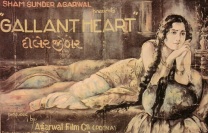 time
when they have at least secured a single regular monthly slot for
silent film, what will be the reaction to another poorly attended event.
At the very least, a hasty switch to a smaller screen as happened with
Gallant Hearts (1931) in January or, more
seriously, a reappraisal of the very wisdom of screening even this low
number of silent films because they don’t appear to pull in sufficient
time
when they have at least secured a single regular monthly slot for
silent film, what will be the reaction to another poorly attended event.
At the very least, a hasty switch to a smaller screen as happened with
Gallant Hearts (1931) in January or, more
seriously, a reappraisal of the very wisdom of screening even this low
number of silent films because they don’t appear to pull in sufficient  audiences.
Without wishing to apportion blame, its hard not to take the BFI to task on this as they appear to operate in something of a scheduling vacuum. Dates for the KenBio Festival have been widely available since at least last November. And its not like the BFI haven’t got previous form for such a clash. Their late scheduling of The  Informer (1929) as the silent film highlight of the 2016 London Film Festival was in direct competition with the Barbican’s screening of The Adventures of Robin Hood (1922) with live full orchestral accompaniment which had been widely publicised for almost a year in advance.
Whichever venue we choose to attend on the afternoon of 11 March, it will be deeply frustrating to think that barely two miles away is another silent film being screened which we may well never get the chance to see again. Wouldn’t it be nice to think that someone would come up with some sort of silent film calendar to help avoid this happening again in the future…..
8 January
 New Regular Silent Film Screenings At Genesis And The Palace. Its always nice to see silent film screenings become a regular event at new venues and
  particularly
if they come with live musical accompaniment. So its doubly nice to
get news of not just one but two such new regular events. In December,
the venerable Palace Cinema in Broadstairs, Kent put on a screening of Keaton’s The General (Dir. Buster Keaton/Clyde Bruckman,US, 1926) with live piano accompaniment from the excellent Lillian Henley. This was a taster for a regular silent film slot at The Palace
in 2018. Screenings will take place on the afternoon of the last
Sunday of each month. Screenings begin in January although we don’t yet
have a first title. Meanwhile, at the Genesis Cinema in London, following a successful screening last year of The Cabinet of Dr Caligari (Dir. Robert
particularly
if they come with live musical accompaniment. So its doubly nice to
get news of not just one but two such new regular events. In December,
the venerable Palace Cinema in Broadstairs, Kent put on a screening of Keaton’s The General (Dir. Buster Keaton/Clyde Bruckman,US, 1926) with live piano accompaniment from the excellent Lillian Henley. This was a taster for a regular silent film slot at The Palace
in 2018. Screenings will take place on the afternoon of the last
Sunday of each month. Screenings begin in January although we don’t yet
have a first title. Meanwhile, at the Genesis Cinema in London, following a successful screening last year of The Cabinet of Dr Caligari (Dir. Robert 
 Wiene, 1920) with live accompaniment by electro-improvisational group Grok, they have now secured a regular monthly slot at the cinema and will be accompanying Hitchcock’s first thriller The Lodger: A Story of the London Fog (Dir. Alfred Hitchcock, UK, 1927) in January, the somewhat bizarre Lon Chaney vehicle The Unknown (Dir. Tod Browning, US, 1927) in February, the beautiful and lyrical Earth (Dir. Oleksandr Dovzhenko, USSR, 1930) in March and Eisenstein’s masterpiece Battleship Potemkin (Dir. Sergei Eisenstein,USSR, 1925) in April. Details of all of these screenings at Genesis and The Palace will of course be available on the listings pages of silentfilmcalendar.org.
21 November
 Silent Film Festival Planning Up t’North Those good people at the Yorkshire Silent Film Festival are
beavering away to get everything in place for next year’s festival.
This kicks off on May 8 2018 with a Gala opening and runs for the rest
of the month at venues across the county. Screening locations already
include Leeds, Sheffield, York, Hull, Scarborough, Hebden Bridge,
Settle, Ossett, Kettlewell, Leyburn with more due to be added. Since
its inception in 2016 the festival has already become firmly established
on the silent film fixture list and the 2018 event is aiming to build
on the previous two year’s successes. As with previous years, the
festival is likely to include a mix of the popular, the renowned and the
more obscure (but no less interesting) film titles. The films will be
accompanied by live music from a host of nationally and internationally
known musicians together with pianist and festival organiser Jonny
Best.
Silent Film Festival Planning Up t’North Those good people at the Yorkshire Silent Film Festival are
beavering away to get everything in place for next year’s festival.
This kicks off on May 8 2018 with a Gala opening and runs for the rest
of the month at venues across the county. Screening locations already
include Leeds, Sheffield, York, Hull, Scarborough, Hebden Bridge,
Settle, Ossett, Kettlewell, Leyburn with more due to be added. Since
its inception in 2016 the festival has already become firmly established
on the silent film fixture list and the 2018 event is aiming to build
on the previous two year’s successes. As with previous years, the
festival is likely to include a mix of the popular, the renowned and the
more obscure (but no less interesting) film titles. The films will be
accompanied by live music from a host of nationally and internationally
known musicians together with pianist and festival organiser Jonny
Best.
Watch out for more details of the festival as we get them and check out the festival website Here
20 November
Oh to be in Berlin – Weimar Cinema Revisited. For fans of Weimar cinema – and lets face it, that’s pretty much all of us – the 2018 Berlin International Film Festival looks to be a must see event. The reason is, the festival ‘Retrospective’ strand will be focusing on cinema of the Weimar era, showcasing a programme of 28 narrative, documentary, and short films made between 1918 and 1933. The films to be screened will be categorised under three broad themes, the ‘exotic’, the ‘everyday’ and history.
Amongst screenings already announced are;
Im Auto durch zwei Welten (In the Car Through Two Worlds, 1931) a documentary by Swede Carl Axel Söderström about his and Clärenore Stinnes’ 1927-31 round the world car journey.
Menschen im Busch (People
In The Bush, 1930), an early example of ethnographic cinema in which
Friedrich Dalsheim and Gulla Pfeffer observe the unspectacular daily
life of a family in Togo, breaking new  ground by allowing the subjects themselves to speak instead of relying entirely on off-camera narration.
Brothers (1929) (image, right) a silent drama from director Werner Hochbaum focusing upon a poor working class family amidst Hamburg’s 1896/97 dockworkers’ strike and featuring a largely amateur cast.
The retrospective will feature first
screenings of films newly restored by leading German archives and film
institutions including mountaineering epic Fight for  the Matterhorn (Mario Bonnard, Nunzio Malasomma, 1928), Robert Reinert’s monumental Opium (1919), as well as a two-part film long thought lost, Urban Gad’s Christian Wahnschaffe (Part 1: World Afire, 1920, Part 2: The Escape from the Golden Prison, 1921), based on the 1919 Jakob Wassermann novel ‘The World’s
  Illusion’.
The emphasis in the retrospective will be on lesser known titles from the era with other screenings including Der Favorit der Königin (Dir. Franz Seitz, Sr.,1922), The Adventure of Thea Roland (Dir. Hermann Kosterlitz, 1932) and The Docks of Hamburg (Die Carmen von St. Pauli, Dir. Erich Waschneck, 1928).
Most of the silent film screenings will be accompanied by live music from internationally renowned musicians including the UK’s own Stephen Horne while well known German musician Gunter Buchwald will be celebrating 40 years as a silent film accompanist in 2018.
The festival runs from 15 -25 February 2018, so get booking those tickets now. Further details Here
16 October
 Cinema Museum Under Threat! Shock
news comes of an imminent threat to the future of London’s Cinema
Museum. The museum is a one-off treasure trove of cinematic delights.
It receives no public funding and has something of a perennial
hand-to-mouth existence but it
Cinema Museum Under Threat! Shock
news comes of an imminent threat to the future of London’s Cinema
Museum. The museum is a one-off treasure trove of cinematic delights.
It receives no public funding and has something of a perennial
hand-to-mouth existence but it  remains
the only museum in Britain dedicated to all aspects of the history of
cinema and is just too important to be lost for the sake of another
featureless housing development.
remains
the only museum in Britain dedicated to all aspects of the history of
cinema and is just too important to be lost for the sake of another
featureless housing development.
Based for the past 19 years in the old
Lambeth Workhouse, the former home to Charlie Chaplin, his brother and
mother, the Cinema Museum houses a priceless collection of historic
cinema artefacts including films, over a million movie stills, thousands
of books, magazines going back to the 1900s and a huge range of rare
and historically important cinema equipment. They provide essential
training  and
resources to universities/students studying film, cinema, media and
communications via this unprecedented archive of material. The Cinema
Museum hosts a wide range of regular cinema and other media related
gatherings and events, frequently attracting world renowned guests. It
also provides extensive well-being services for elderly, disabled, LGBT
and other culturally and socially marginalised members of the community.
The collection’s owners want to gift a substantial proportion of their
collection to the Nation via the charitable vehicle
and
resources to universities/students studying film, cinema, media and
communications via this unprecedented archive of material. The Cinema
Museum hosts a wide range of regular cinema and other media related
gatherings and events, frequently attracting world renowned guests. It
also provides extensive well-being services for elderly, disabled, LGBT
and other culturally and socially marginalised members of the community.
The collection’s owners want to gift a substantial proportion of their
collection to the Nation via the charitable vehicle  of
The Cinema Museum – once their permanent home is secured. Sadly, it
seems that these services and the opportunity for this gift may now be
lost forever.
of
The Cinema Museum – once their permanent home is secured. Sadly, it
seems that these services and the opportunity for this gift may now be
lost forever.
The Cinema Museum landlords over
this time have been South London & Maudsley NHS Foundation Trust.
The museum has always paid market rent and frequently delivered therapy
projects and hosted events for the hospital free of charge. Over the
past 10 years South London & Maudsley Hospital Trust had agreed to
let the Museum charity purchase its home, to secure its future once the
hospital was ready to sell. The Museum paid for valuations, found
partners,  secured
funding and as agreed awaited the sale. However, the hospital has now
changed its mind at the last minute, denying that there was ever any
agreement with the Cinema Museum. They are now refusing to sell to the
Museum, insisting on it being sold on the open market with a view to a
fast sale. This leaves the Cinema Museum facing closure within
months and the South London & Maudsley Hospital Trust have even said
they will make the imminent lease expiry (March 2018) a feature of
their marketing materiel.
secured
funding and as agreed awaited the sale. However, the hospital has now
changed its mind at the last minute, denying that there was ever any
agreement with the Cinema Museum. They are now refusing to sell to the
Museum, insisting on it being sold on the open market with a view to a
fast sale. This leaves the Cinema Museum facing closure within
months and the South London & Maudsley Hospital Trust have even said
they will make the imminent lease expiry (March 2018) a feature of
their marketing materiel.
On 17 October a petition was started to help bring pressure on the NHS Foundation to revert to its previous promise to sell the building to the Cinema Museum. You can add your signature Here
To find out more or show your further support, contact the Cinema Museum at martin@cinemamuseum.org.uk or on twitter @CinemaMuseum or on FacebookHere
15 October
Some good silent film news for Orcadians.
Scotland’s Orkney Isles may perhaps not be the best place to live if
you have an abiding interest in silent film with live musical
accompaniment, but the next couple of weeks at least will be something
of a boon. On 21st October there will be a screening in Stromness of  By the Law (Dir
. Lev Kuleshov,USSR, 1926) legendary Russian director Lev
Kuleshov’s adaption of a short story by Jack London, fashioning a tense,
existential study of moral pressure… in effect a pared-back Soviet
By the Law (Dir
. Lev Kuleshov,USSR, 1926) legendary Russian director Lev
Kuleshov’s adaption of a short story by Jack London, fashioning a tense,
existential study of moral pressure… in effect a pared-back Soviet  Western. The
film will be accompanied by multi-award-winning Scottish musician,
singer and song-writer R.M. Hubbert (aka Hubby) performing his brand new
guitar score, commissioned this year by the Hippodrome Silent Film
Festival. Then in November there will be two screenings of director
Anthony Asquith’s wonderful A Cottage on Dartmoor (Dir. Anthony Asquith, UK, 1929), the first in St Margaret’s Hope on 4th November and the second the following day in Hoy. The film is a tale of love and revenge set in the bleak
Western. The
film will be accompanied by multi-award-winning Scottish musician,
singer and song-writer R.M. Hubbert (aka Hubby) performing his brand new
guitar score, commissioned this year by the Hippodrome Silent Film
Festival. Then in November there will be two screenings of director
Anthony Asquith’s wonderful A Cottage on Dartmoor (Dir. Anthony Asquith, UK, 1929), the first in St Margaret’s Hope on 4th November and the second the following day in Hoy. The film is a tale of love and revenge set in the bleak 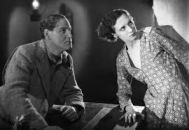 landscape of Dartmoor , one of the last British films
  of
the silent era and a virtuoso piece of film-making. Both screenings
will be introduced by Laraine Porter of De Montford University and
accompanied live by renowned silent film musician Stephen Horne.
of
the silent era and a virtuoso piece of film-making. Both screenings
will be introduced by Laraine Porter of De Montford University and
accompanied live by renowned silent film musician Stephen Horne.
Full details of these screenings in the October and November listings pages ofsilentfilmcalendar.org.
15 October
Some silent thrills for Halloween As the nights draw in and Halloween looms, silent film programmers across the country are doing their best to crank  up the scares and thrills as the witching hour approaches. On 26th October, perennial horror favourite Nosferatu ((Dir. F W Murnau, Ger, 1922) screens at LSO St Lukes in London with live accompaniment from
  musicians The Cabinet of Living Cinema. Acclaimed silent film accompanists Minima will be playing along to shocker Phantom of the Opera (Dir. Rupert Julian, USA, 1925) at Bristol’s Wardrobe Theatre on 27th and 28th October. Meanwhile, the unsettling expressionist classic The Cabinet of Dr
 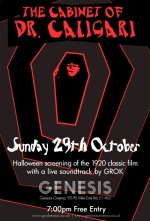 Caligari (Robert
Wiene, Ger, 1920) is being screened at Sheffield’s Abbeydale Picture
House on 27 October with music by the excellent Jonathan Best (piano)
Trevor Bartlett (percussion) and Sam Gillies (electronics) and also at
the Genesis Cinema in London on 29 October with music by experimental
and improvisational group Grok. Finally, on Halloween
Caligari (Robert
Wiene, Ger, 1920) is being screened at Sheffield’s Abbeydale Picture
House on 27 October with music by the excellent Jonathan Best (piano)
Trevor Bartlett (percussion) and Sam Gillies (electronics) and also at
the Genesis Cinema in London on 29 October with music by experimental
and improvisational group Grok. Finally, on Halloween  itself (31 Oct) the rarely seen but superb Haxan: Witchcraft Through the Ages
( (Dir. Benjamin Christensen, Swe., 1922) will be screened at the
Phoenix Cinema in East Finchley. A fictionalized documentary with
dramatic reconstructions documenting the evolution of witchcraft, it
will be accompanied by live narration of the Swedish inter-titles by
Reece Shearsmith (The League of Gentlemen, High Rise, A Field in
England) while renowned silent film musician Stephen Horne. will be
providing live musical accompaniment.
itself (31 Oct) the rarely seen but superb Haxan: Witchcraft Through the Ages
( (Dir. Benjamin Christensen, Swe., 1922) will be screened at the
Phoenix Cinema in East Finchley. A fictionalized documentary with
dramatic reconstructions documenting the evolution of witchcraft, it
will be accompanied by live narration of the Swedish inter-titles by
Reece Shearsmith (The League of Gentlemen, High Rise, A Field in
England) while renowned silent film musician Stephen Horne. will be
providing live musical accompaniment.
Full details of all of these screenings can be found in the October page of silentfilmcalendar.org or Click here
11 September
 A Soviet Western With Live Music By Hubby. Do
you like westerns? Of course you do. Well what about Soviet westerns?
If you haven’t seen such a thing then you could be in for a treat this
autumn, because By the Law (Po Zakonu) is just such a film and its being
A Soviet Western With Live Music By Hubby. Do
you like westerns? Of course you do. Well what about Soviet westerns?
If you haven’t seen such a thing then you could be in for a treat this
autumn, because By the Law (Po Zakonu) is just such a film and its being  screened across Scotland with live guitar accompaniment by Scottish singer/song-writer R M Hubbert (aka ‘Hubby’).
Based on ‘The Unexpected’ a story by Jack London and directed by legendary Soviet film director Lev Kuleshov
in 1926, it tells the story of three Yukon gold prospectors holed up in
a cabin over the winter– one driven to murder by greed, the other two
wrestling with whether to wait for the snow and ice to thaw and go for
the authorities or to take the law into their own hands. Its a a claustrophobic drama of raw
power, combining naturalism and the grotesque, realism and melodrama. R
M Hubbert is a multi-award-winning Scottish performer who will be
accompanying the film with his own score, commissioned especially for
the film by the the Hippodrome Silent Film Festival in
Bo’Ness. The film will be screened in Inverness, Orkney, Shetland,
Glasgow, Edinburgh, Anstruther and Dunoon from the middle of September
onwards. Full details as always in silentfilmcalendar’org’s listing pages.
take the law into their own hands. Its a a claustrophobic drama of raw
power, combining naturalism and the grotesque, realism and melodrama. R
M Hubbert is a multi-award-winning Scottish performer who will be
accompanying the film with his own score, commissioned especially for
the film by the the Hippodrome Silent Film Festival in
Bo’Ness. The film will be screened in Inverness, Orkney, Shetland,
Glasgow, Edinburgh, Anstruther and Dunoon from the middle of September
onwards. Full details as always in silentfilmcalendar’org’s listing pages.
25 August
 A Big Screen Cinema Release for Fritz Lang’s Metropolis. After last year’s successful cinema screenings across the country for Abel Gance’s epic Napoleon (1927), followed by the nationwide cinema release given by distributors Eureka Video this year to Fritz Lang’s early but little known work Der Mude Tod (1921) news now comes that Eureka have
  decided to give Lang’s 1927 classic Metropolis its own cinema release to mark the 90th anniversary of the film’s original screening.
With its dizzying depiction of a futuristic cityscape and alluring female robot, Metropolis needs
absolutely no introduction and is among the most famous of all German
films and the mother of science-fiction cinema (an influence on Blade Runner (1982) and Star Wars (1977),
among countless other films). With jaw-dropping production values,
iconic imagery, and modernist grandeur – it was described by Luis Buñuel
as “a captivating symphony of movement” – the 
 film remains as powerful as ever, and the cinema remains to only place to appreciate it in all its glory.
Screenings announced in England so far include London, Brighton, Manchester, Halifax, York, Norwich, Brighton and Oswestry as well as Bo’Ness and Edinburgh in Scotland. Several of the screenings come with live musical accompaniment. Further screenings are to be announced with full details available here and of course within silentfilmcalendar.org’s listing pages.
11 August
First Programme Details of British Silent Film Festival Announced. Details
have just been released of the programme highlights for this year’s
British Silent Film Festival, due to take place at the Phoenix Cinema in Leicester from 13-17 September. The Festival begins with an Edgar Allan  Poe programme at
the wonderfully atmospheric St Mary de Castro Church with live music
played on the church organ. The horror theme is picked up with Carl Dreyer’s Vampyr with Minima performing their highly acclaimed music score live.
Poe programme at
the wonderfully atmospheric St Mary de Castro Church with live music
played on the church organ. The horror theme is picked up with Carl Dreyer’s Vampyr with Minima performing their highly acclaimed music score live.
Britain’s most popular female star of the 1920s, Betty Balfour features in two  comedies A Sister of Six (Die sieben Töchter der Frau Gyurkovics), recently rediscovered in Sweden and Paradise set on the Cote d’Azure. Other comedies include a P.G. Wodehouse golf programme with readings from broadcaster Neil Brand and the rare Cocktails featuring
  1920s favourites now forgotten, Pat and Patachon. The hilarious Hand’s Up is a must see comedy set in the American Civil War featuring the fabulous comedian Raymond Griffiths.
The hypnotic and lyrical qualities of silent film with live music are explored in our ‘slow silents’ programme of 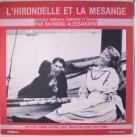 barge and canal films including the beautiful and touching L’Hirondelle et la Mesange set on two barges as they travel through a France recently devastated by WWI.
All silent films will be accompanied by leading silent cinema musicians including Neil Brand, Stephen Horne, Philip Carli, John Sweeney and joined by Elizabeth-Jane Baldry on Harp.
Full programme details will be included in silentfilmcalendar.org as soon as they are released. Further details of the festival can be found on Twitter @BritishSilentFF and (VERY reasonably priced) tickets can be purchased Here.
2 August
 The Dark Corners of Weimar in Dublin Wow,
this almost slipped under our radar but we’ve just spotted a cracking
good silent film season being screened at the Irish Film Institute in
Dublin
The Dark Corners of Weimar in Dublin Wow,
this almost slipped under our radar but we’ve just spotted a cracking
good silent film season being screened at the Irish Film Institute in
Dublin  throughout August. Entitled Dark Corners: Cinema of the Weimar Republic,
the season comprises an excellent collection of silents (and a couple
of talkies) made during the years of the German Weimar Republic from
1919-33. Despite the significant political and economic difficulties
Germany encountered during this period it was also a time of great
cultural creativity. Cinema in particular flourished, as a generation of
film-makers evolved whose technical and narrative
throughout August. Entitled Dark Corners: Cinema of the Weimar Republic,
the season comprises an excellent collection of silents (and a couple
of talkies) made during the years of the German Weimar Republic from
1919-33. Despite the significant political and economic difficulties
Germany encountered during this period it was also a time of great
cultural creativity. Cinema in particular flourished, as a generation of
film-makers evolved whose technical and narrative  innovations marked this as a critical period in cinematic development.
Although
nearly all of the most significant directors of this era are
represented, it is nice to see that one or two of their lesser known
films are given a somewhat rare outing, rather than just their best
known efforts. Thus from Lang we get the excellent Frau im Mond (1929) rather than Metropolis and from Murnau comes Faust (1926) rather than Caligari. There is a chance to see Lotte Reiniger’s feature length animation The Adventures of Prince Achmed (1926) and Ruttman’s classic Berlin:  Symphony of a Great City (1927). There is a little known Lubitsch, The Wild Cat (1921) and Dupont’s stunning Variety (1925). The talkies
  include Pabst’s first sound film, the little known but recently re-released Westfront 1918 (1930) and Leontine Sagan’s cult classic Madchen in Uniform (1931).
A number of the films are being shown in 16mm and 35mm versions and several come with live musical accompaniment. There will also be a concluding discussion on Weimar cinema on 27 August, led by Stefan Drößler, the Director of the Munich Film Museum. All in all, a great month to be in Dublin. Full details are in silentfilmcalendar.org’s August listing pages.
26 July
 Silents at the Scalarama. The
annual Scalarama Film Festival, which is due to take place at venues
across the country throughout September, includes this year a varied and
interesting selection of silent films. There are at least a dozen
opportunities in London and nationwide to see
Silents at the Scalarama. The
annual Scalarama Film Festival, which is due to take place at venues
across the country throughout September, includes this year a varied and
interesting selection of silent films. There are at least a dozen
opportunities in London and nationwide to see 
 director Alex Barrett’s London Symphony,
a 2017 addition to the genre of silent ‘City Symphony’ films. If you
are lucky to be in West Yorkshire this is being complemented by the
screening of two classics from the same genre, Berlin: Symphony of a Great City (Dir. Walter Ruttman, Ger, 1927) in Leeds and Man With A Movie Camera (Dir. Dziga Vertov, USSR, 1929) in Hebden Bridge. Also in Yorkshire, there is a screening of Pudovkin’s classic The End of St. Petersburg (Dir. Vsevolod Pudovkin, USSR, 1927) in Leeds and Metropolis (Dir.
Fritz Lang, 1927) in Halifax. Lang’s dystopian masterpiece will also
be screened in Brighton while in Bristol there will be an evening of
early colourised
director Alex Barrett’s London Symphony,
a 2017 addition to the genre of silent ‘City Symphony’ films. If you
are lucky to be in West Yorkshire this is being complemented by the
screening of two classics from the same genre, Berlin: Symphony of a Great City (Dir. Walter Ruttman, Ger, 1927) in Leeds and Man With A Movie Camera (Dir. Dziga Vertov, USSR, 1929) in Hebden Bridge. Also in Yorkshire, there is a screening of Pudovkin’s classic The End of St. Petersburg (Dir. Vsevolod Pudovkin, USSR, 1927) in Leeds and Metropolis (Dir.
Fritz Lang, 1927) in Halifax. Lang’s dystopian masterpiece will also
be screened in Brighton while in Bristol there will be an evening of
early colourised  silent
films together with a bit of a booze up to celebrate film pioneer
William Friese-Green’s birth which will be accompanied by a selection of
films inspired by his work. Last but by no means least, the epic
Indian/German co-production A Throw Of
silent
films together with a bit of a booze up to celebrate film pioneer
William Friese-Green’s birth which will be accompanied by a selection of
films inspired by his work. Last but by no means least, the epic
Indian/German co-production A Throw Of  Dice (Dir. Franz Osten,1929) is due to be screened at a railway station in Liverpool!
In another
positive development, several of these films are being screened with
live musical accompaniment. The final programme for Scalarama has not
yet been fixed so there may be some further silent sceenings to be
added. Details of all the existing and any further screenings can be
found in the September listings section of silentfilmcalendar.org.
25 July
 Classic British Silent Comedy Coming to BFI We wouldn’t normally use the news spot on silentfilmcalendar.org
to highlight just a single showing of one silent film, preferring
instead to leave that to our listings pages. But this has to be an
exception. In September, BFI Southbank is showing, for one night only, a
true classic of British silent comedy, Not For Sale (Dir.
W P Kellino, 1924). ‘But I’ve never heard of that film’ we hear you
all cry. Of course you haven’t. Normally it is locked deep in the
bowels of the BFI’s National Film Archive, never to see the light of
day, not on the BFI-player, not on DVD and certainly not ‘coming soon to
a screen near you’! But very rarely this film manages to escape,
although you have to be quick to catch it before it is consigned back to
its underground lair.
Classic British Silent Comedy Coming to BFI We wouldn’t normally use the news spot on silentfilmcalendar.org
to highlight just a single showing of one silent film, preferring
instead to leave that to our listings pages. But this has to be an
exception. In September, BFI Southbank is showing, for one night only, a
true classic of British silent comedy, Not For Sale (Dir.
W P Kellino, 1924). ‘But I’ve never heard of that film’ we hear you
all cry. Of course you haven’t. Normally it is locked deep in the
bowels of the BFI’s National Film Archive, never to see the light of
day, not on the BFI-player, not on DVD and certainly not ‘coming soon to
a screen near you’! But very rarely this film manages to escape,
although you have to be quick to catch it before it is consigned back to
its underground lair.
The film
tells the story of a spoiled young aristocrat (Ian Hunter), cut off
without a penny by his exasperated father and thereby forced to fend for
himself. He finds accommodation in a Bloomsbury boarding house run by
impoverished but attractive landlady Annie (Mary Odette, image left), who already has to cope with a house full of dysfunctional tenants, not to mention her devilish  little
brother and stagestruck sister. Will love ever flourish on such a
rocky path? We saw this film at the British Silent Film Festival in
Leicester in 2015 and it didn’t so much have people chuckling in their
seats as rolling in the aisles. But so it should have done given the
pedigree of cast and crew.
little
brother and stagestruck sister. Will love ever flourish on such a
rocky path? We saw this film at the British Silent Film Festival in
Leicester in 2015 and it didn’t so much have people chuckling in their
seats as rolling in the aisles. But so it should have done given the
pedigree of cast and crew.
Screenwriter
Lydia Hayward was responsible for adapting many of the W W Jacobs
stories directed by her one time husband H Manning Haynes. A regular
feature at Kennington Bioscope festivals, these films (such as The Skipper’s Wooing (1922),  Head of the Family (1922, image right) and The Boatswain’s Mate (1924)) are just a sheer joy to watch. Not For Sale director
Will Kellino was a former circus acrobat but had developed a sound
reputation for screen comedy direction well before this film was made.
Cast leads Hunter and Odette work well together but it is the
supporting cast of silent British character acting stalwarts that make
the film such a delight, including a young (-ish) Moore Marriot long
before he became the grizzled Harbottle in many of Will Hay’s best
films.
Head of the Family (1922, image right) and The Boatswain’s Mate (1924)) are just a sheer joy to watch. Not For Sale director
Will Kellino was a former circus acrobat but had developed a sound
reputation for screen comedy direction well before this film was made.
Cast leads Hunter and Odette work well together but it is the
supporting cast of silent British character acting stalwarts that make
the film such a delight, including a young (-ish) Moore Marriot long
before he became the grizzled Harbottle in many of Will Hay’s best
films.
Not For Sale screens on 24 September at BFI Southbank’s Screen 3 so book your seats now. It may be the only chance you ever get to see this classic.
21 July
 Help fund the screening of a Japanese silent classic. How do you fancy helping to fund not only a silent classic but also kick off a whole new Japanese film festival. The Japanese Avant-garde and Experimental Film Festival (JAEFF) is a new venture aiming to draw connections between classic 20th century Japanese Avant-garde Cinema and
  contemporary Japanese experimental film-making. For its launch event they are hoping to screen Teinosuke Kinugasa’s 1926 silent classic Kurutta Ippēji (A Page of Madness)
Considered
lost for some 45 years, Kinugasa thankfully found the print in his
garden shed in the early 1970s. Set in a psychiatric hospital, A Page of Madness is
a visually stunning, and technically dazzling work of surrealism. The
film contained no intertitles as it was intended to be exhibited with
live narration delivered by a  benshi who would stand to the side of the screen and introduce and relate the story to the audience.
The JAEFF hope to screen the film in London on 24 September (the 91st anniversary of the film’s theatrical release) . The plan is to screen a 35mm copy of the film with narration by an authentic Japanese benshi and live musical accompaniment by traditional Japanese musicians. But as with all such projects, funding is an issue. So they’ve launched a modest crowdfunding appeal to raise funds to fly in the film, the benshi and the musicians from Japan. If you’d like to contribute or simply find out a bit more click here.
20 July
 Classic Silents With Live Music At The Hippodrome. Those good folk at the Hippodrome Cinema in Bo’ness, responsible for bringing us HippFest,
Scotland’s only festival of silent film, have put together a short
series of classic silent films for the Autumn under the title ‘Taste of Silents’ all of which will be screened with live musical accompaniment. Kicking the series
Classic Silents With Live Music At The Hippodrome. Those good folk at the Hippodrome Cinema in Bo’ness, responsible for bringing us HippFest,
Scotland’s only festival of silent film, have put together a short
series of classic silent films for the Autumn under the title ‘Taste of Silents’ all of which will be screened with live musical accompaniment. Kicking the series  off is Fritz Lange’s science fiction classic Metropolis (Dir. Fritz Lange, Ger, 1927).
This
stunning, landmark film is a dark vision of a futuristic city, divided
between its upper-class, living luxuriously in skyscrapers high above
ground, and a working-class endlessly toiling in squalor below the
city. A major influence on Ridley Scott’s ‘Blade Runner’, George Lucas’
‘Star Wars’, as well as pop culture – referenced by Madonna, Beyoncé,
Janelle Monáe and countless others – Metropolis is  amongst the most iconic films of all time, a cinema classic which has more than stood the test of time.
The film will be screened in its fully restored, 2010 version and musical accompaniment will be provided by DJ Vangelis Makriyannakis with a soundscape drawn from the vaults of kraut-electronica, industrial, minimalist electronics & post-rock. The film will be screened on 2 September.
Other films to be shown in this series are the haunting romantic drama Sunrise (Dir. F W Murnau, US, 1927) Harold Lloyd’s breath-taking, clock-face-hanging comedy Safety Last (Dir. Fred C Newmeyer/Sam Taylor, US, 1923) and Hitchcock’s suspenseful thriller Blackmail (Dir. Alfred Hitchcock, GB. 1929).
See silentfilmcalendar.org’s listings pages for further details as soon as we get them.
3 July
KenBio ‘Silent Laughter Saturday’ and Autumn Programme Make sure that you mark  down 11 November in your diaries as that is when the Kennington Bioscope will be staging its second ‘Silent Laughter Saturday’.
The disappointing news is that they are reverting to their 2015 format
of just a single day, unlike the silent laughter weekend held last
year. But the good news is
down 11 November in your diaries as that is when the Kennington Bioscope will be staging its second ‘Silent Laughter Saturday’.
The disappointing news is that they are reverting to their 2015 format
of just a single day, unlike the silent laughter weekend held last
year. But the good news is  that
the programme still looks to be packed with goodies. As usual,
acclaimed film historian Kevin Brownlow will be in attendance,
introducing some of the screenings, including one said to be amongst
Harold Lloyd’s personal favourites from his feature-length films, The Kid Brother (1927). In the film, Lloyd plays mild-mannered Harold Hickory, a feeble boy in an otherwise brawny family. When money goes
that
the programme still looks to be packed with goodies. As usual,
acclaimed film historian Kevin Brownlow will be in attendance,
introducing some of the screenings, including one said to be amongst
Harold Lloyd’s personal favourites from his feature-length films, The Kid Brother (1927). In the film, Lloyd plays mild-mannered Harold Hickory, a feeble boy in an otherwise brawny family. When money goes  missing
and his father gets the blame, Harold has to use guile rather than
muscle to find the real culprits and get the girl. Subject to
confirmation, they also hope to present Max Linder’s rare 1919 French
feature Le Petit Café in which Max plays a waiter who
inherits two million francs. But he can’t quit his job because his
uncle’s old servant has schemed with the cafe’s owner to get a cut of
the money by binding him to a contract — Max must work at the cafe for
20 years; if he quits, he forfeits the inheritance. Another highlight
will be the presence of American author and historian Anthony Slide, giving a talk – with clips – about the brilliant but sadly neglected comedienne Alice Howell,
one of only a handful of silent comediennes who ventured into the
“men’s terrain” of rough-house physical comedy and whose comedic skill
was compared to that of Chaplin and Linder.
missing
and his father gets the blame, Harold has to use guile rather than
muscle to find the real culprits and get the girl. Subject to
confirmation, they also hope to present Max Linder’s rare 1919 French
feature Le Petit Café in which Max plays a waiter who
inherits two million francs. But he can’t quit his job because his
uncle’s old servant has schemed with the cafe’s owner to get a cut of
the money by binding him to a contract — Max must work at the cafe for
20 years; if he quits, he forfeits the inheritance. Another highlight
will be the presence of American author and historian Anthony Slide, giving a talk – with clips – about the brilliant but sadly neglected comedienne Alice Howell,
one of only a handful of silent comediennes who ventured into the
“men’s terrain” of rough-house physical comedy and whose comedic skill
was compared to that of Chaplin and Linder.
 As well as their Silent Comedy Saturday, we also now have a first peak (subject to confirmation) at the regular Kennington
  Bioscope autumn programme. Screenings between September and December will include ; The Goose Woman (1925) a Clarence Brown directed drama with Louise Dresser; Filibus (1915) a
fantastic sounding Italian adventure story directed by Mario
Roncoroni about a mysterious sky pirate, Cristina Ruspoli, who makes
daring heists with her technologically advanced airship; Underworld (1927) a von Sternberg directed crime drama with George Bancroft and Evelyn Brent; The Last of the Mohicans (1920) an
early adaption of the Fenimore-Cooper novel directed by Clarence Brown
and Maurice Tourneur and starring Wallace Beery; Pavement Butterfly
Bioscope autumn programme. Screenings between September and December will include ; The Goose Woman (1925) a Clarence Brown directed drama with Louise Dresser; Filibus (1915) a
fantastic sounding Italian adventure story directed by Mario
Roncoroni about a mysterious sky pirate, Cristina Ruspoli, who makes
daring heists with her technologically advanced airship; Underworld (1927) a von Sternberg directed crime drama with George Bancroft and Evelyn Brent; The Last of the Mohicans (1920) an
early adaption of the Fenimore-Cooper novel directed by Clarence Brown
and Maurice Tourneur and starring Wallace Beery; Pavement Butterfly  (aka Großstadtschmetterling) (1929) an Anglo-German drama directed by Richard Eichberg and starring the wonderful Anna May Wong and finally, Miss Bluebeard (1925) a comedy directed by Frank Tuttle and starring Bebe Daniels (who was last seen at Ken Bio in the excellent Feel My Pulse
(1928)). All in all a pretty high quality programme with some real
rarities, almost looking forward to the autumn nights drawing in and the
programme kicking off. Further details in the listing pages as soon as
we get them.
(aka Großstadtschmetterling) (1929) an Anglo-German drama directed by Richard Eichberg and starring the wonderful Anna May Wong and finally, Miss Bluebeard (1925) a comedy directed by Frank Tuttle and starring Bebe Daniels (who was last seen at Ken Bio in the excellent Feel My Pulse
(1928)). All in all a pretty high quality programme with some real
rarities, almost looking forward to the autumn nights drawing in and the
programme kicking off. Further details in the listing pages as soon as
we get them.
6 June
 June Turning into Der Müde Tod -Fest Month! Full marks to Eureka Video for their bold decision to give a cinema release to the newly-restored version of Fritz Lange’s early work Der Müde Tod (1921).
Whilst this film has often been overlooked even amongst Lange’s earlier
work, it is a work rich in expressionist imagery and featuring
innovative special effects. It has been hugely influential, with
directors such as Alfred Hitchcock, Ingmar Bergman and Luis Buñuel
citing it as a direct influence on their own work. And the good news is
that cinemas have not been slow in taking up the opportunity to screen
the film, many of them planning to show it over multiple days. The
June Turning into Der Müde Tod -Fest Month! Full marks to Eureka Video for their bold decision to give a cinema release to the newly-restored version of Fritz Lange’s early work Der Müde Tod (1921).
Whilst this film has often been overlooked even amongst Lange’s earlier
work, it is a work rich in expressionist imagery and featuring
innovative special effects. It has been hugely influential, with
directors such as Alfred Hitchcock, Ingmar Bergman and Luis Buñuel
citing it as a direct influence on their own work. And the good news is
that cinemas have not been slow in taking up the opportunity to screen
the film, many of them planning to show it over multiple days. The  film
opened on 4 June at the Curzon Soho in London but goes on wider release
both in London and across the country from 9 June.
film
opened on 4 June at the Curzon Soho in London but goes on wider release
both in London and across the country from 9 June.
The result is that we already have over sixty screenings  scheduled for Der Müde Tod
in June alone with more to come in the following month. And while such
a release may not perhaps rival your average Hollywood blockbuster it
is nevertheless fairly amazing for a film made almost a hundred years
ago. Here’s hoping that it proves a success and, along with last year’s
equally successful cinema release for Able Gance’s Napoleon (1927), sets a further precedent for the wider scale cinema release of other silent films.
scheduled for Der Müde Tod
in June alone with more to come in the following month. And while such
a release may not perhaps rival your average Hollywood blockbuster it
is nevertheless fairly amazing for a film made almost a hundred years
ago. Here’s hoping that it proves a success and, along with last year’s
equally successful cinema release for Able Gance’s Napoleon (1927), sets a further precedent for the wider scale cinema release of other silent films.
Full details of these screenings are in silentfilmcalendar.org’s listing pages.
2 June
 Blue Plaque Unveiling for Charlie (and Sydney) Chaplin. On
14 June, English Heritage will unveil a blue plaque at Glenshaw
Mansions on Brixton Road to commemorate the time that brothers Charlie
and Sydney Chaplin spent living there between 1908 and 1910. All are
welcome at the unveiling at 2pm and are encouraged to
Blue Plaque Unveiling for Charlie (and Sydney) Chaplin. On
14 June, English Heritage will unveil a blue plaque at Glenshaw
Mansions on Brixton Road to commemorate the time that brothers Charlie
and Sydney Chaplin spent living there between 1908 and 1910. All are
welcome at the unveiling at 2pm and are encouraged to  dress
up as Chaplin’s iconic Tramp character. The unveiling will be followed
by a special screening of three of Chaplin’s short films. Comedian Paul
Merton will introduce Kid Auto Races at Venice (1914), The Pawnshop (1916) and A Dog’s Life
(1918) at the Ritzy Cinema in Brixton. The first two films will feature
live accompaniment. Full details of these screenings are in silentfilmcalendar.org’s June listing page
dress
up as Chaplin’s iconic Tramp character. The unveiling will be followed
by a special screening of three of Chaplin’s short films. Comedian Paul
Merton will introduce Kid Auto Races at Venice (1914), The Pawnshop (1916) and A Dog’s Life
(1918) at the Ritzy Cinema in Brixton. The first two films will feature
live accompaniment. Full details of these screenings are in silentfilmcalendar.org’s June listing page
24 May
 A Couple of Ukrainian Silent Rarities in Town. Ukrainian
silent films are a bit like London buses, you wait ages for one and
then two show up almost at once. But, hey, who’s complaining when both
are rarely seen pieces. Over the next couple of weeks, the Ukrainian Institute in London is putting on events to mark A Century of Ukrainian Revolutions: 1917-2017. Included
in these will be the screening of two little known silent films, both
made in 1929 in what was then the Ukrainian Republic of the USSR.
A Couple of Ukrainian Silent Rarities in Town. Ukrainian
silent films are a bit like London buses, you wait ages for one and
then two show up almost at once. But, hey, who’s complaining when both
are rarely seen pieces. Over the next couple of weeks, the Ukrainian Institute in London is putting on events to mark A Century of Ukrainian Revolutions: 1917-2017. Included
in these will be the screening of two little known silent films, both
made in 1929 in what was then the Ukrainian Republic of the USSR.
 The first of these, Shkurnik (aka A Profiteer, aka The Self-Seeker) (Dir. Nikolai Shpikovsky, Ukr/USSR, 1929) is being screened on 30 May.
It is virtually unknown in the West and charts the efforts of an
opportunistic Kiev resident to avoid the unrest of civil war and yet
still prosper under Bolshevik rule. Being a biting satire on the Soviet
propaganda the film was quickly banned by the Soviet authorities.
The first of these, Shkurnik (aka A Profiteer, aka The Self-Seeker) (Dir. Nikolai Shpikovsky, Ukr/USSR, 1929) is being screened on 30 May.
It is virtually unknown in the West and charts the efforts of an
opportunistic Kiev resident to avoid the unrest of civil war and yet
still prosper under Bolshevik rule. Being a biting satire on the Soviet
propaganda the film was quickly banned by the Soviet authorities.
 The second film, due to be screened on 7 June, is In Spring
(Dir. Mikhail Kaufman, Ukr/USSR, 1929) This was Kaufman’s first solo
project after creative differences forced a split with his brother Dziga
Vertov following their collaborative work on Man with A Movie Camera
(1929). The film takes the form of a cinematic poem to the arrival of
spring in nature as well as a new era in society and offers a rare
glimpse of everyday life in the Soviet Ukraine during the New Economic
Policy era and the Soviet “indigenisation” programme.
The second film, due to be screened on 7 June, is In Spring
(Dir. Mikhail Kaufman, Ukr/USSR, 1929) This was Kaufman’s first solo
project after creative differences forced a split with his brother Dziga
Vertov following their collaborative work on Man with A Movie Camera
(1929). The film takes the form of a cinematic poem to the arrival of
spring in nature as well as a new era in society and offers a rare
glimpse of everyday life in the Soviet Ukraine during the New Economic
Policy era and the Soviet “indigenisation” programme.
Both films will be accompanied by interesting looking lectures. Shkurnik comes with Slavic Studies academic Professor Mark von Hagen speaking on ‘Why the Ukrainian Revolution Matters for Historians of the  Russian Revolutions’ while In Spring is accompanied by Stanislav Menzelevskyi, a Programme Director from the Oleksandr Dovzhenko National Centre which is the centre for the preservation and restoration of, and research into, Ukrainian film history.
Full details of both screenings can be found in silentfilmcalendar.org’s listing pages.
23 May
 That Rare Thing, A Brand New Silent Film. Yes, on 3rd
September a brand new silent film is set for release. And not only is
the film being released in London but it is also a celebration of
London. The film is London Symphony (Dir. Alex Barrett, UK, 2017) and is a contemporary take on the ‘city symphony’, a genre of creative non-fiction film that
That Rare Thing, A Brand New Silent Film. Yes, on 3rd
September a brand new silent film is set for release. And not only is
the film being released in London but it is also a celebration of
London. The film is London Symphony (Dir. Alex Barrett, UK, 2017) and is a contemporary take on the ‘city symphony’, a genre of creative non-fiction film that  flourished in the 1920s and that sought to present poetic portraits of city life. Examples include Manhatta (Dir. Charles Sheeler, US, 1921, image left) featuring Manhattan and Rien que les Heures (aka Nothing but the Hours)
(Dir. Alberto Cavalcanti, Fr, 1926) focusing on Paris. Such films
often took a strongly avant-garde or experimental approach, for example
in Rain (Dir. Mannus Franken/Joris Ivens, Neth, 1929, image right) with the depiction of rainstorms in Amsterdam and the
flourished in the 1920s and that sought to present poetic portraits of city life. Examples include Manhatta (Dir. Charles Sheeler, US, 1921, image left) featuring Manhattan and Rien que les Heures (aka Nothing but the Hours)
(Dir. Alberto Cavalcanti, Fr, 1926) focusing on Paris. Such films
often took a strongly avant-garde or experimental approach, for example
in Rain (Dir. Mannus Franken/Joris Ivens, Neth, 1929, image right) with the depiction of rainstorms in Amsterdam and the  unfurling of umbrellas presenting an almost cubist image while Man with A Movie Camera (Dir. Dziga Vertov, USSR, 1929) and its depiction of Moscow and Odessa was a veritable showcase for experimental film-making
  techniques. For an interesting write-up on the city symphony genre, see sensesofcinema.com. Perhaps the most famous of these city symphonies was Berlin: Symphony of a Metropolis (Dir. Walter Ruttman, Ger, 1927) and it is in homage to this film that director Alex Barrett has chosen to time the release of London Symphony to coincide with the 90th anniversary of the first screening of Ruttmann’s film.
On the 3rd of September London Symphony will be screened at the Barbican as part of that venue’s ‘Silent Film and Live Music’ series. The film will be accompanied by the premier of a newly composed score by composer James McWilliam, performed by the Orchestra of St Paul‘s led by conductor Ben Palmer. There will also be a screening at the Cinema Museum in Lambeth on 29th September after-which the film will tour around a number of carefully selected venues throughout the UK, including conventional cinema spaces and alternative spaces such as a parish church and a Buddhist meditation centre. The film will also be released internationally later in the year through distributors Flicker Alley.
Full details of all London Symphony screenings will of course be detailed in silentfilmcalendar.org
17 May
 An Actual Opera House Screening for Phantom of the Opera (1925). Yes, Rupert Julian’s 1925 shocker, Phantom of the Opera, starring that master of disguise Lon Chaney is to be screened later this year in an actual opera
  house. And not just any old opera house, but at one of the grandest operatic venues of all, the London Coliseum, home of the English National Opera. Although not the first film adaption of Gaston Leroux’s 1910 novel Le Fantôme de l’Opéra (that
honour goes to a 1916 Danish version directed by Ernst Matray and now
considered a lost film) Julian’s 1925 version remains the standard by
which others are judged. Forget the tepid Lloyd Weber musical, the
laughable 1962 Hammer reworking with Herbert Lom or even the hopelessly
un-scary 1943 Hollywood effort with Claude Rains, it is Chaney that
gives
house. And not just any old opera house, but at one of the grandest operatic venues of all, the London Coliseum, home of the English National Opera. Although not the first film adaption of Gaston Leroux’s 1910 novel Le Fantôme de l’Opéra (that
honour goes to a 1916 Danish version directed by Ernst Matray and now
considered a lost film) Julian’s 1925 version remains the standard by
which others are judged. Forget the tepid Lloyd Weber musical, the
laughable 1962 Hammer reworking with Herbert Lom or even the hopelessly
un-scary 1943 Hollywood effort with Claude Rains, it is Chaney that
gives  the
phantom real menace. Universal producer Carl Laemmle was apparently
hooked on first reading Leroux’s novel during a visit to Paris and
immediately brought the rights. No expense was spared during the film’s
production, including
the
phantom real menace. Universal producer Carl Laemmle was apparently
hooked on first reading Leroux’s novel during a visit to Paris and
immediately brought the rights. No expense was spared during the film’s
production, including  the
construction of a 5000-seat opera house on the Universal set (which
survived until 2014). But despite the big budget, the film suffered not
one but two disastrous preview screenings, each resulting in a change
of director, re-shooting of scenes and re-editing, with Lois Weber
eventually having a major input to the final look of the film which
subsequently proved a box-office and critical success.
the
construction of a 5000-seat opera house on the Universal set (which
survived until 2014). But despite the big budget, the film suffered not
one but two disastrous preview screenings, each resulting in a change
of director, re-shooting of scenes and re-editing, with Lois Weber
eventually having a major input to the final look of the film which
subsequently proved a box-office and critical success.
 But the screening of Phantom of the Opera
at the London Coliseum is just half the story. The film is also to be
accompanied by the world premiere of a new score, written by jazz
musician and composer Roy Budd and performed by the Docklands Sinfonia Orchestra, conducted by Spencer Down. Roy Budd was a world-renowned composer with some 40 film scores to his name including Soldier
But the screening of Phantom of the Opera
at the London Coliseum is just half the story. The film is also to be
accompanied by the world premiere of a new score, written by jazz
musician and composer Roy Budd and performed by the Docklands Sinfonia Orchestra, conducted by Spencer Down. Roy Budd was a world-renowned composer with some 40 film scores to his name including Soldier  Blue (1970), Get Carter (1971), Man at the Top (1973), Wild Geese (1978). Producing a new score for Phantom of the Opera
was a long-cherished project which also saw him acquire and restore a
35mm print of the film. He completed a full orchestral score for the
film using an 84-piece orchestra and recorded this with the Luxembourg
Symphony Orchestra. In 1993, with five weeks to go before a London
premiere and European tour, Roy Budd suffered a brain haemorrhage and
passed away at just 46 years of age.
Blue (1970), Get Carter (1971), Man at the Top (1973), Wild Geese (1978). Producing a new score for Phantom of the Opera
was a long-cherished project which also saw him acquire and restore a
35mm print of the film. He completed a full orchestral score for the
film using an 84-piece orchestra and recorded this with the Luxembourg
Symphony Orchestra. In 1993, with five weeks to go before a London
premiere and European tour, Roy Budd suffered a brain haemorrhage and
passed away at just 46 years of age.
 Now,
24 years later The London Coliseum will host the first ever live
performance of the new score accompanying the film. According to those
that have heard it, it is arguably Budd’s greatest achievement: a grand
soundtrack for full orchestra with several themes and leitmotifs that
pay tribute to the great composers of the concert hall and screen, while
at the same time unmistakably the work of its inspired creator.
Now,
24 years later The London Coliseum will host the first ever live
performance of the new score accompanying the film. According to those
that have heard it, it is arguably Budd’s greatest achievement: a grand
soundtrack for full orchestra with several themes and leitmotifs that
pay tribute to the great composers of the concert hall and screen, while
at the same time unmistakably the work of its inspired creator.
You will be able to judge for yourself when the Phantom of the Opera and its new score are premiered on 8 October this year (Details here). Our only niggle is that screening the film in an opera house is inevitably accompanied by opera house pricing. So, for those unable to afford £112 for a seat in the stalls, it is to be hoped that this screening will eventually be followed by a release on disc.
16 May
 Half Time at The Yorkshire Silent Film Festival. It
looks like this year’s Yorkshire Silent Film Festival is shaping up to
surpass last year’s inaugural event. The opening night screening of
Hitchcock’s The Lodger (1926, left) featuring the world premiere of a new score composed by Neil Brand got
Half Time at The Yorkshire Silent Film Festival. It
looks like this year’s Yorkshire Silent Film Festival is shaping up to
surpass last year’s inaugural event. The opening night screening of
Hitchcock’s The Lodger (1926, left) featuring the world premiere of a new score composed by Neil Brand got  excellent reviews (see here) as did the rest of the first weekend of screenings at the Abbeydale Cinema in Sheffield (see here). Other notable screenings during the first half of the festival included Boris Barnet’s superb comedy Girl With A Hat Box (1927) with the sublime Anna Sten (right), the somewhat more bizarre Man Without Desire (1923) with
  Ivor Novello, that original Hollywood epic Ben Hur (1925) and the one I really regretted not being able to get up to Yorkshire to see, Dragnet Girl (1933), Japanese director Ozu’s film noir gangster
  classic (left) screened with a new harp score by Elizabeth Jane Baldry.
The second half of the month offers a second chance to catch up with some of these classics (but sadly no second chance for Dragnet Girl!) as well as offering some superb new screenings including another classic Barnet comedy, The House on Trubnaya (1928), the rarely screened British thriller The Four Just Men (1921), and the equally rare Danish melodrama  The Golden Clown (1926) before concluding with The Woman Men Desire (1929), with Marlene Dietrich (right) perfecting her femme fatale persona well in advance of her appearing in Sternberg’s The Blue Angel (1930).
Full details of all Yorkshire Silent Film Festival screenings can be found here
30 April
 Der Müde Tod (1921) – Screening Details Revealed Back in February, we reported that restoration of the 1921 Fritz Lange film Der Müde Tod (aka Destiny, aka Behind the Wall)
had been completed and, as well as a DVD/Blu-Ray release, the film was
going on release at UK and Irish cinemas. Details of the cinema
screenings have now been released. The film will be screened at the Curzon Soho for one night only on June 4 and will then go on wider release on 9 June at the BFI Southbank (for 14 days), Curzon Bloomsbury (for 7 days), Home Manchester (for 7 days), Filmhouse
Der Müde Tod (1921) – Screening Details Revealed Back in February, we reported that restoration of the 1921 Fritz Lange film Der Müde Tod (aka Destiny, aka Behind the Wall)
had been completed and, as well as a DVD/Blu-Ray release, the film was
going on release at UK and Irish cinemas. Details of the cinema
screenings have now been released. The film will be screened at the Curzon Soho for one night only on June 4 and will then go on wider release on 9 June at the BFI Southbank (for 14 days), Curzon Bloomsbury (for 7 days), Home Manchester (for 7 days), Filmhouse 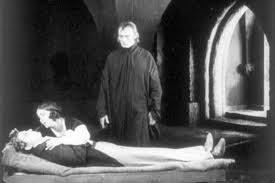 Edinburgh (for 4 days) and at the Film Theatre, Glasgow and the Irish Film Institute, Dublin (for a period to be confirmed).
Although Lange is probably better known for his later cinematic masterpieces such as Metropolis (1927), Spione (1928) and M (1931), while Der Müde Tod
has often been overlooked even amongst his earlier work, it is a film
rich in expressionist imagery and featuring innovative special effects
work. It has been hugely influential, with directors such as Alfred
Hitchcock, Ingmar Bergman and Luis Buñuel citing it as a direct
influence on their own work. As a result, this release provides a
welcome opportunity for a wider audience to catch up with what has until
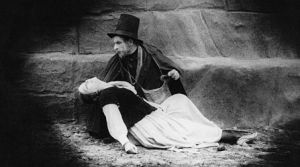 now
been a little seen but important example of Lange’s work. The only
somewhat disappointing aspect is the BFI Screening. Although the film
will be shown some 30 times over 14 days, all of the screenings will be
in the smaller NFT2 or 3 screens or in the tiny Studio screen. Its a
shame that they couldn’t have found even just a single slot in NFT1 to
show the film on a big screen or even laid on at least one screening
with live musical accompaniment rather than having to rely on the
recorded soundtrack for every showing. Something of a missed
opportunity!
now
been a little seen but important example of Lange’s work. The only
somewhat disappointing aspect is the BFI Screening. Although the film
will be shown some 30 times over 14 days, all of the screenings will be
in the smaller NFT2 or 3 screens or in the tiny Studio screen. Its a
shame that they couldn’t have found even just a single slot in NFT1 to
show the film on a big screen or even laid on at least one screening
with live musical accompaniment rather than having to rely on the
recorded soundtrack for every showing. Something of a missed
opportunity!
Full details of all the screenings are in silentfilmcalendar.org‘s listings pages.
21 April
 London’s Hollywood E17 – Blue Plaque Unveiling 1st May Just a quick reminder that if you want to be a part of some film history in the making then head along to Walthamstow on 1st May when actor Paul McGann (Withnail & I, Doctor Who, The Monocled Mutineer) will be unveiling a blue plaque at the site of the former Precision Film Studios. The unveiling will take plae at Noon on 1st May
in Wood Street Walthamstow, now Beuleigh Court, Wood Street E17 3PA and
situated on the junction of Wood Street and Lea Bridge Road, close to
the Whipps Cross roundabout.
London’s Hollywood E17 – Blue Plaque Unveiling 1st May Just a quick reminder that if you want to be a part of some film history in the making then head along to Walthamstow on 1st May when actor Paul McGann (Withnail & I, Doctor Who, The Monocled Mutineer) will be unveiling a blue plaque at the site of the former Precision Film Studios. The unveiling will take plae at Noon on 1st May
in Wood Street Walthamstow, now Beuleigh Court, Wood Street E17 3PA and
situated on the junction of Wood Street and Lea Bridge Road, close to
the Whipps Cross roundabout.
Precision Studios was a pioneer of the British film industry in the early part of the last century. Between 1910 and 1926, 400 silent films were made by four film studios in Walthamstow , including the 1916 classic The Battle of the Somme. Many important actors first appeared in Walthamstow films including Victor Mclaglen, a John Ford stalwart who went on to win an Oscar for his role in The Informer and the famous Hollywood star Ronald Colman also launched his career was at Broadwest films.
17 April
KenBio Silent Film Weekend – Programme Details The third annual Kennington Bioscope Silent Film Weekend is scheduled to take place on 10-11 June at the Cinema Museum in Lambeth, London. Details of the provisional programme have just been released  and as is the KenBio’s tradition the line-up focuses upon the rare, the unusual and the infrequently screened.
Highlights of the Saturday programme include; Are Parents People (Dir. Mal St. Clair, 1925) a Betty Bronson comedy in which she tries to prevent her  parent’s divorce by giving them something bigger to worry about; Grass: A Nation’s Battle for Life (Dir. Cooper/ Schoedsack , 1925) a Nanook of the North style anthropological/travelogue documentary about rural life in Iran; Maria Marten (Dir. Walter West, 1928) an oft-filmed story based upon the real life Red Barn murder case of the 1920s; and The Wonderful Lies of Nina Petrovna (Dir. Hanns Schwarz, 1929) a little-seen German
 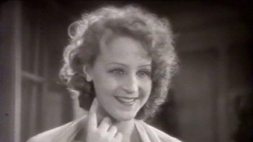 romantic melodrama with Metropolis star Brigitte Helm (left). Also being screened are French shorts from Renoir, Clair and Dulac, together with an early Walt Disney cartoon The Four Musicians of Bremen from 1922.
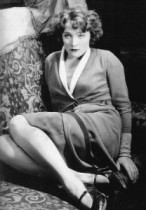 The Sunday programme includes; The Safety Curtain (Dir. Sidney A. Franklin, 1919) a romantic melodrama of epic proportions starring Norma Talmadge; Kipps (Dir. Harold Shaw, 1921) an early adaption of the H G Wells novel; The Three Lovers (Dir. Curtis Bernhard, 1929) starring Marlene Dietrich (right) at her femme fatale best; Feel My Pulse
(Dir. Gregory La Cava, 1926) a sparkling comedy about an inherited
health sanatorium and rum-runners starring Bebe Daniels and William
Powell; and The Unholy Three (Dir. Tod Browning 1925) a seriously odd film
The Sunday programme includes; The Safety Curtain (Dir. Sidney A. Franklin, 1919) a romantic melodrama of epic proportions starring Norma Talmadge; Kipps (Dir. Harold Shaw, 1921) an early adaption of the H G Wells novel; The Three Lovers (Dir. Curtis Bernhard, 1929) starring Marlene Dietrich (right) at her femme fatale best; Feel My Pulse
(Dir. Gregory La Cava, 1926) a sparkling comedy about an inherited
health sanatorium and rum-runners starring Bebe Daniels and William
Powell; and The Unholy Three (Dir. Tod Browning 1925) a seriously odd film  about a crime trio (left)
comprising ventriloquist, circus strongman and midget who set about
selling parrots, it naturally stars Lon Chaney! Also being screened are a
series of comedy shorts featuring female stars Florence Turner, Henny
Porten and Viola Dana.
about a crime trio (left)
comprising ventriloquist, circus strongman and midget who set about
selling parrots, it naturally stars Lon Chaney! Also being screened are a
series of comedy shorts featuring female stars Florence Turner, Henny
Porten and Viola Dana.
As always with the KenBio, the emphasis will be on 35/16mm projection, with films coming from both the BFI and Kevin Brownlow’s own collection. Kevin will also be providing the introductions along with Tony Fletcher and the BFI’s Bryony Dixon. The films with have live piano accompaniment by the country’s leading silent film musicians. All in all, a weekend to look forward too. Watch out for full details appearing shortly on our listings pages.
1 April
 Yorkshire Silent Film Festival – 2017 Programme. Full programme details have now been released for the second annual Yorkshire Silent Film Festival.
Building on the success of last year’s event, this year’s programme
features 37 screenings spread across the county throughout the month of
May. The various screenings include both British and international
pictures, comedies, melodramas, thrillers and animation. As well as
popular
Yorkshire Silent Film Festival – 2017 Programme. Full programme details have now been released for the second annual Yorkshire Silent Film Festival.
Building on the success of last year’s event, this year’s programme
features 37 screenings spread across the county throughout the month of
May. The various screenings include both British and international
pictures, comedies, melodramas, thrillers and animation. As well as
popular  classics, there are a number of little seen titles getting a rare outing. British thrillers Blackmail (1929) and The Lodger (1927) are to the fore. Hollywood gets a look-in with the likes of Ben Hur (1925), Chicago
 (1927) and 7th Heaven (1927) while Gilbert and Garbo also feature in Flesh and the Devil (1926) and Buster Keaton is represented by Sherlock Jr (1924) and The Cameraman (1928). But of perhaps more interest are some of the rarities. Japanese master director Yasujiro Ozu’s classic crime drama Dragnet Girl
  (1933) gets a rare screening as do two simply delightful comedies from Russian director Boris Barnet, Girl With A Hat Box (1927) and House on Trubnaya (1928), both of which are just a joy to watch. A little known but apparently well-regarded Danish
  melodrama The Golden Clown (1926) looks particularly intriguing while a newly re-edited and restored print of Behind The Door
(1919), possibly the ‘darkest’ silent film you will ever see, gets only
its third UK screening. And there is much else besides.
melodrama The Golden Clown (1926) looks particularly intriguing while a newly re-edited and restored print of Behind The Door
(1919), possibly the ‘darkest’ silent film you will ever see, gets only
its third UK screening. And there is much else besides.
As with last year the emphasis will be on screenings of 35mm prints and all of the films come with live musical accompaniment from a range of top-notch accompanists. So clearly May is a great month to be in Yorkshire but even if you can’t get to see everything there is at least something to see for everyone here. Full programme details can be found at the festival website here or on the silentfilmcalendar.org May listing page here.
9 March
A Silent Marathon At The Flatpack Festival Details have now been revealed of further silent film screenings scheduled for this year’s Flatpack Film Festival in Birmingham, running from 4-9 April. Screenings already announced include a look at the work of Spanish film pioneer Segundo de Chomon whose quite brilliant films have been largely overshadowed by those of his better known contemporary Georges Méliès as well as Around China With A Movie Camera, a compilation of some of the oldest surviving film shot in China – much of it unseen for 115 years. Newly announced additions to the programme include that rarity, a modern silent called The Red Turtle, a beautifully drawn wordless animation. Also being screened is the Frank Borzage directed drama Lucky Star with Charles Farrell and Janet Gaynor. Long thought lost a copy of the film was rediscovered in the 1990s. There is also a modern documentary, entitled Minute Bodies, on the work of Percy Smith an early nature documentary film-maker who from 1909 pioneered the use of time lapse and micro cinematography. But the most intriguing event is a screening of the 1923 French film serial House of Mystery, all 383 minutes of it. The plot is pure melodrama: a mill owner is framed for murder, escapes from a penal colony, and spends years trying to clear his name, while the real killer woos his wife. As well as all of the usual action and suspense, the serial has the time to delve into sophisticated character development and is also beautifully shot. It stars silent movie hunk Ivan Mosjoukine, probably best known for the title role in the 1926 epic Michel Strogoff. Live piano accompaniment for the whole six and a half hour marathon will be provided by renowned silent film accompanist John Sweeney. Full details of all silent screenings at the festival can be foundHere
1 March
British Silent Film Festival Symposium Details Programme details have just been released for this year’s British Silent Film Festival Symposium, due to take place at King’s College, London on 6-7 April. Intended to complement the Silent Film Festival itself, the symposium presents an opportunity for scholars, archivists and enthusiasts to consider the achievements and the key debates brought to light by the festival, and to discuss the new directions that future research may take. The full symposium programme can be viewed here and speakers will include the BFI’s Bryony Dixon, Silent London’s Pamela Hutchinson, Author Ellen Cheshire and film academics and historians including Laraine Porter, Tony Fletcher and Geoff Brown. As well as shorter film clips used to highlight presentations there will also be three more substantive films screened during the symposium; A Lowland Cinderella (Dir. Sidney Morgan, 1921) starring Joan Morgan in a romance set in Scotland but filmed on the English south coast; The Unsleeping Eye (Dir. Alexander Macdonald, 1928) an adventure film shot by a Scottish production company; and, A Light Woman (Dir. Adrian Brunel, 1928) which was previously thought lost, but has now been discovered in a truncated home-market version. It is likely that the films will be screened with live musical accompaniment but no details are yet available. Further details of the films being screened can be found on silentfilmcalendar.org’s listings pages.
28 February
London Film Festival Archive Gala Presentation Announced The BFI’s National Archive announced this morning that the film to be presented as the Archive Gala event at this year’s 61st London Film Festival will be the 1928 Indian/British/German silent co-production Shiraz. The film will be screened on 14th October at the Barbican accompanied by a live performance of a specially commissioned score by the Indian composer and sitar player Anoushka Shankar. The early announcement of this screening is a welcome development and should help avoid a repeat of last year’s LFF gala event which was scheduled late in the year and clashed with the Barbican’s own long-planned principal annual silent film screening.
Based on a play by Indian author Niranjan Pal, Shiraz tells the fictionalised love story of the 17th-century princess who inspired the construction of the Taj Mahal. It was directed by Germany’s Franz Osten, one of at least 17 films he made in India between 1925 and 1939, best known of which are The Light of Asia (1925) and A Throw of Dice (1929). The film was photographed entirely on location in India and all the actors are Indian although the crew were mostly German. Upon its release Shiraz was a considerable critical and popular success. Find out more atsilentfilm.org. The film’s producer and leading man, Himansu Rai, along with Pal and Osten subsequently became major influences in Indian filmmaking with the formation of the Bombay Talkies film studios in 1934.
The restoration and screening of Shiraz is part of a wider season of Indian films scheduled for screening at the BFI which is, in turn, part of the UK India Year of Culture, a celebration of the long-standing relationship between the UK and India. As part of this festival, Shiraz will also be released in India including a screening with live musical accompaniment at the Taj Mahal itself. Additionally the BFI will also release some 300 newly digitised films that were shot in India during the early 20th century, including the oldest surviving footage of India on film from 1899, on the BFI player with a highlights collection available for cinema and DVD release as a companion piece to last year’s Around China With A Movie Camera compilation.
24 February
Cowgirls at the Kennington Bioscope If you’re a regular reader of our news page you’ll already know of the forthcoming Kennington Bioscope Silent Western Saturday, due to take place on March 11 and featuring films such as Thundering Hoofs (1924), The Narrow Trail (1917) and The Winning of Barbara Worth (1926). But news comes now of a fascinating additional item on the programme, Women Out West, a look at some early cowgirl stars of the silent era as selected by Michelle from @best2vilmabanky. Featuring prominently in this presentation will be the wonderfully named Texas Guinan. Born in Waco, Texas in 1884 Mary Louise Cecilia Guinan initially found work as a singer, dancer and vaudeville star but, with the arrival of the movies the now self-renamed Texas Guinan achieved national acclaim as “The Queen of the West” or even “The Female William S. Hart” , eventually making some 36 mainly b-westerns. But as her film career faded Texas Guinan was to achieve even greater notoriety as New York’s “Queen of the Nightclubs”, happily flouting America’s prohibition laws with a string of up-market nightclubs and leading to long-running and highly publicised battles with the police and licensing authorities. But much of Guinan’s true life story was obscured by her own self-inflated publicity campaign. So we will leave it to Michelle to try and disentangle the story from the legend. Further details and tickets for the Kennington Bioscope Silent Western Saturday are availablehere .
23 February
Remembering Britain’s First Purpose Built Film Studios On 1 May you can have the chance to take part in a bit of film history with the unveiling of a Waltham Forest Heritage Blue Plaque on the site of the first purpose built film studio in Britain. The Precision Film Studio was opened in 1910 on Wood Street in Walthamstow by UK film pioneers the Gobbert Brothers. A number of other studios subsequently opened in the same neighbourhood making this area an important early hub for UK film production and distribution. However it was to be a short-lived presence as newer and bigger rival studios came to dominate and sadly virtually all of the studiobuildings in Walthamstow have long been demolished. A campaign to recognise the importance of this area of London to the early British film industry was championed by local film director and scriptwriter Barry Bliss. The Blue Plaque will be unveiled at midday on 1 May by actor Paul McGann (Withnail & I, Doctor Who, The Monocled Mutineer) at the studio’s former location on the junction of Wood Street and Lea Bridge Road.
22 February
Silents at the Flatpack Festival First programme details of Birmingham’s Flatpack Film Festival have now been released. The festival runs at venues across the city from 4-11 April and features a small but interesting selection of silent film events. There are two silent events scheduled so far. The first is a selection of works by Spanish film pioneer Segundo de Chomon. His work has often been overshadowed by his contemporary Georges Méliès, but is arguably just as brilliant. This event has the added bonus of being held in Birmingham’s Grand Hotel. Closed since 2002, this may be the last chance to explore the hotel’s historic Grosvenor Suite before the refurbished Grand re-opens to paying customers. The second event is entitled Around China With A Movie Camera and explores 50 years of Chinese history through an extraordinary collection of rare and beautiful travelogues, newsreels and home movies from the archives of the British Film Institute including what could well be the oldest surviving film shot in China – unseen for 115 years. The footage will be accompanied by a five-piece band brought together by Midlands based composer Ruth Chan. Full details of these screenings and other silent film screenings at the Flatpack Festival can be found on the April 2017 page of silentfilmcalendar.org
9 February
Cinema Release For Another Silent Film Classic If the recent theatrical re-release of a beautifully restored version of Able Gance’s epic Napoleon achieved nothing else (other, that is, than giving a lot of people a lot of enjoyment) it may have convinced both film distributors and cinema operators that there is a viable audience for re-released silent films. Because news now comes that Eureka Entertainment have announced not only the release of a newly restored version of Fritz Lange’s 1921 classic Der Müde Tod (aka Destiny, aka Behind the Wall) on BluRay and DVD but also a theatrical release of the film in cinemas across Britain and Ireland. Lange (image, left) is probably better known for his later cinematic masterpieces such as Metropolis (1927), Spione (1928) and M (1931) and Der Müde Tod (literally The Weary Death) has often been overlooked even amongst Lang’s earlier work but it is a film rich in expressionist imagery and featuring innovative special effects work. It has been hugely influential, with directors such as Alfred Hitchcock, Ingmar Bergman and Luis Buñuel citing it as a direct influence on their own work
In the film, a young woman (Lil Dagover) confronts the personification of Death (Bernhard Goetzke), in an effort to save the life of her fiancé (Walter Janssen). Death weaves three romantic tragedies and offers to unite the girl with her lover, if she can prevent the death of the lovers in at least one of the episodes. Thus begin three exotic scenarios of ill-fated love, in which the woman must somehow reverse the course of destiny: Persia, Renaissance Venice, and a fancifully rendered ancient China.
The new restoration of Der Müde Tod by Anke Wilkening on behalf of the Friedrich-Wilhelm-Murnau-Stiftung preserves the original German intertitles and simulates the historic colour tinting and toning of its initial release. The film is accompanied by a recently-composed score by Cornelius Schwehr as a commissioned composition by ZDF / ARTE which was originally performed by the 70-member Berlin Rundfunk Symphony Orchestra under the direction of conductor Frank Strobel, at Berlinale 2016. Der müde Tod will be released in selected cinemas nationwide (UK & Ireland) and on Digital HD from 9 June 2017. There are already plans to screen the film in London, Manchester, Edinburgh, Glasgow and Dublin. Full details on these and further screenings will appear in silentfilmcalendar.co.uk as soon as they are confirmed.
8 February
Silent Film Listings in Ireland What’s this, silentfilmcalendar.org going all international? No, not really, just expanding our borders a little to include listings of silent films being screened in the Republic of Ireland. We don’t often get to hear about silent film screenings in Ireland but one we recently came across looked particularly fascinating which is what prompted us to expand our coverage just this little bit. On 19 March St Patrick’s Cathedral in Dublin is hosting a presentation by the Irish Film Institure of silent films with an Irish theme made by the Kalem Film Company of New York , including The Lad From Old Ireland, the first film made by a US company outside America. The company, fondly referred to as The O’Kalems, first came to Ireland in 1910 and during several visits over the following years made almost 30 films there. An excellent introduction to the story of the Kalem Company in Ireland can be found at irishamerica.com . Most of Kalem’s films in Ireland were directed by Toronto-born Sidney Olcott (image below, right), (seesidneyolcott.com– in French), using a small, stock cast usually centred around Gene Gauntier (image left) and Jack J Clark. The films being screened on 19 March include The Lad From Old Ireland (Sidney Olcott, 1910) , You Remember Ellen (Dir. Sidney Olcott, 1912) and The Colleen Bawn (Sidney Olcott, 1911) Details on all of them can be found at an excellent Trinity College, Dublin websitehereand all of the films are accompanied by an original score by Bernard Reilly, commissioned for the 2014 Kerry Film Festival, and performed live by the Irish CineTheatre Ensemble. Further details of the 19 March screening can be foundhereand if you know of any other silent films being screened in Ireland, let us know so we can include them in our silentfilmcalendar.org listings.
8 February
Festivals, Festivals and More Festivals There are plenty of opportunities coming up to see silent films at festivals across the country. First up, the Hippodrome Festival of Silent Film (HippFest) at Bo’Ness in Scotland has just released full details of its programme. The festival runs from 22-26 March. Highlights include the little-seen Nell Shipman wilderness drama The Grub Stake (1923), the BFI’s recently restored print of The Informer (1929), Conrad Veidt in the classic Hands of Orlac (1924), the little known Chinese silent superstar Ruan Lingyu in The Goddess (1934), a Soviet ‘western’ By The Law (1926) and a cracking good Marion Davis comedy The Patsy (1928). There are also some interesting looking illustrated discussions on women in silent film, both in the West and in China as well as the usual cache of silent comedies. The festival finishes with that old favourite Chicago (1927). Familiar faces providing film accompaniment include Stephen Horne, John Sweeney, Frank Bockius and Gunter Buchwald while musicians making their festival debut include Netherlands’ Filmorchestra The Sprockets and multi-award-winning, post-rock, Scottish composer and song-writer R.M. Hubbert (aka Hubby). Oh, and remember that the Hippodrome Cinema is still looking to purchase a new piano for its silent screenings. You can help by contributinghere.
Next up is the Fashion in Film Festival, a biennial event now in its tenth year, which takes place across London from 11-26 March. The festival features a number of silent films including Soviet science fiction classic Aelita (1924) with its visually stunning sets and costumes and the recently rediscovered Beyond The Rocks (1922) featuring two of the biggest stars of the silent screen, Gloria Swanson and Rudolph Valentino in what remains the only film where the pair appeared together. She plays a habitual clotheshorse, showcasing numerous glamorous gowns, while he cuts a picture of elegance in a wardrobe designed by his then-lover Natacha Rambova. Both films feature live accompaniment from Stephen Horne. Also of note is a linked exhibition featuring a number of short, silent films made between 1909 and 1920 to highlight aspects of fashion and dress. In order to meet all of its festival targets, Fashion in Film has launched a fund-raiser on Kickstarter and in return is offering some excellent gifts including various subscriptions to MUBI, the curated online cinema, showing cult, classic, independent, and award-winning movies. You can contributehere.
Last but not least, the fifteenth annual Borderlines Film Festival runs in the Shropshire, Hereford and Marches areas from 24 February to 12 March. Silent films being screened at the festival include the Keaton classic The General (1926), Danish silent screen superstar Asta Nielsen in Hamlet (1921), probably the best (albeit rather loose) silent screen adaption of a Shakespeare play, and Shoes (1916) a key film from little known female silent film pioneer Lois Weber. Live musical accompaniment for these screenings will be provided by Paul Shallcross, Lillian Henley and John Sweeney respectively. There will also be another chance to catch up with Able Gance’s classic Napoleon (1927) featuring Carl Davis’ recorded score.
Full details of all of these screenings can be found in the silentfilmcalendar.org monthly listings pages.
6 February
First Re-Discovered Silent of the Year? The EYE Film Institute in the Netherlands has announced the rediscovery of what is thought to be one of the oldest extant Hungarian silent films, A Munkászubbony(aka The Work Jacket). Directed by Istvan Brody and originally released in 1915, the film had been thought lost for decades. The re-discovery is particularly important given that only a tiny handful of films from Hungary’s silent film era survive, many of which are incomplete or damaged. Little is known of the plot of A Munkászubbony but it will now be sent to the Hungarian National Film Archives’ collection, where, once restored and digitalized, it will be re-released. Find out morehere.
25 January
British Silent Film Festival 2017 Dates have just been announced for the 19th British Silent Film Festival which is due to take place on 14th – 17th September. The venue will once again be the Phoenix Cinema in Leicester which is great news given their superb hosting of the last festival in 2015. There are no details yet as to the programme but, based on previous festivals, we can expect some real treats, all screened with live musical accompaniment from the foremost national and international silent film accompanists. We’ll be adding full details to our listings as soon as we hear more.
15 January
Silent Films Down Under Although we’re primarily a UK focused listing site its always nice to see silentfilmcalendar.org picking up a few more followers overseas. In Australia there certainly seems to be a bustling silent film scene, in the Sydney area at least. The Australia’s Silent Film Festival group are responsible for screening a broad range of mainstream as well as lesser known silent films in the city, throughout the year. For example, on 4th February they are putting on a day of silents including Chaplin’s Dough and Dynamite (1914), Harold Lloyd’s Number Please (1920), Charley Chase in Innocent Husbands (1925) and the Max Linder classic Seven Years Bad Luck (1921). The highpoint of the evening is the Australian premier of a new, digitally restored version of The Phantom of the Opera (1925). All of the films are screened with live musical accompaniment. On 12th February they are putting on a trio of Chaplin shorts, on March 8th (International Women’s Day) they’re showing Lois Weber’s Where Are My Children (1916) and further screenings include Berlin: Symphony For A City (1927), The Moth of Moonbi (1926) and The Ghost That Never Returns (1930). Find out more about their activitieshere .
14 January
Silent Western Saturday At The KenBio Those bad hombres at the Kennington Bioscope are certainly getting the New Year off to a great start. Not content with their own Silent Film Festival (seehere) and their own Silent Laughter Weekend (seehere) they have now decided to put on a Silent Western Saturday. Put Saturday 11th March in your diaries because on that day they aim to screen at least four westerns all with top quality live musical accompaniment. The main evening event is a showing of Henry King’s classic rip roaring horse opera The Winning of Barbara Worth (1926), with the popular romantic pairing of Ronald Colman and Vilma Banky, together with Gary Cooper in his first major screen role. Get set for romantic rivalry, backstabbing, an epic flood and last minute rescue. Also showing are Thundering Hoofs (surely ‘Hooves’, ed.) (Dir. Albert Rogell, 1924) with Fred Thompson and Silver King the horse and The Narrow Trail (Dir. Lambert Hillyer, 1917) starring William S Hart. But the one I’m really looking forward to seeing is The Devil Horse (Dir. Fred Jackman, 1926) in which star Yakima Canutt has to take second billing to Rex the Wonder Horse. But by all accounts Rex really was more devil horse than wonder horse, supposedly the biggest, baddest horse in Hollywood, known variously as mean … ornery … dangerous … vicious … a killer and not averse to attacking his co-stars, even attempting to drag one out from beneath the car under which he was hiding! Sort of Russell Crowe of the equine world! So this looks like a great way to spend a Saturday. Hope Silent Western Saturday becomes a regular feature at the Ken Bio. Find out morehereor on silentfilmcalendar.org’s regular listing pages.
13 January
Yorkshire Silent Film Festival Happening in May. Word comes that the second annual Yorkshire Silent Film Festival will take place this year in May. Building on last years highly successful event, it is anticipated that there will be thirty plus silent film screenings at various venues across the county during the month, hopefully mixing popular classics with some rarer titles and with an emphasis on live musical accompaniment and 35mm screenings. The first two screenings announced are The Lodger: A Story of the London Fog (Dir. Alfred Hitchcock, 1927) plus a selection of early works from early film pioneers George Méliès and Segundo de Chomón, both events screening at National Centre for Early Music, York. Check back with silentfilmcalendar.co.uk for details of further screenings as they are announced.
9 January
Epic Seven Hour Version Of Les Miserables (1925) To Screen In Britain For First Time Ever For those silent film ultra-athletes not content with sitting through a mere 332 minutes of Able Gance’s Napoleon (1927), good news! The Barbican has announced plans to screen a fully restored version of Henri Fescourt’s 1925 version of Les Miserables, running for an eye watering 397 minutes!
Victor Hugo’s epic nineteenth century novel Les Misérables, the story of Jean Valjean, an ex-convict struggling to redeem himself, with his attempts continually frustrated by the intrusion of the cruel, ruthless police inspector Javert has been the subject of numerous adaptions, on film, radio, stage-play, musical, even manga comic! Amongst film adaptions, the first feature length version was from France in 1912 directed by Alberto Cappellani and much praised in its time. Another much feted French version came from director Raymond Bernard in 1934. Hollywood got in on the act in 1935 with a version starring Fredric March and Charles Laughton. Further French versions followed in 1958 with Jean Gabin and 1995 starring Jean Paul Belmondo, while Hollywood renewed its interest in 1998 with a vehicle for Liam Neeson and a musical version in 2012 with Hugh Jackman and Russell Crowe (!) But amongst these various adaptions, one has gone virtually unseen in its original form since its first release in 1925. Directed in France by Henri Fescourt it was originally produced in a fully tinted version lasting almost seven hours. Despite being a resounding critical and public success at the time, this original version largely disappeared from view, to be replaced by a much shorter black and white edit. The original version was never ‘lost’; it merely languished in various film vaults. But this all changed in late 2014 when, following a four year restoration process, the film was screened in its original tinted and full length version and in 2015 it got a showing at the Pordenone silent film festival. And now the film is coming to Britain, to be shown in this country for the very first time, being screened at the Barbican in London on 23 April. The screening will be accompanied live on piano by the renowned silent film accompanist Neil Brand (who deserves a medal for even contemplating such a feat).
Fescourt (1880-1956)’s work is generally under-rated and largely forgotten today, a result, it has been argued, of his output being focused mainly on film serials which although popular were scorned by intellectuals. But Fescourt’s experience in turning out multi-episode serials often with complex and long drawn-out plot structures and his willingness to devote sufficient screen time to telling Hugo’s complex story is probably a key reason in ensuring his version of Les Miserables was a success, enabling his seven hour version to follow a lucid and cogent plot which captured the essential spirit of Hugo’s writing and avoided being just a series of largely unconnected tableaux highlighting key points of the book. So, despite the plethora of Les Miserables adaptions around, amongst those who have been lucky enough to see this restored version “…it is not too much to surmise that Henri Fescourt’s 1925 cinéroman is the most faithful in every sense – to the narrative, the philosophy, the humanity, and the morality. This is Hugo.” Find out morehere . No link to the Barbican as yet.
4 January
Some Classics Coming Up At The Electric, Birmingham. As part of their ‘Cinematic Time Machine’ programme Birmingham’s Electric cinema will be showing a number of classic silent films over the next couple of months. First up on 21 January is Chaplin’s 1925 classic, The Gold Rush. The film contains many of Chaplin’s most celebrated comedy sequences, including the boiling and eating of his boot, the dance of the rolls, and the teetering cabin. The film was made on location and on a scale that Chaplin had never attempted. The Gold Rush was 17 months in the making with 235 days of actual filming, it cost $923,886.45, making it the most expensive comedy of the silent-film era and 230,000 feet of rushes were edited down to 10,000 feet for release. But The Gold Rush proved to be one of Chaplin’s greatest critical and commercial successes. In complete contrast the following day, 22 January, they are screening Eisenstein’s Battleship Potemkin (1925), one of the most renowned films in the history of cinema. Commemorating the failed 1905 revolution, this was one of a series of films commissioned to tell the full story of the Soviet revolution along with, for example, Strike (1924) and October (1928). The Odessa steps sequence remains one of the most powerful images of politically orchestrated violence ever put on film.
On 29 January Carl Theodor Dreyer’s 1928 masterpiece The Passion of Joan of Arc is being shown. Focusing on the trial and eventual execution of Joan of Arc after she is captured by the English, and based on the actual trial transcripts, the film is dominated by the little known Renee Jeanne Falconetti as Joan (in her first and only starring role) in what is now widely held to be one of the finest acting performances ever recorded on film. This is a film more to be experienced than enjoyed, with an almost visceral intensity. Finally, on 21 February comes the 1926 Fritz Lang classic Metropolis, one of the greatest science fiction films not just of the silent era but of all time and a powerful influence on film making right up to the present day. Filmed on a colossal scale, actual shooting lasted over a year, the film went almost four-fold over budget and its female lead, Brigitte Helm, apparently regarded making it as the worst experience of her life! After being released in a heavily edited version against Lang’s wishes the film was not an initial success but is now regarded as a classic, particularly with the 2008 re-discovery of 30 minutes of missing footage which has almost restored the film to Lang’s original cut. All screening details can be found here or check out our regular listing pages. For those interested not only in silent classics, The Electric’s ‘Cinematic Time Machine’ series also includes Sunset Boulevard (1950) (incidentally starring silent movie star Gloria Swanson), 42nd Street (1933), The Wizard of Oz (1939), La Grande Illusion (1937) and Duck Soup (1933).
The Electric in Birmingham has the distinction of being Britain’s oldest working cinema, having been opened in December 1909. It pre-dates its namesake, The Electric, Notting Hill by just two months. But since its first opening it has had something of a chequered history. In 1920 it was brought out and renamed The Select. Sound equipment was added in 1930 and the first sound screening was one of the popular Bulldog Drummond detective series. But The Select closed just a year later. After a spell as an amusement arcade, the cinema was largely rebuilt and re-opened in 1937 as The Tatler News Theatre. Further changes of ownership saw the cinema become The Jacey, The Classic and The Tivoli before reverting to The Electric in 1993. That cinema was closed and resold in 2003. Its new owners restored the building as far as possible to its original art-deco style (sadly much of this was irretrievably lost in the 1937 rebuild) and The Electric has since operated successfully as a luxury art-house venue, celebrating its centenary in 2009.
Live On-Line Events
Lock-down may be preventing us from getting out to see silent film events ‘in the flesh’. But don’t forget that there are still opportunities to see films at live On-Line screenings. Forthcoming events include;
Sunday 13 September
 Episode 26 of the Silent Comedy Watch Party, live from New York and hosted by accompanist Ben Model and silent film historian Steve Massa.
The usual format is three silent comedies introduced by Steve and with
Ben doing live piano accompaniment from his Upper West Side apartment.
This week’s films will be detailed shortly. The event streams at 8pm
UK time on You Tube. Further details here. (NB This event will be available to watch live but will also remain available on You Tube to watch later.)
Episode 26 of the Silent Comedy Watch Party, live from New York and hosted by accompanist Ben Model and silent film historian Steve Massa.
The usual format is three silent comedies introduced by Steve and with
Ben doing live piano accompaniment from his Upper West Side apartment.
This week’s films will be detailed shortly. The event streams at 8pm
UK time on You Tube. Further details here. (NB This event will be available to watch live but will also remain available on You Tube to watch later.)
Sunday 27 September
Episode 27 of the Silent Comedy Watch Party, live from New York and hosted by accompanist Ben Model and silent film historian Steve Massa.
The usual format is three silent comedies introduced by Steve and with
Ben doing live piano accompaniment from his Upper West Side apartment.
This week’s films will be detailed shortly. The event streams at 8pm
UK time on You Tube. Further details here. (NB This event will be available to watch live but will also remain available on You Tube to watch later.)
Monday 28 September
 Retroformat Silent Films, live from Los Angeles, presents a fortnightly silent screening. Tonight’s film is The Bargain (1914), Hollywood (and real) cowboy Willian S Hart’s first feature. The second Hart Western to be named to the National
  Film Registry (after Hell’s Hinges
(1916) ), selected apparently on account of Hart’s charisma, the film’s
authenticity and its realistic portrayal of the Western genre. Find
out more at www.loc.gov. Watch here on their You Tube channel (broadcast 7.30 pm US West Coast Time, 3.30am 4 Aug UK time!!). (NB This event will also remain available on You Tube to watch later.)
Film Registry (after Hell’s Hinges
(1916) ), selected apparently on account of Hart’s charisma, the film’s
authenticity and its realistic portrayal of the Western genre. Find
out more at www.loc.gov. Watch here on their You Tube channel (broadcast 7.30 pm US West Coast Time, 3.30am 4 Aug UK time!!). (NB This event will also remain available on You Tube to watch later.)
Sunday 11 October
 The London Film Festival in partnership with the Kennington Bioscope present The Cheaters
(1930), one of Australia’s major surviving silent films. When
embezzler Bill Marsh (Arthur Greenaway) emerges from jail he works with
his daughter Paula (Marie Lorraine), who serves as bait, targeting
wealthy victims. He is
The London Film Festival in partnership with the Kennington Bioscope present The Cheaters
(1930), one of Australia’s major surviving silent films. When
embezzler Bill Marsh (Arthur Greenaway) emerges from jail he works with
his daughter Paula (Marie Lorraine), who serves as bait, targeting
wealthy victims. He is  also
seeking revenge on businessman John Travers (John Faulkner), who turned
him into the police. However, Paula falls in love with Travers’ son and
starts to doubt her future in a life of crime. Highly regarded for its
set design – including some striking details – mood and atmosphere, and
featuring stunningly vivid tinting, The Cheaters was also unusual in being a film produced, directed and starring Sydney’s Isabel, Phyllis, and Paulette McDonagh,
who bucked a predominantly male film world and successfully produced
four feature films between 1926 and 1933. Find out more at wfpp.columbia.edu. Film screens at 1pm UK time, here. With live piano accompaniment from Cyrus Gabrysch. (NB This film will be available to watch on ‘catch-up’ until 1pm UK time on 14 October)
also
seeking revenge on businessman John Travers (John Faulkner), who turned
him into the police. However, Paula falls in love with Travers’ son and
starts to doubt her future in a life of crime. Highly regarded for its
set design – including some striking details – mood and atmosphere, and
featuring stunningly vivid tinting, The Cheaters was also unusual in being a film produced, directed and starring Sydney’s Isabel, Phyllis, and Paulette McDonagh,
who bucked a predominantly male film world and successfully produced
four feature films between 1926 and 1933. Find out more at wfpp.columbia.edu. Film screens at 1pm UK time, here. With live piano accompaniment from Cyrus Gabrysch. (NB This film will be available to watch on ‘catch-up’ until 1pm UK time on 14 October)
Episode 28 of the Silent Comedy Watch Party, live from New York and hosted by accompanist Ben Model and silent film historian Steve Massa.
The usual format is three silent comedies introduced by Steve and with
Ben doing live piano accompaniment from his Upper West Side apartment.
This week’s films will be detailed shortly. The event streams at 8pm
UK time on You Tube. Further details here. (NB This event will be available to watch live but will also remain available on You Tube to watch later.)
3 – 10 October
 With the ‘actual’ Pordenone Silent Film Festival
now sadly cancelled, we do at least have a ‘virtual’ festival to look
forward to in October. Over eight days there will be opportunities to
watch silent film offerings from some of the world’s leading film
archives including the Library of Congress in Washington D.C., Lobster Films in Paris, Det Danske Filminstitut in Copenhagen, the China Film Archive in Beijing, EYE Filmmuseum in Amsterdam, the National Film Archive of Japan in Tokyo, together with the Cineteca del Friuli, co-founder with Cinemazero
of the Pordenone Silent Film Festival. Details of screenings should
begin to be released in September. Find out more information here
With the ‘actual’ Pordenone Silent Film Festival
now sadly cancelled, we do at least have a ‘virtual’ festival to look
forward to in October. Over eight days there will be opportunities to
watch silent film offerings from some of the world’s leading film
archives including the Library of Congress in Washington D.C., Lobster Films in Paris, Det Danske Filminstitut in Copenhagen, the China Film Archive in Beijing, EYE Filmmuseum in Amsterdam, the National Film Archive of Japan in Tokyo, together with the Cineteca del Friuli, co-founder with Cinemazero
of the Pordenone Silent Film Festival. Details of screenings should
begin to be released in September. Find out more information here
On Line Listings
A regularly updated selection of silent films that can be watched for free on-line.
( NB. Most of the films we list here are provided legitimately on-line by distribution companies, film archives and rights holders but one or two are less ‘official’ postings. Although the films may have been made a century ago distributors, archives and accompanists still need to earn a crust, particularly in these desperate times, so if there is anything here that you like it will almost certainly look better if you buy and watch it on disc or pay to see it ‘live’ on the big screen, so get out and contribute a few pounds/dollars/Euros/whatever towards the future of silent film.)
22 August
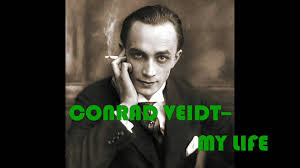 Conrad Veigt – My Life (Dir.
Mark Rappaport, UK, 2019) Conrad Veidt is perhaps best known for his
regular roles in his later American films as a suave and sinister Nazi,
most notably Major Heinrich Strasser, in Casablanca.
In reality, his career dates back to 1917 and the silent era where he
played in a number of seminal German impressionistic films. Using clips
from Veidt’s films, acclaimed director Mark Rappaport imagines the
actor narrating his life and career from the silent era—including his
leading roles in The Cabinet of Dr. Caligari and The Man Who Laughs (which inspired the character of The Joker)—through
to his Hollywood years where, with supreme irony, he often played a
Nazi, while in reality he was an ardent anti-fascist who left Nazi
Germany for Britain, falsely claiming to be Jewish in solidarity with
his Jewish wife. Until the end of August, the film is available to watch
for free from Filmmuseum Munchen on Vimeo here
Conrad Veigt – My Life (Dir.
Mark Rappaport, UK, 2019) Conrad Veidt is perhaps best known for his
regular roles in his later American films as a suave and sinister Nazi,
most notably Major Heinrich Strasser, in Casablanca.
In reality, his career dates back to 1917 and the silent era where he
played in a number of seminal German impressionistic films. Using clips
from Veidt’s films, acclaimed director Mark Rappaport imagines the
actor narrating his life and career from the silent era—including his
leading roles in The Cabinet of Dr. Caligari and The Man Who Laughs (which inspired the character of The Joker)—through
to his Hollywood years where, with supreme irony, he often played a
Nazi, while in reality he was an ardent anti-fascist who left Nazi
Germany for Britain, falsely claiming to be Jewish in solidarity with
his Jewish wife. Until the end of August, the film is available to watch
for free from Filmmuseum Munchen on Vimeo here
20 August
 When The Earth Trembled
(Dir. Barry O’Neil, US, 1913). This short feature, centered around the
1906 San Francisco earthquake, is a master class in just how much drama
and action you can pack into just 43 minutes of nitrate. Including
family feuds, business machinations, shipwreck and castaway rescue, and
final melodramatic reconciliation, the actual earthquake itself seems at
times just a minor sub-plot. But
When The Earth Trembled
(Dir. Barry O’Neil, US, 1913). This short feature, centered around the
1906 San Francisco earthquake, is a master class in just how much drama
and action you can pack into just 43 minutes of nitrate. Including
family feuds, business machinations, shipwreck and castaway rescue, and
final melodramatic reconciliation, the actual earthquake itself seems at
times just a minor sub-plot. But  when the earth does tremble, it is indeed dramatic stuff. Production company Lubin Studio
were turning out two films a week at the time but devoted an
at-that-time unheard of four months to complete the film and its special
effects. And full marks go to star Ethyl Clayton who
steadfastly carries on in one scene despite being accidently being hit
full in the face by a falling chandilier. The film was superbly
restored by Robert Byrne for the San Francisco Silent Film Festival where it was screened in 2015 and it can be viewed on the SFSFF webpage on Vimeo here with the same live accompaniment from Stephen Horne and Frank Bockius recorded on that occasion.
when the earth does tremble, it is indeed dramatic stuff. Production company Lubin Studio
were turning out two films a week at the time but devoted an
at-that-time unheard of four months to complete the film and its special
effects. And full marks go to star Ethyl Clayton who
steadfastly carries on in one scene despite being accidently being hit
full in the face by a falling chandilier. The film was superbly
restored by Robert Byrne for the San Francisco Silent Film Festival where it was screened in 2015 and it can be viewed on the SFSFF webpage on Vimeo here with the same live accompaniment from Stephen Horne and Frank Bockius recorded on that occasion.
31 July
 The Doll (Die Puppe) (Dir. Ernst Lubitsch, Ger, 1919) (70mins) Another
early classic from director Lubitisch, right from opening shots as the
director himself appears to build the highly stylised set from a giant
toy box. And when the set comes to life we find the rich Baron trying
to find a bride for his milksop nephew. To avoid marrying a real girl,
the shy nephew arranges for a toymaker to
The Doll (Die Puppe) (Dir. Ernst Lubitsch, Ger, 1919) (70mins) Another
early classic from director Lubitisch, right from opening shots as the
director himself appears to build the highly stylised set from a giant
toy box. And when the set comes to life we find the rich Baron trying
to find a bride for his milksop nephew. To avoid marrying a real girl,
the shy nephew arranges for a toymaker to  secretly
make him a life-sized doll he can marry instead. But when the doll is
accidentally broken, the toy-maker’s daughter surrepticiously takes its
place and mayhem ensues. This was another Lubitsch film where the
entire cast were clearly having a great time, particularly Ossi Oswalda,
playing both the girl and the doll. The whole film is not just very
funny but also hugely innovative with just the most sublime slice of
risque humour from Lubitsch, already finding his famous ‘touch’. Find
out more at moviessilently.com The version here on You Tube is a beautiful restoration from Kino Lorber with a lovely score by Jon Mirsalis. The film is available to buy on disc either individually or as part of the Lubitsch In Berlin box set from Eureka.
secretly
make him a life-sized doll he can marry instead. But when the doll is
accidentally broken, the toy-maker’s daughter surrepticiously takes its
place and mayhem ensues. This was another Lubitsch film where the
entire cast were clearly having a great time, particularly Ossi Oswalda,
playing both the girl and the doll. The whole film is not just very
funny but also hugely innovative with just the most sublime slice of
risque humour from Lubitsch, already finding his famous ‘touch’. Find
out more at moviessilently.com The version here on You Tube is a beautiful restoration from Kino Lorber with a lovely score by Jon Mirsalis. The film is available to buy on disc either individually or as part of the Lubitsch In Berlin box set from Eureka.
30 July
 Rob Roy (Dir. William Kellino, UK, 1922) (80mins) Rarely screened, this early biopic of one of Scotland’s best-known outlaws stars David Hawthorne
in full tartan kilt and tammy and tells the story of the MacGregors in
the early 18th century. Shot entirely on location in the Trossachs and
nearby Stirling Castle, whilst the 10th Duke of Argyll gave permission
to the production to film on his estates, the film makes liberal use of
Scots for the intertitles (“dinnae fash yersel”) and includes epic fight
scenes, with over 800 men of the Argyll and Sutherland Highlanders
enlisted as extras in
Rob Roy (Dir. William Kellino, UK, 1922) (80mins) Rarely screened, this early biopic of one of Scotland’s best-known outlaws stars David Hawthorne
in full tartan kilt and tammy and tells the story of the MacGregors in
the early 18th century. Shot entirely on location in the Trossachs and
nearby Stirling Castle, whilst the 10th Duke of Argyll gave permission
to the production to film on his estates, the film makes liberal use of
Scots for the intertitles (“dinnae fash yersel”) and includes epic fight
scenes, with over 800 men of the Argyll and Sutherland Highlanders
enlisted as extras in  a
dramatic battle. Although perhaps not a classic, it does have some
memorable scenes, with the dramatic night-time shots of the burning down
of the MacGregor clan’s ‘s crofts a particular highlight. It is also a
film of some impressive facial hair with not only Rob Roy’s awesome
monobrow but also the aptly named Sandy The Biter,
looking live a real life incarnation of Yosemite Sam and someone whose
behaviour amply lived up to his moniker. Find out more at imdb.com The film can be viewed on the BFI‘s You Tube channel here. This version comes without musical accompaniment. However, acclaimed musician David Allison was commissioned to compose a new score for the film at last years HippFest and he has just put the score out on Spotify here.
So, with a bit of judicious button pressing it is just about possible
to stream both the film and the music in tandem and they complement each
other beautifully. Other than a couple other versions of the film on You Tube there is no sign of Rob Roy being available on disc.
a
dramatic battle. Although perhaps not a classic, it does have some
memorable scenes, with the dramatic night-time shots of the burning down
of the MacGregor clan’s ‘s crofts a particular highlight. It is also a
film of some impressive facial hair with not only Rob Roy’s awesome
monobrow but also the aptly named Sandy The Biter,
looking live a real life incarnation of Yosemite Sam and someone whose
behaviour amply lived up to his moniker. Find out more at imdb.com The film can be viewed on the BFI‘s You Tube channel here. This version comes without musical accompaniment. However, acclaimed musician David Allison was commissioned to compose a new score for the film at last years HippFest and he has just put the score out on Spotify here.
So, with a bit of judicious button pressing it is just about possible
to stream both the film and the music in tandem and they complement each
other beautifully. Other than a couple other versions of the film on You Tube there is no sign of Rob Roy being available on disc.
19 June
 Queen Of Hearts (Dir. Yakov Protazanov, Russis, 1916) (84 mins) A
young but impoverished Russian nobleman, German (Ivan Mozzhukhin), is
fascinated by his friend’s constant gambling at cards but when invited
to join them in a game replies “I am not in a position to risk the
essential in the hope of acquiring the superfluous.” But when he learns
of an old countess who supposedly has
Queen Of Hearts (Dir. Yakov Protazanov, Russis, 1916) (84 mins) A
young but impoverished Russian nobleman, German (Ivan Mozzhukhin), is
fascinated by his friend’s constant gambling at cards but when invited
to join them in a game replies “I am not in a position to risk the
essential in the hope of acquiring the superfluous.” But when he learns
of an old countess who supposedly has  knowledge
of a card system which means she will always win he becomes obsessed
with learning the secret for himself. He schemes to gain access to the
countess via her young niece Lizaveta (Vera Orlova). But will the
secret bring him the fortune he desires or will it prove his undoing?
Based upon the 1834 short story by Alexander Pushkin, Queen Of Hearts had been filmed previously in 1910 by Russian director Pyotr Chardynin. However,
this 1916 version probably represents one of the crowning achievements
of pre-revolutionary Russian cinema. It may be a relatively simple tale
of the supernatural but what stands out are the impressive production
values (sets, costumes, cast numbers etc) as well as some novel early
cinematic techniques (such as the split sreening, double exposures and
the story-within-a-story narrative). Ivan Mozzhukhin puts in his usual broodingly
knowledge
of a card system which means she will always win he becomes obsessed
with learning the secret for himself. He schemes to gain access to the
countess via her young niece Lizaveta (Vera Orlova). But will the
secret bring him the fortune he desires or will it prove his undoing?
Based upon the 1834 short story by Alexander Pushkin, Queen Of Hearts had been filmed previously in 1910 by Russian director Pyotr Chardynin. However,
this 1916 version probably represents one of the crowning achievements
of pre-revolutionary Russian cinema. It may be a relatively simple tale
of the supernatural but what stands out are the impressive production
values (sets, costumes, cast numbers etc) as well as some novel early
cinematic techniques (such as the split sreening, double exposures and
the story-within-a-story narrative). Ivan Mozzhukhin puts in his usual broodingly 
 intense performance while Tamara Duvan
is interesting as the young countess (although the overuse of eye-liner
amongst all the cast does at times prove somewhat distracting!).
Mozzhukhin would leave Russia come the revolution, never to return but
enjoying cosiderable success in France as Ivan Ivan Mosjoukine.
Protazanov would also leave Russia but he returned in the early 1920s
and resumed directorial work, most notably with the pioneering science
fiction film Aelita: Queen of Mars (1924). Find out more at thedevilsmanor.blogspot.com. The version here on You Tube is of OK quality and comes with musical accompaniment. The film is available to buy from Milestone as part of their Early Russian Cinema anthology here
intense performance while Tamara Duvan
is interesting as the young countess (although the overuse of eye-liner
amongst all the cast does at times prove somewhat distracting!).
Mozzhukhin would leave Russia come the revolution, never to return but
enjoying cosiderable success in France as Ivan Ivan Mosjoukine.
Protazanov would also leave Russia but he returned in the early 1920s
and resumed directorial work, most notably with the pioneering science
fiction film Aelita: Queen of Mars (1924). Find out more at thedevilsmanor.blogspot.com. The version here on You Tube is of OK quality and comes with musical accompaniment. The film is available to buy from Milestone as part of their Early Russian Cinema anthology here
18 June
 The Extraordinary Adventures of Mr. West in the Land of the Bolsheviks (Dir. Lev Kuleshov, USSR, 1924) (94 mins).
As Mr. West, the president of the American YMCA, prepares to journey to
the Soviet Union in the hope of establishing a YMCA branch YMCA there,
US newspapers warn of a land of criminality and unrest,
The Extraordinary Adventures of Mr. West in the Land of the Bolsheviks (Dir. Lev Kuleshov, USSR, 1924) (94 mins).
As Mr. West, the president of the American YMCA, prepares to journey to
the Soviet Union in the hope of establishing a YMCA branch YMCA there,
US newspapers warn of a land of criminality and unrest,  populated
by fur-wearing Bolshevik savages. For his protection Mr West decides
to take along Jeddy, his gun toting cowboy employee. But soon after
arriving in Moscow, Mr West’s briefcase is stolen and he becomes
separated from Jeddy. But worse is to follow when he falls into the
hands of an apparently ruthless gang who appear to confirm his worst
stereotypes of the savage Bolshevik. The Extraordinary Adventures of Mr. West…. was the first feature length production from director Lev Kuleshov‘s
radical and innovative cinematic ‘workshop’. At one level it is a
riotous and very funny comedy amply demonstrating all that the workshop
had gleamed from the work of American directors such as Sennett and
Griffith with its rapid and cross-cutting. It is surely no coincidence
that the central character of Mr West is a Harold Lloyd look-alike. But
the film also showcases how
populated
by fur-wearing Bolshevik savages. For his protection Mr West decides
to take along Jeddy, his gun toting cowboy employee. But soon after
arriving in Moscow, Mr West’s briefcase is stolen and he becomes
separated from Jeddy. But worse is to follow when he falls into the
hands of an apparently ruthless gang who appear to confirm his worst
stereotypes of the savage Bolshevik. The Extraordinary Adventures of Mr. West…. was the first feature length production from director Lev Kuleshov‘s
radical and innovative cinematic ‘workshop’. At one level it is a
riotous and very funny comedy amply demonstrating all that the workshop
had gleamed from the work of American directors such as Sennett and
Griffith with its rapid and cross-cutting. It is surely no coincidence
that the central character of Mr West is a Harold Lloyd look-alike. But
the film also showcases how  Kuleshov
had taken this work forward with his own brand of montage,
criss-crossing between various plot threads at an increasing pace. At
another leval, the film is also a piece of cinematic propaganda intended
to highlight (deliberate?) American misconceptions about the impact of
the Bolshevik
Kuleshov
had taken this work forward with his own brand of montage,
criss-crossing between various plot threads at an increasing pace. At
another leval, the film is also a piece of cinematic propaganda intended
to highlight (deliberate?) American misconceptions about the impact of
the Bolshevik  revolution.
The film’s cast and crew are a veritable Who’s Who of the early
Soviet film talent. Actors Boris Barnet and Vsevolod Pudovkin both went
on to become renowned directors (for example, Girl With A Hatbox (1927) and Mother (1926) respectively). Actress Aleksandra Khokhlova is perhaps best known for her role in By The Law
(1926) but also went on to direct. Although Kuleshov himself continued
to work in various aspects of the Soviet film industry until his death
in 1970 his frequent brushes with the authorities meant that he never
achieved the heights his early work foretold. However, his impact as a
mentor for the likes of Barnet and Pudovkin as well as Eisenstein,
Dovzhenko and Vertov can never be under-estimated. Find out more at sensesofcinema.com. There is a nice version of the film here on You Tube courtesy of All Soviet Movies on RVISION with a pleasant piano and strings accompaniment. The film was available to buy on Flicker Alley‘s compendium Landmarks of Early Soviet Films
although it currently appears out of stock. The only other alternative
appears to be a French import with just Russian/French inter-titles here
revolution.
The film’s cast and crew are a veritable Who’s Who of the early
Soviet film talent. Actors Boris Barnet and Vsevolod Pudovkin both went
on to become renowned directors (for example, Girl With A Hatbox (1927) and Mother (1926) respectively). Actress Aleksandra Khokhlova is perhaps best known for her role in By The Law
(1926) but also went on to direct. Although Kuleshov himself continued
to work in various aspects of the Soviet film industry until his death
in 1970 his frequent brushes with the authorities meant that he never
achieved the heights his early work foretold. However, his impact as a
mentor for the likes of Barnet and Pudovkin as well as Eisenstein,
Dovzhenko and Vertov can never be under-estimated. Find out more at sensesofcinema.com. There is a nice version of the film here on You Tube courtesy of All Soviet Movies on RVISION with a pleasant piano and strings accompaniment. The film was available to buy on Flicker Alley‘s compendium Landmarks of Early Soviet Films
although it currently appears out of stock. The only other alternative
appears to be a French import with just Russian/French inter-titles here
12 June
 An Old Gangster’s Moll (aka Milenky staré kriminálníka aka The Lovers of an Old Criminal) (Dir. Svatopluk Innemann, Cz, 1927) (108 mins) Factory owner Pardon (Jan W. Speerger) meets Olga and the two hit it off right away. But Olga’s mother breaks them up
  seeking
a better match for her daughter. Meanwhile a rich businessman is
pressurising Pardon to marry his eccentric daughter Fifi (Anny
Ondráková). But Pardon has eyes only for Olga so he gets his aged uncle
Cyril ( Vlasta Burian) to impersonate himself in the hope of putting
Fifi off. But Fifi is not a girl to be put off so easily, even when
Cyril pretends to be the notorious murderer Kanibal. But then the real
Kanibal also shows up…. An Old Gangster’s Moll is nothing if not complicated. But it is also an hilarious knock-about comedy. Anny Ondráková (who became Anny Ondra when she moved to Britain to star in
seeking
a better match for her daughter. Meanwhile a rich businessman is
pressurising Pardon to marry his eccentric daughter Fifi (Anny
Ondráková). But Pardon has eyes only for Olga so he gets his aged uncle
Cyril ( Vlasta Burian) to impersonate himself in the hope of putting
Fifi off. But Fifi is not a girl to be put off so easily, even when
Cyril pretends to be the notorious murderer Kanibal. But then the real
Kanibal also shows up…. An Old Gangster’s Moll is nothing if not complicated. But it is also an hilarious knock-about comedy. Anny Ondráková (who became Anny Ondra when she moved to Britain to star in  Hitchcock
thrillers) is fantastic as the mini-skirt wearing, cigar-chomping
Fifi. Unknown in the West but still to this day a comedy legend in the
Czech Republic, Vlasta Burian is also excellent as
Uncle Cyril. The film maintains a frenetic pace throughout with
frequent laugh-out-loud moments, I cannot recommend it too highly.
Check out our (with spoilers) review here. Find out more at ithankyouarthur.blogspot.com. There is a good quality version of the film here with an interesting musical accompaniment curteosy of the Czech National Film Archive fro whom the film can also be purchased here via Amazon.
Hitchcock
thrillers) is fantastic as the mini-skirt wearing, cigar-chomping
Fifi. Unknown in the West but still to this day a comedy legend in the
Czech Republic, Vlasta Burian is also excellent as
Uncle Cyril. The film maintains a frenetic pace throughout with
frequent laugh-out-loud moments, I cannot recommend it too highly.
Check out our (with spoilers) review here. Find out more at ithankyouarthur.blogspot.com. There is a good quality version of the film here with an interesting musical accompaniment curteosy of the Czech National Film Archive fro whom the film can also be purchased here via Amazon.
 Thomas Graal’s Best Child (Dir. Mauritz Stiller, Swe, 1918) (72 mins) When
Thomas Graal (Victor Sjostrom)’s new wife Bessie (Karin Molander) says
on their wedding day that she ‘knows’ that their first child will be a
girl, Thomas is somewhat shocked as he had
Thomas Graal’s Best Child (Dir. Mauritz Stiller, Swe, 1918) (72 mins) When
Thomas Graal (Victor Sjostrom)’s new wife Bessie (Karin Molander) says
on their wedding day that she ‘knows’ that their first child will be a
girl, Thomas is somewhat shocked as he had  always
anticipated having a son. Wedding day feuding turns to longer drawn
out marital strife until a passing drunk provides the impetus for a
reconciliation but what then when the first child comes along? Thomas Graal’s Best Child was a sort of sequel to director Stiller’s earlier film Thomas Graal’s Best Film
(1917), featuring the same leading players. As with the earlier film,
it is a nice early example of the sophisticated battle-of-the-sexes
marriage comedy. Indeed, some have drawn parellels between Sjostrom/Molander in the Thomas Graal films and the Powell/Loy pairing in the Thin Man series. Sjostrom of course went on to focus
always
anticipated having a son. Wedding day feuding turns to longer drawn
out marital strife until a passing drunk provides the impetus for a
reconciliation but what then when the first child comes along? Thomas Graal’s Best Child was a sort of sequel to director Stiller’s earlier film Thomas Graal’s Best Film
(1917), featuring the same leading players. As with the earlier film,
it is a nice early example of the sophisticated battle-of-the-sexes
marriage comedy. Indeed, some have drawn parellels between Sjostrom/Molander in the Thomas Graal films and the Powell/Loy pairing in the Thin Man series. Sjostrom of course went on to focus  more on directing (Phantom Carriage (1921), He Who Gets Slapped ( 1924), The Wind
(1928) etc). As for Molander, despite rave reviews in this and other
Stiller directed films her cinema career was all but over by 1920. She
married Lars Hanson and went with him to Hollywood in the 1920s but
after they returned to Sweden she had retired from even a theatrical
acting career by the mid-1930s which was a shame as she clearly had
considerable acting and comedic talent. Stiller too would get his
chance in Hollywood but it was not a success and he returned to Sweden
in 1927 where he died suddenly the following year aged just 45. Find
out more at imdb.com. The version here on You Tube
isn’t of great quality but it is just about watchable and comes with an
OK musical accompaniment. The film is available to buy on disc here from Loving The Classics.
more on directing (Phantom Carriage (1921), He Who Gets Slapped ( 1924), The Wind
(1928) etc). As for Molander, despite rave reviews in this and other
Stiller directed films her cinema career was all but over by 1920. She
married Lars Hanson and went with him to Hollywood in the 1920s but
after they returned to Sweden she had retired from even a theatrical
acting career by the mid-1930s which was a shame as she clearly had
considerable acting and comedic talent. Stiller too would get his
chance in Hollywood but it was not a success and he returned to Sweden
in 1927 where he died suddenly the following year aged just 45. Find
out more at imdb.com. The version here on You Tube
isn’t of great quality but it is just about watchable and comes with an
OK musical accompaniment. The film is available to buy on disc here from Loving The Classics.
11 June
 Dr Jekyll And Mr Hyde (Dir. John S. Robertson ,US, 1920) (79mins) This
1920 version was not the first cinematic retelling of Stevenson’s
famous story but it remains one of the more memorable. John Barrymore
is dignified and virtuous as Dr Henry Jekyll but when his friend, Sir
George Carew (Brandon Hurst), takes him to a show featuring the sensual
Miss Gina (Nita Naldi), an aroused Jekyll sets out on a quest to
separate man’s saintly and
Dr Jekyll And Mr Hyde (Dir. John S. Robertson ,US, 1920) (79mins) This
1920 version was not the first cinematic retelling of Stevenson’s
famous story but it remains one of the more memorable. John Barrymore
is dignified and virtuous as Dr Henry Jekyll but when his friend, Sir
George Carew (Brandon Hurst), takes him to a show featuring the sensual
Miss Gina (Nita Naldi), an aroused Jekyll sets out on a quest to
separate man’s saintly and  sinful
sides. Barrymore’s classic transformation scenes, a mixture of facial
and bodily contortions as well as make-up, are a sight to behold. But
while he may capture the tortured soul of the doctor who has released
the monster he can no longer control, Barrymore’s portrayl of Hyde tends
to lurch onto over-
sinful
sides. Barrymore’s classic transformation scenes, a mixture of facial
and bodily contortions as well as make-up, are a sight to behold. But
while he may capture the tortured soul of the doctor who has released
the monster he can no longer control, Barrymore’s portrayl of Hyde tends
to lurch onto over- dramatic
theatricality. Martha Mansfield plays the overly pure and innocent
sweetheart Millicent Carewe but it is Nita Naldi who has a juicier role
as the long suffering dance-hall star who sets the Doctor’s passions
aflame (apparently having been chosen by Barrymore himself for the role)
. She would go on to much bigger things, starring alongside Valentino
in Blood and Sand (1922) and the now lost A Sainted Devil (1924). Find out more at moviessilently.com There is a reasonable quality version here on You Tube with a piano/violin musical accompaniment. The film is available to buy on disc here.
dramatic
theatricality. Martha Mansfield plays the overly pure and innocent
sweetheart Millicent Carewe but it is Nita Naldi who has a juicier role
as the long suffering dance-hall star who sets the Doctor’s passions
aflame (apparently having been chosen by Barrymore himself for the role)
. She would go on to much bigger things, starring alongside Valentino
in Blood and Sand (1922) and the now lost A Sainted Devil (1924). Find out more at moviessilently.com There is a reasonable quality version here on You Tube with a piano/violin musical accompaniment. The film is available to buy on disc here.
 Der Steinerne Reiter (The Stone Rider) (Dir. Fritz Wendhausen, Germany 1923) (86mins) In
a distant Teutonic village a cruel despot (Rudolf Klein-Rogge) demands
the right of the first night with the bride of one of his vassals. When
the bridegroom refuses there is a fight and the bride is accidentally
killed. The bride’s sister (Lucie Mannheim) swears revenge on the despot
but gradually begins to see him in a new light. However, the other
villagers remain intent upon revenge. Although some of the rather
sudden changes of pace in the film perhaps hint at missing footage, the
really impressive aspect of The Stone Rider was
the almost hyper-expressionist look of the costumes and sets. These
were the work of artist Heinrich Heuser and art director Karl
Der Steinerne Reiter (The Stone Rider) (Dir. Fritz Wendhausen, Germany 1923) (86mins) In
a distant Teutonic village a cruel despot (Rudolf Klein-Rogge) demands
the right of the first night with the bride of one of his vassals. When
the bridegroom refuses there is a fight and the bride is accidentally
killed. The bride’s sister (Lucie Mannheim) swears revenge on the despot
but gradually begins to see him in a new light. However, the other
villagers remain intent upon revenge. Although some of the rather
sudden changes of pace in the film perhaps hint at missing footage, the
really impressive aspect of The Stone Rider was
the almost hyper-expressionist look of the costumes and sets. These
were the work of artist Heinrich Heuser and art director Karl  Volbrecht, the latter who would go on to work on a range of Fritz Lang films including Der Nibelungen (1924), Metropolis (1927) and Woman in the Moon (1929). In a further link with Lang, The Stone Rider was
scripted by Thea von Harbou (then married to Lang and, perhaps a little
awkwardly on set, also previously married to Klein-Rogge). She would
go on to script numerous Lang films including Metropolis.
Klein-Rogge was excellent as the baron, driven to live up to his evil
reputation, almost against his better judgement. This was but one of
his many roles as the villain in Lang films,
Volbrecht, the latter who would go on to work on a range of Fritz Lang films including Der Nibelungen (1924), Metropolis (1927) and Woman in the Moon (1929). In a further link with Lang, The Stone Rider was
scripted by Thea von Harbou (then married to Lang and, perhaps a little
awkwardly on set, also previously married to Klein-Rogge). She would
go on to script numerous Lang films including Metropolis.
Klein-Rogge was excellent as the baron, driven to live up to his evil
reputation, almost against his better judgement. This was but one of
his many roles as the villain in Lang films,  most memorably as the mad scientist Rotwang in Metropolis.
Equally good was Lucie Mannheim as Hirtin, whose grim determination
for revenge fades as she gets to know the baron and is then faced with
the dilemma of betraying her
most memorably as the mad scientist Rotwang in Metropolis.
Equally good was Lucie Mannheim as Hirtin, whose grim determination
for revenge fades as she gets to know the baron and is then faced with
the dilemma of betraying her  fellow
villagers to engineer his escape. Although probably best remembered as
Annabella Smith, the blond whose early death sets Robert Hanney off on
his search for The 39 Steps (1935), Mannheim was also notable in G W Pabst’s debut feature The Treasure (1923). Of note also was the cinematography from Carl Hoffmann (also responsible for Variety (1925), Faust (1926) and The Wonderful Lies of Nina Petrovna (1929)) and Gunter Rittau (Metropolis (1927), Asphalt (1929) and The Blue Angel (1930)).
Amongst many stunning scenes, one in particular stood out when the
evil baron’s shadow falls across the peasant village as he approaches. Find out more at imdb.com. The version available here on You Tube isn’t of particularly good quality but it does come with a thunderously good orchestral score. There is no sign of The Stone Rider being available in disc, which is a shame as it deserves to be better known.
fellow
villagers to engineer his escape. Although probably best remembered as
Annabella Smith, the blond whose early death sets Robert Hanney off on
his search for The 39 Steps (1935), Mannheim was also notable in G W Pabst’s debut feature The Treasure (1923). Of note also was the cinematography from Carl Hoffmann (also responsible for Variety (1925), Faust (1926) and The Wonderful Lies of Nina Petrovna (1929)) and Gunter Rittau (Metropolis (1927), Asphalt (1929) and The Blue Angel (1930)).
Amongst many stunning scenes, one in particular stood out when the
evil baron’s shadow falls across the peasant village as he approaches. Find out more at imdb.com. The version available here on You Tube isn’t of particularly good quality but it does come with a thunderously good orchestral score. There is no sign of The Stone Rider being available in disc, which is a shame as it deserves to be better known.
7 June
 The Black Pirate (Dir. Albert Parker, US, 1926) (94 mins) After
pirates attack, rob and blow up a merchant ship the only survivors are a
dying man and his son (Douglas Fairbanks). Washed up on a desert
island the son meets the self same
The Black Pirate (Dir. Albert Parker, US, 1926) (94 mins) After
pirates attack, rob and blow up a merchant ship the only survivors are a
dying man and his son (Douglas Fairbanks). Washed up on a desert
island the son meets the self same  pirates
burying their loot. Masquerading as ‘The Black Pirate’ he defeats the
pirate captain and joins the gang. Single-handedly leading the capture
of another merchant ship. Rather than killing the crew he convinces the
pirates to hold them to ransom. When a woman (Billie Love) is
discovered on board he manages initially to save her from the clutches
of the pirates. But these pirates are a fickle lot and soon The Black
Pirate’s life is in danger again. Producer and star Douglas Fairbanks
had sought to bring a pirate story to the screen ever since completion
of The Mark Of Zorro (1920) but had
convinced himself that it could only be made in colour. It was not
until 1926 therefore that two-tone Technicolor film technology was
pirates
burying their loot. Masquerading as ‘The Black Pirate’ he defeats the
pirate captain and joins the gang. Single-handedly leading the capture
of another merchant ship. Rather than killing the crew he convinces the
pirates to hold them to ransom. When a woman (Billie Love) is
discovered on board he manages initially to save her from the clutches
of the pirates. But these pirates are a fickle lot and soon The Black
Pirate’s life is in danger again. Producer and star Douglas Fairbanks
had sought to bring a pirate story to the screen ever since completion
of The Mark Of Zorro (1920) but had
convinced himself that it could only be made in colour. It was not
until 1926 therefore that two-tone Technicolor film technology was  sufficiently
developed to enable shooting to begin. The resulting film, altnough
beaten to the screen by several other well recieved
sufficiently
developed to enable shooting to begin. The resulting film, altnough
beaten to the screen by several other well recieved  pirate films such as The Sea Hawk and Captain Blood
(both 1924) nevertheless established many of the rules for the
subsequent pirate film genre. Its classic Fairbanks faire, heavy on the
action (with some very impressive sword fight sequences, not to mention
some incredible acrobatics in the ship’s rigging), a smattering of love
interest, but never taking himself too seriously. Billie Dove
is the said love interest but she isn’t called on to do much other than
swoon occasionally. The two-tone red/green colouring still works
pretty well, adding significantly to the film’s overall impact. Find
out more at silentfilm.org. A good quality coloured version is here via You Tube with an exciting orchestral score. It is available to buy here from Kino Lorber but make sure you get the Deluxe Edition to ensure its the colour version.
pirate films such as The Sea Hawk and Captain Blood
(both 1924) nevertheless established many of the rules for the
subsequent pirate film genre. Its classic Fairbanks faire, heavy on the
action (with some very impressive sword fight sequences, not to mention
some incredible acrobatics in the ship’s rigging), a smattering of love
interest, but never taking himself too seriously. Billie Dove
is the said love interest but she isn’t called on to do much other than
swoon occasionally. The two-tone red/green colouring still works
pretty well, adding significantly to the film’s overall impact. Find
out more at silentfilm.org. A good quality coloured version is here via You Tube with an exciting orchestral score. It is available to buy here from Kino Lorber but make sure you get the Deluxe Edition to ensure its the colour version.
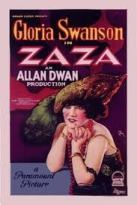 Zaza (Dir. Allan Dwan, US, 1923) (86 mins) The
star of a provincial theatre near Paris is the tempestuous and firery
tempered actress Zaza (Gloria Swanson). When diplomat
Zaza (Dir. Allan Dwan, US, 1923) (86 mins) The
star of a provincial theatre near Paris is the tempestuous and firery
tempered actress Zaza (Gloria Swanson). When diplomat  Bernard
Dufresne (H.B. Warner) comes to the town on business and sees Zaza
perform there is an immediate attraction between the two. But Zaza has a
rival for Dufresne’s attractions, the theatre’s former star Florianne
(Mary Thurman) who sabotages Zaza’s act. And Dufresne himself has a
secret he’s not telling. Based upon a popular 1899 stage play of the
same name by Pierre Berton and Charles Simon which had previously been filmed in 1915, director Allan Dwan brought the rights for Paramount, updated it and made it into a star vehicle for Gloria Swanson.
Beautifully shot at Paramount’s Astoria Studios in New York and on
location in a New Jersey mansion, the plot may be threadbare and the
film
Bernard
Dufresne (H.B. Warner) comes to the town on business and sees Zaza
perform there is an immediate attraction between the two. But Zaza has a
rival for Dufresne’s attractions, the theatre’s former star Florianne
(Mary Thurman) who sabotages Zaza’s act. And Dufresne himself has a
secret he’s not telling. Based upon a popular 1899 stage play of the
same name by Pierre Berton and Charles Simon which had previously been filmed in 1915, director Allan Dwan brought the rights for Paramount, updated it and made it into a star vehicle for Gloria Swanson.
Beautifully shot at Paramount’s Astoria Studios in New York and on
location in a New Jersey mansion, the plot may be threadbare and the
film  changes
mid course from rom-com to melodrama but it certainly gave Swanson an
opportunity to shine. And shine she does, in a series of
changes
mid course from rom-com to melodrama but it certainly gave Swanson an
opportunity to shine. And shine she does, in a series of  oppulent
costumes, designer jewelry and extravagant hair styles, with everything
embossed with her signature ‘Z’. The Dwan/Swanson combination worked
so well that they went on to make a further seven films together while
the film itself was remade again in 1939 with Claudette Colbert. Find
out more at outofthepastblog.com. The version here on You Tube
is of excellent quality with a nice piano accompaniment from Jeff
Rapsis. The film is available to buy on BluRay and DVD from Kino Lorber here
and includes audio commentary by author Frederic Lombardi and a 12-page
insert booklet with promotional materials and an essay by Imogen Sara
Smith.
oppulent
costumes, designer jewelry and extravagant hair styles, with everything
embossed with her signature ‘Z’. The Dwan/Swanson combination worked
so well that they went on to make a further seven films together while
the film itself was remade again in 1939 with Claudette Colbert. Find
out more at outofthepastblog.com. The version here on You Tube
is of excellent quality with a nice piano accompaniment from Jeff
Rapsis. The film is available to buy on BluRay and DVD from Kino Lorber here
and includes audio commentary by author Frederic Lombardi and a 12-page
insert booklet with promotional materials and an essay by Imogen Sara
Smith.
30 May
 The Beloved Rogue (Dir. Alan Crosland, US, 1927) ( 98 mins) In
fifteenth century France, Francois Villon (John Barrymore) is a poet,
clown, womaniser, thief and vagabond. But above all he is a patriot (
who loves “France earnestly, Frenchwomen excessively, French wine
exclusively”)
The Beloved Rogue (Dir. Alan Crosland, US, 1927) ( 98 mins) In
fifteenth century France, Francois Villon (John Barrymore) is a poet,
clown, womaniser, thief and vagabond. But above all he is a patriot (
who loves “France earnestly, Frenchwomen excessively, French wine
exclusively”)  and
is beloved by the downtrodden and working classes. As the Duke of
Burgundy seeks to overthrow Louis XI (Conrad Veidt) and seize the throne
by subterfuge, Villon thwarts his plans by spiriting away the King’s
niece Charlotte de Vauxcelles (Marceline Day) who the Duke sought to
marry off to one of his allies. But Villon is not yet in the clear with
many a buckle yet to swash. While The Beloved Rogue
owes little to historical accuracy it is nevertheless great fun.
Barrymore plays hero Villon very much in the style of Douglas Fairbanks
and looked to having great fun. But at a review screening he was
and
is beloved by the downtrodden and working classes. As the Duke of
Burgundy seeks to overthrow Louis XI (Conrad Veidt) and seize the throne
by subterfuge, Villon thwarts his plans by spiriting away the King’s
niece Charlotte de Vauxcelles (Marceline Day) who the Duke sought to
marry off to one of his allies. But Villon is not yet in the clear with
many a buckle yet to swash. While The Beloved Rogue
owes little to historical accuracy it is nevertheless great fun.
Barrymore plays hero Villon very much in the style of Douglas Fairbanks
and looked to having great fun. But at a review screening he was reportedly horrified at his portrayal, crying out “Call yourself an actor? My god, what a ham!” Conrad Veidt, making his US debut, played the hugely
  superstitious
King in the style more akin to a demented Richard III. Marceline Day
looked wonderful but wasn’t called on to do a great deal beyond
simpering. Also deserving of praise were the stunning set designs from
William Cameron Menzies who had previously worked with Fairbanks on such
classics as The Three Musketeers (1921), Robin Hood (1922) and The Thief Of Baghdad (1924). Oh, and look out for Angelo Rossitto as Beppo the Dwarf, whose final film role was in Mad Max: Beyond Thunderdome (1985). Find out more at moviessilently.com. There is an OK quality version of The Beloved Rogue here at Daily Motion
with a musical compilation of grand orchestral themes (although several
are somewhat out of place!). There is a better, tinted version on You Tube but it lacks any musical accompaniment. The film is available on DVD here from Kino Lorber
superstitious
King in the style more akin to a demented Richard III. Marceline Day
looked wonderful but wasn’t called on to do a great deal beyond
simpering. Also deserving of praise were the stunning set designs from
William Cameron Menzies who had previously worked with Fairbanks on such
classics as The Three Musketeers (1921), Robin Hood (1922) and The Thief Of Baghdad (1924). Oh, and look out for Angelo Rossitto as Beppo the Dwarf, whose final film role was in Mad Max: Beyond Thunderdome (1985). Find out more at moviessilently.com. There is an OK quality version of The Beloved Rogue here at Daily Motion
with a musical compilation of grand orchestral themes (although several
are somewhat out of place!). There is a better, tinted version on You Tube but it lacks any musical accompaniment. The film is available on DVD here from Kino Lorber
29 May
 The Chechahcos (Dir. Lewis H. Moomaw, US, 1924) (87 mins) Set
in the 1890s as the Klondike gold rush sucks in thousands of fortune
huntes to the icy wastes of Alaska hoping to make it rich (one way or
another), when a fire engulfs a shipload of prospectors Margaret Stanlaw
(Eve Gorden) is separated from her young daughter Ruth in the
confusion. Mrs Stanlaw is led to believe that her daughter is dead but
instead the child ends up in the care of a couple of rough-edged
prospectors. Years pass and the now adult Ruth (Gladys Johnson) is in
love with one of her by-now prosperous guardians. But danger is afoot
when an old adversary of the prospector arrives in town, along with Mrs.
Stanlaw
The Chechahcos (Dir. Lewis H. Moomaw, US, 1924) (87 mins) Set
in the 1890s as the Klondike gold rush sucks in thousands of fortune
huntes to the icy wastes of Alaska hoping to make it rich (one way or
another), when a fire engulfs a shipload of prospectors Margaret Stanlaw
(Eve Gorden) is separated from her young daughter Ruth in the
confusion. Mrs Stanlaw is led to believe that her daughter is dead but
instead the child ends up in the care of a couple of rough-edged
prospectors. Years pass and the now adult Ruth (Gladys Johnson) is in
love with one of her by-now prosperous guardians. But danger is afoot
when an old adversary of the prospector arrives in town, along with Mrs.
Stanlaw  who remains unaware that her daughter has survived. I stumbled upon The Chechahcos ( a native Alaskan word meaning ‘tenderfoot‘)
by accident, never having previously heard of the film but it turned
out to be a pleasent discovery. The only film made by the Alaska Moving Pictures Corporation and the first film shot entirely on location in Alaska it features some stunning photography capturing both the
who remains unaware that her daughter has survived. I stumbled upon The Chechahcos ( a native Alaskan word meaning ‘tenderfoot‘)
by accident, never having previously heard of the film but it turned
out to be a pleasent discovery. The only film made by the Alaska Moving Pictures Corporation and the first film shot entirely on location in Alaska it features some stunning photography capturing both the  ruggedness
of the country and the privations of the prospectors as they cross icy
glacial passes or traverse river rapids in frail boats. And the story
is not bad either. On completion the film was picked up by a major
distributor, review screenings were positive and the film was set for a
big fanfare release. But for inexplicable reasons the crowds stayed
away. Perhaps it was the absence of big name stars amongst the cast,
perhaps it was the unpronounceable title ( Chee-chaw-koz). But
whatever the reason, the film had just a short run before it
disappeared until, ninety odd years later it was rediscovered, restored
by the University of Alaska and re-screened in Anchorage with a new orchestral score. Find out more at www.loc.gov. There is a good quality print on the National Film Preservation Foundation website here
which comes with a nice piano accompaniment (although I did have great
difficulty streaming this). A lower quality version is available here on You Tube but without musical accompaniment. If you want to buy the film on DVD it is available from the Anchorage Fine Arts Society here in a version featuring the newly commissioned orchestral score.
ruggedness
of the country and the privations of the prospectors as they cross icy
glacial passes or traverse river rapids in frail boats. And the story
is not bad either. On completion the film was picked up by a major
distributor, review screenings were positive and the film was set for a
big fanfare release. But for inexplicable reasons the crowds stayed
away. Perhaps it was the absence of big name stars amongst the cast,
perhaps it was the unpronounceable title ( Chee-chaw-koz). But
whatever the reason, the film had just a short run before it
disappeared until, ninety odd years later it was rediscovered, restored
by the University of Alaska and re-screened in Anchorage with a new orchestral score. Find out more at www.loc.gov. There is a good quality print on the National Film Preservation Foundation website here
which comes with a nice piano accompaniment (although I did have great
difficulty streaming this). A lower quality version is available here on You Tube but without musical accompaniment. If you want to buy the film on DVD it is available from the Anchorage Fine Arts Society here in a version featuring the newly commissioned orchestral score.
27 May
 Hindle Wakes (Dir. Maurice Elvey, UK, 1927) (115 mins) In
the mill town of Hindle, ‘wakes week’ is the seven day shut-down when
the workers head off for their annual seaside holiday. Amongst them is
the exuberant shop floor worker Fanny Hawthorn (Estelle Brody) who meets
with and has a brief affair with the mill owner’s son, Alan
Hindle Wakes (Dir. Maurice Elvey, UK, 1927) (115 mins) In
the mill town of Hindle, ‘wakes week’ is the seven day shut-down when
the workers head off for their annual seaside holiday. Amongst them is
the exuberant shop floor worker Fanny Hawthorn (Estelle Brody) who meets
with and has a brief affair with the mill owner’s son, Alan  Jeffcote.
When the affair is discovered by their parents the pressure is on Allan
to ‘do the decent thing’ and marry Fanny. But Fanny herself has other
ideas…..There is the long held view that nothing much happened in the
world of British silent film of the 1920s until the arrival of Alfred Hitchcock. Whilst such a reading of film history ignores the work of Hitchcock contemporary Anthony Asquith it also neglects the fact that Maurice Elvey had been turning out quality silents for over a decade by the time of Hindle Wakes. Based on the (at the time) scandalous 1912 stage play of the same name by Stanley Houghton, Hindle Wakes is probably Elvey’s finest work. The first half is a whirlwind of
Jeffcote.
When the affair is discovered by their parents the pressure is on Allan
to ‘do the decent thing’ and marry Fanny. But Fanny herself has other
ideas…..There is the long held view that nothing much happened in the
world of British silent film of the 1920s until the arrival of Alfred Hitchcock. Whilst such a reading of film history ignores the work of Hitchcock contemporary Anthony Asquith it also neglects the fact that Maurice Elvey had been turning out quality silents for over a decade by the time of Hindle Wakes. Based on the (at the time) scandalous 1912 stage play of the same name by Stanley Houghton, Hindle Wakes is probably Elvey’s finest work. The first half is a whirlwind of  stunning
location shooting while the second half (where Houghton’s original play
began) is intense and gripping melodrama. For its time the film (and
presumably even more so the earlier stage play) is a remarkable
expression of female emancipation. But subjects addressed by the film
go further than this, focusing in particular on the issue of class and
the
stunning
location shooting while the second half (where Houghton’s original play
began) is intense and gripping melodrama. For its time the film (and
presumably even more so the earlier stage play) is a remarkable
expression of female emancipation. But subjects addressed by the film
go further than this, focusing in particular on the issue of class and
the  moral
and social codes of behavior faced primarily by the working classes and
especially working class women, as well as the ever present theme of
missed opportunity. Then there is the terrific ensemble cast
performance although Estell Brody in particular shines out. All in all, Hindle Wakes
stands out as a silent film the quality of which matches anything being
produced in Europe or America at that time. Read our (with spoilers)
review here or find out more at silentlondon.co.uk . The version avaible here on You Tube is a high quality print from the BFI’s National Film Archive. However, it comes without sound accompaniment. Hindle Wakes is available on (Region 1) DVD from Milestone Films here with two alternative original scores by In the Nursery and Philip Carli.
moral
and social codes of behavior faced primarily by the working classes and
especially working class women, as well as the ever present theme of
missed opportunity. Then there is the terrific ensemble cast
performance although Estell Brody in particular shines out. All in all, Hindle Wakes
stands out as a silent film the quality of which matches anything being
produced in Europe or America at that time. Read our (with spoilers)
review here or find out more at silentlondon.co.uk . The version avaible here on You Tube is a high quality print from the BFI’s National Film Archive. However, it comes without sound accompaniment. Hindle Wakes is available on (Region 1) DVD from Milestone Films here with two alternative original scores by In the Nursery and Philip Carli.
18 May
 Underworld ( Dir.Josef von Sternberg, US, 1927) (80mins) Brash gang boss ‘Bull’ Weed (George Bancroft) saves ‘Rolls Royce’ Wensel (Clive Brook), previously a lawyer but now a
  down
and out alcoholic, from a rival gang boss. They team up together with
Rolls Royce providing the intelligence for Weed’s criminal activities.
However, when Rolls Royce begins to fall for Weed’s girl, ‘Feathers’
McCoy (Evelyn Brent), his jealousy knows no bounds and is likely to get
everyone killed. Underworld is now recognised as one of the great gangster films of the silent era and, along with The Racket
(see below) set most of the rules for the gangster movie genre for the
next 60 years. George Bancroft may have been a bit ‘over the top’ as
Weed but he set the tone for Paul Muni in Scarface (1932). Clive Brook and Evelyn Brent play off each other wonderfully and Evelyn
down
and out alcoholic, from a rival gang boss. They team up together with
Rolls Royce providing the intelligence for Weed’s criminal activities.
However, when Rolls Royce begins to fall for Weed’s girl, ‘Feathers’
McCoy (Evelyn Brent), his jealousy knows no bounds and is likely to get
everyone killed. Underworld is now recognised as one of the great gangster films of the silent era and, along with The Racket
(see below) set most of the rules for the gangster movie genre for the
next 60 years. George Bancroft may have been a bit ‘over the top’ as
Weed but he set the tone for Paul Muni in Scarface (1932). Clive Brook and Evelyn Brent play off each other wonderfully and Evelyn  Brent
herself is just, well, wonderful. Her eyebrows alone could act most
anyone else off the screen. The film marked out von Sternberg as a
truly great director and the film was a huge critical and popular
success across the world. See our (with spoilers) review here or find out more at immortalephemera.com. The version here on You Tube comes with a good orchestral accompaniment. If you want to buy it on disc, a Criterion release here is a three film von Sternberg compilation along with the equally enjoyable The Docks Of New York and The Last Command
Brent
herself is just, well, wonderful. Her eyebrows alone could act most
anyone else off the screen. The film marked out von Sternberg as a
truly great director and the film was a huge critical and popular
success across the world. See our (with spoilers) review here or find out more at immortalephemera.com. The version here on You Tube comes with a good orchestral accompaniment. If you want to buy it on disc, a Criterion release here is a three film von Sternberg compilation along with the equally enjoyable The Docks Of New York and The Last Command
 The Racket (Dir. Lewis Milestone, US, 1928) (84 mins) James
McQuigg (Thomas Meighan) and Nick Scarsi (Louis Walheim) are old
friends who now sit on opposite sides of the law. McQuigg is that rare
commodity in 1920s Chicago, an honest cop, while Scarsi runs runs one of
the biggest criminal gangs in the city. Despite McQuigg’s attempts to
take him down, Scarsi has the judges and politicians in his pocket.
Eventually Scarsi tires of McQuigg’s efforts and gets him transferred to
a backwater precinct. But
The Racket (Dir. Lewis Milestone, US, 1928) (84 mins) James
McQuigg (Thomas Meighan) and Nick Scarsi (Louis Walheim) are old
friends who now sit on opposite sides of the law. McQuigg is that rare
commodity in 1920s Chicago, an honest cop, while Scarsi runs runs one of
the biggest criminal gangs in the city. Despite McQuigg’s attempts to
take him down, Scarsi has the judges and politicians in his pocket.
Eventually Scarsi tires of McQuigg’s efforts and gets him transferred to
a backwater precinct. But  McQuigg
sees a chance to get back at Scarsi through his less than smart younger
brother and a gold-digging nightclub singer (Marie Prevost). However,
its a course of action which will come at a heavy cost for all
involved. Long thought lost, a copy The Racket was discovered in Howard Hughes‘
personal archives after the reclusive billionaire’s death. Based on
Bartlett Cormack’s 1927 play which was a huge hit starring Edward G. Robinson,
a 22 year old Hughes brought the rights for one of his early forays
into film making. Looking at the film now it can give an almost
McQuigg
sees a chance to get back at Scarsi through his less than smart younger
brother and a gold-digging nightclub singer (Marie Prevost). However,
its a course of action which will come at a heavy cost for all
involved. Long thought lost, a copy The Racket was discovered in Howard Hughes‘
personal archives after the reclusive billionaire’s death. Based on
Bartlett Cormack’s 1927 play which was a huge hit starring Edward G. Robinson,
a 22 year old Hughes brought the rights for one of his early forays
into film making. Looking at the film now it can give an almost  overly
cliched feel until you realise that this was in fact the film that
first set in train many of the familiar tropes of the gangster film
genre. Meighan is good as McQuigg but Walheim is awesome as the
brutish Scarsi. However, Marie Prevost steals every scene she is in as
the hard-bitten moll. Director Milestone created some incredible studio
scenes of the hustle and bustle of Chicago streets but nothing beats
the scene in the basement speakeasy as the two rival gangs plus the
police cautiously eye each other up with almost balletic poise before
the first shot rings out. Find out more at immortalephemera.com. There is a nicely restored version here on You Tube with a musical score composed by Robert Israel. The Racket has been available to buy on DVD via Flicker Alley but does not appear currently available.
overly
cliched feel until you realise that this was in fact the film that
first set in train many of the familiar tropes of the gangster film
genre. Meighan is good as McQuigg but Walheim is awesome as the
brutish Scarsi. However, Marie Prevost steals every scene she is in as
the hard-bitten moll. Director Milestone created some incredible studio
scenes of the hustle and bustle of Chicago streets but nothing beats
the scene in the basement speakeasy as the two rival gangs plus the
police cautiously eye each other up with almost balletic poise before
the first shot rings out. Find out more at immortalephemera.com. There is a nicely restored version here on You Tube with a musical score composed by Robert Israel. The Racket has been available to buy on DVD via Flicker Alley but does not appear currently available.
17 May
 Paris Qui Dort (aka While Paris Sleeps, aka The Crazy Ray) (Dir. Rene Clair, Fr, 1924) (65mins) The
night watchman on the Eiffel Tower wakes to find that all of the rest
of Paris has been put to sleep, leaving him alone in the city with the
buildings and streets eerily empty. Eventually he meets a disparate
group of four men and a woman who have just arrived in the city by air.
But with limitless time on their hands and nothing to do (not a
dissimilar state than most of us find
Paris Qui Dort (aka While Paris Sleeps, aka The Crazy Ray) (Dir. Rene Clair, Fr, 1924) (65mins) The
night watchman on the Eiffel Tower wakes to find that all of the rest
of Paris has been put to sleep, leaving him alone in the city with the
buildings and streets eerily empty. Eventually he meets a disparate
group of four men and a woman who have just arrived in the city by air.
But with limitless time on their hands and nothing to do (not a
dissimilar state than most of us find  ourselves
at the moment) boredom sets in not to mention romantic notions and
jealousy. And we haven’t even got to the mad scientist bit yet!!. Paris Qui Dort was director Rene Clair’s first film (although his second, Entr’acte,
was released before it) and it is a lovely comic fantasy. Shot on a
shoe-string budget there is some amazing camerawork, not just of the
empty streets of Paris but also as the group traverse the Eiffel Tower.
The scene as the group socialise amongst the sleeping nightclub
clientele has a slightly eerie quality but there are plenty of little
comic asides, particularly from the gentleman thief of the group (not
least when he has the Mona Lisa tucked away in the back of his car).
The film is much less the pure
ourselves
at the moment) boredom sets in not to mention romantic notions and
jealousy. And we haven’t even got to the mad scientist bit yet!!. Paris Qui Dort was director Rene Clair’s first film (although his second, Entr’acte,
was released before it) and it is a lovely comic fantasy. Shot on a
shoe-string budget there is some amazing camerawork, not just of the
empty streets of Paris but also as the group traverse the Eiffel Tower.
The scene as the group socialise amongst the sleeping nightclub
clientele has a slightly eerie quality but there are plenty of little
comic asides, particularly from the gentleman thief of the group (not
least when he has the Mona Lisa tucked away in the back of his car).
The film is much less the pure  surrealistic experiment of Entr’acte, and more an exercise in fantasy colliding with reality. Find out more at ithankyouarthur.blogspot.com. The version here is a stunning restoration from Cinematheque Francaise,
with a very nice piano accompaniment also. Sadly it is one of the few
equally beautiful films in their On-Line collection that comes in
English (somewhat bizarrely in this case because the inter-titles
themselves are in English but have then been sub-titled into French).
If you want a copy of Paris Qui Dort, its available on disc direct from Criterion as an extra to their release of Rene’s Sous Les Toits De Paris (1930) here or via Amazon here
surrealistic experiment of Entr’acte, and more an exercise in fantasy colliding with reality. Find out more at ithankyouarthur.blogspot.com. The version here is a stunning restoration from Cinematheque Francaise,
with a very nice piano accompaniment also. Sadly it is one of the few
equally beautiful films in their On-Line collection that comes in
English (somewhat bizarrely in this case because the inter-titles
themselves are in English but have then been sub-titled into French).
If you want a copy of Paris Qui Dort, its available on disc direct from Criterion as an extra to their release of Rene’s Sous Les Toits De Paris (1930) here or via Amazon here
16 May
 The Great Road (Dir. Sun Yu, Chi, 1934) (104 mins) The
film follows the lives of a group of six itinerant road construction
workers led by Brother Jin (Jin Yan) together with two girls they meet
in the course of their travels, Jasmine ( Li Li-Li) and Ding Xiang (Chen
Yen-yen). With the Japanese invading, construction of the road takes
on strategic importance but their is treachery afoot. In some
The Great Road (Dir. Sun Yu, Chi, 1934) (104 mins) The
film follows the lives of a group of six itinerant road construction
workers led by Brother Jin (Jin Yan) together with two girls they meet
in the course of their travels, Jasmine ( Li Li-Li) and Ding Xiang (Chen
Yen-yen). With the Japanese invading, construction of the road takes
on strategic importance but their is treachery afoot. In some  ways
an obvious propaganda film extolling the virtue of collective patriotic
effort to defeat a common enemy, the film nevertheless has considerable
charm with comedic and romantic interludes. One scene in particular is
very funny but also an unusual reversal of normal sexual stereotypes,
when the two girls come across the work gang bathing naked in the
river. Here it is the men who are embarrassed while it is Jasmine doing
the ogling. This was another film in
ways
an obvious propaganda film extolling the virtue of collective patriotic
effort to defeat a common enemy, the film nevertheless has considerable
charm with comedic and romantic interludes. One scene in particular is
very funny but also an unusual reversal of normal sexual stereotypes,
when the two girls come across the work gang bathing naked in the
river. Here it is the men who are embarrassed while it is Jasmine doing
the ogling. This was another film in  which Li Li-Li excelled, made the same year as Queen Of Sports (see 27 April, below) and cementing her position as one of the most popular actors of her day. The Great Road
came at the tail end of China’s silent film era and is a kind of
silent/talkie hybrid, still reliant on inter-titles but also with a
partial recorded soundtrack of syncronised songs and sound effects.
Find out more at wikipedia.org. The version here on You Tube
comes with the benefit of English translations of the inter-titles and
songs but is of poor quality both in sound and vision. However, there
does not appear to be a better version of the film from any source and
it is one that cries out for a decent restoration. A version of unknown
quality was released on disc by CinemaEpoch but no longer seems to be
available.
which Li Li-Li excelled, made the same year as Queen Of Sports (see 27 April, below) and cementing her position as one of the most popular actors of her day. The Great Road
came at the tail end of China’s silent film era and is a kind of
silent/talkie hybrid, still reliant on inter-titles but also with a
partial recorded soundtrack of syncronised songs and sound effects.
Find out more at wikipedia.org. The version here on You Tube
comes with the benefit of English translations of the inter-titles and
songs but is of poor quality both in sound and vision. However, there
does not appear to be a better version of the film from any source and
it is one that cries out for a decent restoration. A version of unknown
quality was released on disc by CinemaEpoch but no longer seems to be
available.
 Helen Of Four Gates (Dir. Cecil Hepworth, UK, 1920) (77 mins) When
Helen (Alma Taylor) forsakes suitor Abel Mason (James Carew) in order
to marry another, little does she know that she has set in train a
lasting hatred. Two years later, Helen’s husband is dead and she, at
death’s door herself, entrusts the care of her new born baby (also
called Helen) to Mason. But Mason only accepts care of the baby in
order to make its life as miserable as possible in
Helen Of Four Gates (Dir. Cecil Hepworth, UK, 1920) (77 mins) When
Helen (Alma Taylor) forsakes suitor Abel Mason (James Carew) in order
to marry another, little does she know that she has set in train a
lasting hatred. Two years later, Helen’s husband is dead and she, at
death’s door herself, entrusts the care of her new born baby (also
called Helen) to Mason. But Mason only accepts care of the baby in
order to make its life as miserable as possible in  revenge
for Helen rejecting him. Twenty years pass and the now grown Helen
(Alma Taylor) is the drudge of the farm, mercilessly ill-treated by
Mason. When Helen strikes up a friendship with farm worker Martin Scott
(George Dewhurst) she sees a chance of happiness but will Mason stand
by and let it happen? Based upon a novel by former mill girl Ethel
Carnie Holdsworth, Hepworth’s film was long thought lost until a copy
was
revenge
for Helen rejecting him. Twenty years pass and the now grown Helen
(Alma Taylor) is the drudge of the farm, mercilessly ill-treated by
Mason. When Helen strikes up a friendship with farm worker Martin Scott
(George Dewhurst) she sees a chance of happiness but will Mason stand
by and let it happen? Based upon a novel by former mill girl Ethel
Carnie Holdsworth, Hepworth’s film was long thought lost until a copy
was  discovered
in 2007 in a Montreal film archive. The film has a curiously dated
style, with often overly extended scenes and sometimes overtly
theatrical acting, well behind the technical sophistication of film
production in Europe or America at that time. But despite this the
location shooting has a ravishing beauty, filmed on the wild moors above
Hebden Bridge in Yorkshire, where the original novel was set. The film
also affords the chance to see one of Hepworth’s few surviving films.
When his studios went bankrupt creditors tragically melted down all his
original negatives and prints to retrieve the film’s silver content.
Find out more at screenonline.org.uk The version here comes via the BFI Player. Unfortunately it does not have musical accompaniment. The film does not appear to be available to purchase from any source.
discovered
in 2007 in a Montreal film archive. The film has a curiously dated
style, with often overly extended scenes and sometimes overtly
theatrical acting, well behind the technical sophistication of film
production in Europe or America at that time. But despite this the
location shooting has a ravishing beauty, filmed on the wild moors above
Hebden Bridge in Yorkshire, where the original novel was set. The film
also affords the chance to see one of Hepworth’s few surviving films.
When his studios went bankrupt creditors tragically melted down all his
original negatives and prints to retrieve the film’s silver content.
Find out more at screenonline.org.uk The version here comes via the BFI Player. Unfortunately it does not have musical accompaniment. The film does not appear to be available to purchase from any source.
13 May
 Orchids And Ermine (Dir. Alfred Santell, US, 1927) (66 mins) Pink Watson (Colleen Moore) works as a telephone operator at a cement factory but she
  has
dreams of making it big, So when the chance of a job in a swanky hotel
comes along she leaps at it, anticipating finding a rich husband and
living the life or orchids and ermine. When hotel florist Ermintrude De
Vere (Gwen Lee) introduces Pink to an oil millionaire and his loyal
valet (Jack Mulhall and Sam Hardy) she thinks her luck is in, but which
one is the millionaire and which the valet? Orchids and Ermine
is by far my favourite Colleen Moore film, a charming and gentle comedy
and the perfect vehicle for her comedic talent and sparkling
personality. Jack Mulhall is good as the male lead but is somewhat
out-shone by the worldly wise
has
dreams of making it big, So when the chance of a job in a swanky hotel
comes along she leaps at it, anticipating finding a rich husband and
living the life or orchids and ermine. When hotel florist Ermintrude De
Vere (Gwen Lee) introduces Pink to an oil millionaire and his loyal
valet (Jack Mulhall and Sam Hardy) she thinks her luck is in, but which
one is the millionaire and which the valet? Orchids and Ermine
is by far my favourite Colleen Moore film, a charming and gentle comedy
and the perfect vehicle for her comedic talent and sparkling
personality. Jack Mulhall is good as the male lead but is somewhat
out-shone by the worldly wise  (or so he thinks) Sam Hardy. Look out for
  a
brief appearance by a diminutive Mickey Rooney in an early role. There
is also some nice location shooting on the rain-swept streets of New
York. An all-round feel-good film if ever there was one. Find out more
at ithankyouarthur.blogspot.com. The version here on You Tube
isn’t of brilliant quality but does come with musical accompaniment
(albeit a bit scratchy!). In fact, you’ll be hard pressed to purchase a
better quality version on disc. Until recently grapevine video stocked a similar quality version but even that now seems to have been deleted.
a
brief appearance by a diminutive Mickey Rooney in an early role. There
is also some nice location shooting on the rain-swept streets of New
York. An all-round feel-good film if ever there was one. Find out more
at ithankyouarthur.blogspot.com. The version here on You Tube
isn’t of brilliant quality but does come with musical accompaniment
(albeit a bit scratchy!). In fact, you’ll be hard pressed to purchase a
better quality version on disc. Until recently grapevine video stocked a similar quality version but even that now seems to have been deleted.
 It (Dir. Clarence G Badger, US, 1927) (72 mins) Betty Lou Spence (Clara Bow) may be just a humble shop floor worker, but she’s certainly got ‘It’. And when she sets her mind
  on
capturing the heart of the boss nothing is going to stand in her way.
But things go astray when Betty, trying to protect her friend, claims
that her friend’s baby is in fact hers. It is one of
the seminal films of the flapper era. Its writer, Elinor Glyn, even has
a role in the film where she sets out exactly what having ‘It’ really
means. The plot may be painfully thin and inconsequential but it
doesn’t matter because Clara Bow is at her best here, well on her way to
being the biggest movie star of the late 1920s and the very definition
of the ‘It Girl’. The male lead was Spanish born Antonio Moreno, a film
veteran from the mid-teens and often cast as the ‘Latin Lover’ long
before Valentino made the role his own. Hampered by his strong accent
with the arrival of the talkies
on
capturing the heart of the boss nothing is going to stand in her way.
But things go astray when Betty, trying to protect her friend, claims
that her friend’s baby is in fact hers. It is one of
the seminal films of the flapper era. Its writer, Elinor Glyn, even has
a role in the film where she sets out exactly what having ‘It’ really
means. The plot may be painfully thin and inconsequential but it
doesn’t matter because Clara Bow is at her best here, well on her way to
being the biggest movie star of the late 1920s and the very definition
of the ‘It Girl’. The male lead was Spanish born Antonio Moreno, a film
veteran from the mid-teens and often cast as the ‘Latin Lover’ long
before Valentino made the role his own. Hampered by his strong accent
with the arrival of the talkies  he
made the switch to starring in some well received Mexican productions
before returning to Hollywood in later years to appear in productions
such as Creature From The Black Lagoon (1954) and The Searchers (1955). Find out more at www.loc.gov. The version here is the sadly long-out-of-print Milestone release with a knock-out score from Carl Davis. But if you want to buy a copy with alternative musical accompaniment you can do so here
he
made the switch to starring in some well received Mexican productions
before returning to Hollywood in later years to appear in productions
such as Creature From The Black Lagoon (1954) and The Searchers (1955). Find out more at www.loc.gov. The version here is the sadly long-out-of-print Milestone release with a knock-out score from Carl Davis. But if you want to buy a copy with alternative musical accompaniment you can do so here
12 May
 The Flapper (Dir. Alan Crosland, US, 1920) (88 mins) High-spirited
16 year old Genevieve ‘Ginger’ King (Olive Thomas) is packed off to
boarding school by her wealthy father when she becomes too much for
sedate Orange Springs. And that’s where the fun starts She falls for
an older man, gets involved with some jewel thieves and innocently ends
up carrying the loot. But when she attempts to use the stolen jewels to
pass herself off as the sophisticated ‘flapper’ of the title, that’s
when her troubles begin. The Flapper was scripted by Francis
The Flapper (Dir. Alan Crosland, US, 1920) (88 mins) High-spirited
16 year old Genevieve ‘Ginger’ King (Olive Thomas) is packed off to
boarding school by her wealthy father when she becomes too much for
sedate Orange Springs. And that’s where the fun starts She falls for
an older man, gets involved with some jewel thieves and innocently ends
up carrying the loot. But when she attempts to use the stolen jewels to
pass herself off as the sophisticated ‘flapper’ of the title, that’s
when her troubles begin. The Flapper was scripted by Francis  Marion
and is credited with popularizing the slang term “flapper” throughout
the United States in the 1920s, although the flapper of this film was
somewhat tame by comparison with Hollywood depictions by the mid-1920s.
However, the film remains an amusing if somewhat thinly plotted
comedy. Star Olive Thomas was in her mid-twenties when she made the
film but managed a credible portrayal of teenager Ginger. After winning
a “Most Beautiful Girl in New York City” contest in 1914 Thomas became
an
Marion
and is credited with popularizing the slang term “flapper” throughout
the United States in the 1920s, although the flapper of this film was
somewhat tame by comparison with Hollywood depictions by the mid-1920s.
However, the film remains an amusing if somewhat thinly plotted
comedy. Star Olive Thomas was in her mid-twenties when she made the
film but managed a credible portrayal of teenager Ginger. After winning
a “Most Beautiful Girl in New York City” contest in 1914 Thomas became
an  artist’s
model and then a Ziegfeld Girl before moving into pictures. Married to
Jack Pickford, Mary’s younger brother, the two had a turbulent
relationship and just months after the completion of The Flapper
while the couple were visiting Paris. she drank poison in still unclear
circumstances and died shortly afterwards. Oh, and look out for Norma
Shearer in an early un-credited role as one of Ginger’s school girl
friends. Find out more at imdb.com . The version here comes courtesy of Silent Hall Of Fame, although it lacks musical accompaniment. . There are other versions on You Tube but they are let down by dismal ‘music’. The Flapper is available on DVD from Milestone Films here
artist’s
model and then a Ziegfeld Girl before moving into pictures. Married to
Jack Pickford, Mary’s younger brother, the two had a turbulent
relationship and just months after the completion of The Flapper
while the couple were visiting Paris. she drank poison in still unclear
circumstances and died shortly afterwards. Oh, and look out for Norma
Shearer in an early un-credited role as one of Ginger’s school girl
friends. Find out more at imdb.com . The version here comes courtesy of Silent Hall Of Fame, although it lacks musical accompaniment. . There are other versions on You Tube but they are let down by dismal ‘music’. The Flapper is available on DVD from Milestone Films here
10 May
 Tramp, Tramp, Tramp (Dir. Harry Edwards, US, 1926) (62 mins) With
the mighty Burton Shoe Corp. driving all the opposition out of business
Harry Logan (Harry Langdon) needs to raise money quickly to save his
shoe-maker father from being evicted. But Harry is distracted by his
infatuation for the girl in the Burton’s advertising poster. Yet, by a
twist of fate he is entered in
Tramp, Tramp, Tramp (Dir. Harry Edwards, US, 1926) (62 mins) With
the mighty Burton Shoe Corp. driving all the opposition out of business
Harry Logan (Harry Langdon) needs to raise money quickly to save his
shoe-maker father from being evicted. But Harry is distracted by his
infatuation for the girl in the Burton’s advertising poster. Yet, by a
twist of fate he is entered in  Burton’s marketing ploy, a transcontinental walking race with a $25,000 first prize. Tramp, Tramp, Tramp
was Harry Langdon’s first feature length comedy and, although I’m still
not sure I’d include him with the other big three of silent comedy
(Keaton, Lloyd and Chaplin), its a pretty good effort. Langdon’s
bumbling, simpleton, man-child persona can become tiring at times but
there are some funny set-piece scenes and Joan Crawford adds some
glamour in one of her first starring roles. Find out more at ithankyouarthur.blogspot.com. The version of the film here via Daily Motion is of very good quality with a nice piano accompaniment.
Burton’s marketing ploy, a transcontinental walking race with a $25,000 first prize. Tramp, Tramp, Tramp
was Harry Langdon’s first feature length comedy and, although I’m still
not sure I’d include him with the other big three of silent comedy
(Keaton, Lloyd and Chaplin), its a pretty good effort. Langdon’s
bumbling, simpleton, man-child persona can become tiring at times but
there are some funny set-piece scenes and Joan Crawford adds some
glamour in one of her first starring roles. Find out more at ithankyouarthur.blogspot.com. The version of the film here via Daily Motion is of very good quality with a nice piano accompaniment.
 Hamlet (Dir. Svend Gade/Heinz Schall, Ger, 1921) (116mins) A
unique take on the bard’s great story, this version of Hamlet revolves
around the premise of its namesake being born a girl but having been
brought up disguised as a boy in order to maintain the pretense of a
male heir to the throne. The production was a pet project of Danish
star
Hamlet (Dir. Svend Gade/Heinz Schall, Ger, 1921) (116mins) A
unique take on the bard’s great story, this version of Hamlet revolves
around the premise of its namesake being born a girl but having been
brought up disguised as a boy in order to maintain the pretense of a
male heir to the throne. The production was a pet project of Danish
star  Asta Nielsen, the first diva of European silent film, who founded
her own production company to bring the project to fruition and
probably had a considerable influence in the direction of the film. Her
memorable performance in the leading role stands out for its subtle,
under-stated and naturalistic style The film also reflects the scale,
sophistication and capability of German film production of the time.
There are no wobbly cardboard sets here and no expense has been spared
on the large cast of extras, costuming and crowd scenes. Read our (with
spoilers) review here. Find out more at silentsplease.wordpress.com The version here on You Tube is a beautifully tinted restoration with a wonderfully evocative musical accompaniment by Michael Riessler.
Asta Nielsen, the first diva of European silent film, who founded
her own production company to bring the project to fruition and
probably had a considerable influence in the direction of the film. Her
memorable performance in the leading role stands out for its subtle,
under-stated and naturalistic style The film also reflects the scale,
sophistication and capability of German film production of the time.
There are no wobbly cardboard sets here and no expense has been spared
on the large cast of extras, costuming and crowd scenes. Read our (with
spoilers) review here. Find out more at silentsplease.wordpress.com The version here on You Tube is a beautifully tinted restoration with a wonderfully evocative musical accompaniment by Michael Riessler.
 Last of the Mohicans (Dir. Maurice Tourneur/Clarence Brown, US, 1920) (71mins) Last Of The Mohicans
tells the story of two English sisters (Barbara Bedford and Lillian
Hall) meeting danger on the frontier of the American colonies, in and
around the fort commanded by their father, the sisters’ only hope of
survival against the French forces
Last of the Mohicans (Dir. Maurice Tourneur/Clarence Brown, US, 1920) (71mins) Last Of The Mohicans
tells the story of two English sisters (Barbara Bedford and Lillian
Hall) meeting danger on the frontier of the American colonies, in and
around the fort commanded by their father, the sisters’ only hope of
survival against the French forces  and
a menacing Huron Indian called Magua is with the son of the last chief
of the Mohican tribe, the hunky yet majestic Uncas (Albert Roscoe).
Based on James Fenimore Cooper’s 1826 best-selling novel and set during
the French and Indian War, when France and Great Britain battled for
control of North America, what ensues is an epic battle of survival,
betrayal, murder and love nearly all of which is shot on location
amongst some of the most incredible forests and mountainous landscapes
ever put on film. Barbara Bedford is excellent as Cora. Although she
had a long career in both silents and talkies, she never seemed to
achieve the stardom that this early performance promised. Wallace Beery
is suitably menacing as the evil Magua and there is supposed to be an
un-credited role for Boris Karloff as an Indian but I’ve never been able
to spot him. Find out more at latimesblogs.latimes.com. The version here on publicdomainreview.org
is of reasonable quality (although look out for a beautifully tinted
version if you can find it). This version is accompanied by a
compendium of classical music extracts, some of which work better than
others.
and
a menacing Huron Indian called Magua is with the son of the last chief
of the Mohican tribe, the hunky yet majestic Uncas (Albert Roscoe).
Based on James Fenimore Cooper’s 1826 best-selling novel and set during
the French and Indian War, when France and Great Britain battled for
control of North America, what ensues is an epic battle of survival,
betrayal, murder and love nearly all of which is shot on location
amongst some of the most incredible forests and mountainous landscapes
ever put on film. Barbara Bedford is excellent as Cora. Although she
had a long career in both silents and talkies, she never seemed to
achieve the stardom that this early performance promised. Wallace Beery
is suitably menacing as the evil Magua and there is supposed to be an
un-credited role for Boris Karloff as an Indian but I’ve never been able
to spot him. Find out more at latimesblogs.latimes.com. The version here on publicdomainreview.org
is of reasonable quality (although look out for a beautifully tinted
version if you can find it). This version is accompanied by a
compendium of classical music extracts, some of which work better than
others.
9 May
 The Bride of Glomdal (aka Glomdalsbruden) (Dir. Carl Theodor Dreyer. Nor., 1926). (115 mins) Returning
home after many years away, Tore Braaten (Einar Sissener) takes over
the rundown family farm intending to make it into a big successful
enterprise like
The Bride of Glomdal (aka Glomdalsbruden) (Dir. Carl Theodor Dreyer. Nor., 1926). (115 mins) Returning
home after many years away, Tore Braaten (Einar Sissener) takes over
the rundown family farm intending to make it into a big successful
enterprise like  Glomgården
on the other side of the river, where beautiful Berit (Tove Tellback)
lives. Tore falls in love with her, but her father has promised her to
the rich Gjermund. As her wedding to Gjermund draws near, Berit runs
away and seeks refuge with Tore and his parents. But will her father
ever agree to her marriage to Tore. The Bride of Glomdal was but a stopgap project for director C T Dreyer prior to his departure to France to shoot The Passion of Joan of Arc. To accommodate the theatre schedules of his actors, and to
Glomgården
on the other side of the river, where beautiful Berit (Tove Tellback)
lives. Tore falls in love with her, but her father has promised her to
the rich Gjermund. As her wedding to Gjermund draws near, Berit runs
away and seeks refuge with Tore and his parents. But will her father
ever agree to her marriage to Tore. The Bride of Glomdal was but a stopgap project for director C T Dreyer prior to his departure to France to shoot The Passion of Joan of Arc. To accommodate the theatre schedules of his actors, and to  embellish
what he believed to be the relatively slender plot threads of the
original novel written by Jacob Breda Bull, Dreyer uncharacteristically
shot more or less off-the-cuff, albeit with a prepared list of scenes,
throughout the summer of 1925. But the end result is in no way any
sort of second rate production. The story is beautifully told, the
acting excellent and the location shooting, particularly the river
rapids finale, fantastic. Find out more at letterboxd.com. The version here on You Tube has a simple but beautiful piano accompaniment.
embellish
what he believed to be the relatively slender plot threads of the
original novel written by Jacob Breda Bull, Dreyer uncharacteristically
shot more or less off-the-cuff, albeit with a prepared list of scenes,
throughout the summer of 1925. But the end result is in no way any
sort of second rate production. The story is beautifully told, the
acting excellent and the location shooting, particularly the river
rapids finale, fantastic. Find out more at letterboxd.com. The version here on You Tube has a simple but beautiful piano accompaniment.
 The Parson’s Widow (aka Prästänkan) (Dir. Carl Theodor Dreyer, Swe, 1920) (71mins)
In 17th century Norway a young theology student determines to secure
the position of parson so that he can have the means to marry his
sweetheart. But his jubilation at triumphing over his rivals for the
role is short-lived when he learns that the
The Parson’s Widow (aka Prästänkan) (Dir. Carl Theodor Dreyer, Swe, 1920) (71mins)
In 17th century Norway a young theology student determines to secure
the position of parson so that he can have the means to marry his
sweetheart. But his jubilation at triumphing over his rivals for the
role is short-lived when he learns that the  position
is conditional upon marrying his predecessor’s widow. If all you know
of the work of director C T Dreyer is the sombre genius of The Passion of Joan of Arc (1928) then you are in for a surprise here because The Parson’s Widow
is a delightful comedy drama, albeit one that will break your heart at
its finale. There are some wonderful laugh out loud moments,
particularly the mistaken identity through the weaving loom or the
parson’s costume intended to scare Dame Margarete out of the house.
Einar Röd is excellent as the novice parson as is Greta Almroth as Mari,
his intended. But the standout performance is that of Hildur Carlberg,
who plays
position
is conditional upon marrying his predecessor’s widow. If all you know
of the work of director C T Dreyer is the sombre genius of The Passion of Joan of Arc (1928) then you are in for a surprise here because The Parson’s Widow
is a delightful comedy drama, albeit one that will break your heart at
its finale. There are some wonderful laugh out loud moments,
particularly the mistaken identity through the weaving loom or the
parson’s costume intended to scare Dame Margarete out of the house.
Einar Röd is excellent as the novice parson as is Greta Almroth as Mari,
his intended. But the standout performance is that of Hildur Carlberg,
who plays  Dame
Margarete, the aged widow of the dead parson. Sadly she herself died
shortly after completion of filming, before the finished film was
released. There is also an amazing cast of mostly amateur extras
representing the somewhat grotesque village community. The film is
beautifully shot on location at an open air museum in Lillehammer,
Norway, with a ready-made set of stave church, parsonage, scattered
farms, houses and buildings with furnishings and folk art all dating
from the 17th century. The Parson’s Widow is an effortlessly charming yet deeply moving film. Find out more at silentlondon.co.uk The version here on You Tube
isn’t the best quality restoration but it does benefit from a
beautifully appropriate piano accompaniment which helps draw you in
emotionally to the films narrative.
Dame
Margarete, the aged widow of the dead parson. Sadly she herself died
shortly after completion of filming, before the finished film was
released. There is also an amazing cast of mostly amateur extras
representing the somewhat grotesque village community. The film is
beautifully shot on location at an open air museum in Lillehammer,
Norway, with a ready-made set of stave church, parsonage, scattered
farms, houses and buildings with furnishings and folk art all dating
from the 17th century. The Parson’s Widow is an effortlessly charming yet deeply moving film. Find out more at silentlondon.co.uk The version here on You Tube
isn’t the best quality restoration but it does benefit from a
beautifully appropriate piano accompaniment which helps draw you in
emotionally to the films narrative.
7 May
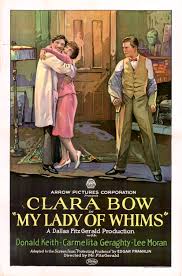 My Lady Of Whims (Dir. Dallas M Fitzgerald, US, 1925) (60 mins) When
Prudence Severn (Clara Bow), the daughter of a rich family gets
artistic inclinations and moves into a seedy Greenwich Village studio,
two unemployed dough-boys (Donald Keith and Lee Moran) are hired to
bring her to her senses and return her home. But Prudence proves a lot
harder to handle than the boys anticipate. My Lady Of Whims
was the last of 15 films Clara Bow made in 1925. Its an amusing comedy
rather than a classic although it does have some funny moments. And
any
My Lady Of Whims (Dir. Dallas M Fitzgerald, US, 1925) (60 mins) When
Prudence Severn (Clara Bow), the daughter of a rich family gets
artistic inclinations and moves into a seedy Greenwich Village studio,
two unemployed dough-boys (Donald Keith and Lee Moran) are hired to
bring her to her senses and return her home. But Prudence proves a lot
harder to handle than the boys anticipate. My Lady Of Whims
was the last of 15 films Clara Bow made in 1925. Its an amusing comedy
rather than a classic although it does have some funny moments. And
any 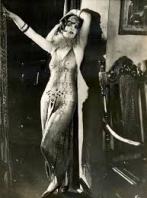 film
featuring Clara Bow has to be worth watching, especially in ‘that’
dress! The film also marked the end of the film’s production company,
Preferred Studios, although the studio head B P Schulberg apparently
walked straight into a job at Paramount
film
featuring Clara Bow has to be worth watching, especially in ‘that’
dress! The film also marked the end of the film’s production company,
Preferred Studios, although the studio head B P Schulberg apparently
walked straight into a job at Paramount  largely on the basis of bringing Ms Bow with him as he had her under a personal contract. Find out more at screeningthepast.com. The version here via You Tube
isn’t of the best quality but it is about the most complete version I
could find. Originally released at 70 mins, this version runs for 60
but others have been cut down to barely 35 minutes. It also comes with a
somewhat scratchy but wholly appropriate jazz score.
largely on the basis of bringing Ms Bow with him as he had her under a personal contract. Find out more at screeningthepast.com. The version here via You Tube
isn’t of the best quality but it is about the most complete version I
could find. Originally released at 70 mins, this version runs for 60
but others have been cut down to barely 35 minutes. It also comes with a
somewhat scratchy but wholly appropriate jazz score.
The White Hell Of Pitz Palu (Dir. Arnold Fanck/G W Pabst) (134 mins) The
‘alpine film’ is a curious and uniquely German film genre, sometimes
seen in cultural and national identity terms as comparable to the
American western. Although probably  less well than other films of the genre such as Struggle For The Matterhorn (1928) or Mountain of Destiny (1926), The White Hell of Pitz Palu
is a good example of the style and content of the genre. The film
opens with the wife of climber Johannes Kraff (Gustav Diesel) being
swept to her death by an avalanche. In the years that follow he
relentlessly searches for her body, earning the nickname ‘the ghost of
the mountain’. Newly engaged couple Maria (Leni Riefenstahl) and Hans
(Ernst Petersen) arrive at an alpine lodge at the foot of the mountain
and meet Kraff. The three decide to climb the unconquered north face of
Pitz Palu but as they ascend the tensions and the passions mount.
Director Fanck was pretty much the instigator of the alpine drama genre
and from him comes stunning footage of the mountain scenery in
less well than other films of the genre such as Struggle For The Matterhorn (1928) or Mountain of Destiny (1926), The White Hell of Pitz Palu
is a good example of the style and content of the genre. The film
opens with the wife of climber Johannes Kraff (Gustav Diesel) being
swept to her death by an avalanche. In the years that follow he
relentlessly searches for her body, earning the nickname ‘the ghost of
the mountain’. Newly engaged couple Maria (Leni Riefenstahl) and Hans
(Ernst Petersen) arrive at an alpine lodge at the foot of the mountain
and meet Kraff. The three decide to climb the unconquered north face of
Pitz Palu but as they ascend the tensions and the passions mount.
Director Fanck was pretty much the instigator of the alpine drama genre
and from him comes stunning footage of the mountain scenery in  both
its beauty and power. But we probably have co-director Pabst to thank
for the human drama. Riefenstahl had already starred in two of Fanck’s
alpine dramas and would make two more after The White Hell of Pitz Palu
before she moved on to directing first a melodrama and then her more
renowned propaganda films. Indeed, the night time search for the lost
climbers in this film, illuminated by blazing torches, is weirdly
prescient of the night time Nazi rally scenes in Triumph of the Will. Find out more at silentsaregolden.com. The version here comes courtesy of Daily Motion and has an orchestral accompaniment to match the visual majesty and drama of the film.
both
its beauty and power. But we probably have co-director Pabst to thank
for the human drama. Riefenstahl had already starred in two of Fanck’s
alpine dramas and would make two more after The White Hell of Pitz Palu
before she moved on to directing first a melodrama and then her more
renowned propaganda films. Indeed, the night time search for the lost
climbers in this film, illuminated by blazing torches, is weirdly
prescient of the night time Nazi rally scenes in Triumph of the Will. Find out more at silentsaregolden.com. The version here comes courtesy of Daily Motion and has an orchestral accompaniment to match the visual majesty and drama of the film.
 The House On Trubnaya (Dir. Boris Barnett, USSR, 1928) (84 mins) Country
girl Paranya (Vera Maretskaya) arrives in Moscow, along with her pet
duck, to stay with her uncle. But unbeknownst to Paranya he has
returned to their village. Instead, she ends up staying with an old
friend at the house on Trubnaya street where she meets hairdresser Mr
Golikov (Vladimir Fogel) who
The House On Trubnaya (Dir. Boris Barnett, USSR, 1928) (84 mins) Country
girl Paranya (Vera Maretskaya) arrives in Moscow, along with her pet
duck, to stay with her uncle. But unbeknownst to Paranya he has
returned to their village. Instead, she ends up staying with an old
friend at the house on Trubnaya street where she meets hairdresser Mr
Golikov (Vladimir Fogel) who  is
looking for non-union labour to do his chores. But Mr Golikov’s hopes
of an easy life with some cheap labour are thwarted when Paranya becomes
a member of the Worker’s Council. There was a lot more to Soviet
cinema of the 1920s than just political spectacle (Battleship Potemkin), montage (Man With A Movie Camera) or propaganda (Turksib). For one thing, there was comedy,
is
looking for non-union labour to do his chores. But Mr Golikov’s hopes
of an easy life with some cheap labour are thwarted when Paranya becomes
a member of the Worker’s Council. There was a lot more to Soviet
cinema of the 1920s than just political spectacle (Battleship Potemkin), montage (Man With A Movie Camera) or propaganda (Turksib). For one thing, there was comedy,  quite a lot of it in fact and much of it very good. A choice example is The House On Trubnaya
which, as well as being very funny, is a dazzlingly well shot and
superbly edited film, giving it a real sense of style and movement. The
characters are well drawn, the actors (particularly Vera Maretskaya)
are excellent and the film even gets over a serious political message.
Find out more at sensesofcinema.com. The version here on You Tube
comes with a pleasant accompaniment which matches the often frenetic
pace of the film. In fact the film may just be a little too frenetic in
this version, which runs for just 62 minutes but it seems to reflect
simply an over-fast projection speed rather than an edited version.
quite a lot of it in fact and much of it very good. A choice example is The House On Trubnaya
which, as well as being very funny, is a dazzlingly well shot and
superbly edited film, giving it a real sense of style and movement. The
characters are well drawn, the actors (particularly Vera Maretskaya)
are excellent and the film even gets over a serious political message.
Find out more at sensesofcinema.com. The version here on You Tube
comes with a pleasant accompaniment which matches the often frenetic
pace of the film. In fact the film may just be a little too frenetic in
this version, which runs for just 62 minutes but it seems to reflect
simply an over-fast projection speed rather than an edited version.
6 May
 Le Brasier Ardent (aka The Burning Crucible) (Dir. Ivan Mosjoukine, Fr, 1923) ( 107 mins) A woman, Elle (Nathalie Lissenko) suffers from vivid nightmares which feature an
  unknown
man’s face. Later, when her husband announces plans for them to leave
her beloved Paris, Elle runs away. The husband attempts to follow but
instead finds himself in the somewhat bizarre ‘Investigations Agency’.
He arranges for them to track down his wife but the agent put on the
case, Detective Z (Ivan Mosjoukine), is the very same man who has been
appearing in his wife’s nightmares. Are you following so far? If you
only know of Mosjoukine from his historical adventure film roles such as
Michel Strogoff (1926) or The Loves of Casanova (1927) then nothing really prepares you for Le Brasier
unknown
man’s face. Later, when her husband announces plans for them to leave
her beloved Paris, Elle runs away. The husband attempts to follow but
instead finds himself in the somewhat bizarre ‘Investigations Agency’.
He arranges for them to track down his wife but the agent put on the
case, Detective Z (Ivan Mosjoukine), is the very same man who has been
appearing in his wife’s nightmares. Are you following so far? If you
only know of Mosjoukine from his historical adventure film roles such as
Michel Strogoff (1926) or The Loves of Casanova (1927) then nothing really prepares you for Le Brasier  Ardent,
the only film which he wrote and directed as well as starred in. The
opening dream sequence is like something out of Dante’s Inferno, the
Investigations Agency is a masterpiece of surrealism, there is a 1920s
dance marathon and a grand-mother fixated detective. The film is a
visual masterpiece with striking sets and clever visual effects.
Mosjoukine and his real life partner Lissenko play off each other
beautifully and there are some wonderful location shots of Paris. Find
out more at ithankyouarthur.blogspot.com. The version screened here on You Tube is Cinematheque Francais‘ beautifully restored and tinted version with nice piano accompaniment from Neil Brand although the English auto-translate of the French inter-titles sometimes left a bit to be desired.
Ardent,
the only film which he wrote and directed as well as starred in. The
opening dream sequence is like something out of Dante’s Inferno, the
Investigations Agency is a masterpiece of surrealism, there is a 1920s
dance marathon and a grand-mother fixated detective. The film is a
visual masterpiece with striking sets and clever visual effects.
Mosjoukine and his real life partner Lissenko play off each other
beautifully and there are some wonderful location shots of Paris. Find
out more at ithankyouarthur.blogspot.com. The version screened here on You Tube is Cinematheque Francais‘ beautifully restored and tinted version with nice piano accompaniment from Neil Brand although the English auto-translate of the French inter-titles sometimes left a bit to be desired.
5 May
 Soft Shoes (Dir. Lloyd Ingraham, US, 1925) (46 mins) Soft Shoes is a nice amalgam of western, crime melodrama and rom-com, with all of that being
  squeezed
into just 46 minutes. Harry Carey is the rugged cowboy who comes to
the big city to collect an inheritance. But his troubles are only just
starting when he catches cat-burglar Faith O’Day (Lillian Rich) breaking
in to his lodgings. Much of the fun of the film rests with the
interplay between Carey and Rich but it also comes with a good dollop of
drama and laughs. An early archetypal screen cowboy, Carey didn’t mind
occasionally playing it for laughs, 1917’s Bucking Broadway being a great example, and he’s just as good here. Lillian Rich is all but forgotten now but this London girl (born just
squeezed
into just 46 minutes. Harry Carey is the rugged cowboy who comes to
the big city to collect an inheritance. But his troubles are only just
starting when he catches cat-burglar Faith O’Day (Lillian Rich) breaking
in to his lodgings. Much of the fun of the film rests with the
interplay between Carey and Rich but it also comes with a good dollop of
drama and laughs. An early archetypal screen cowboy, Carey didn’t mind
occasionally playing it for laughs, 1917’s Bucking Broadway being a great example, and he’s just as good here. Lillian Rich is all but forgotten now but this London girl (born just  down the road in Herne Hill) was a considerable star in the early-mid Twenties before her star faded. There is
  also an appearance by Francis Ford, John’s big brother, as the heavy, plus a cute dog. What more do you want? Find out more at moviessilently.com. The version here
is a lovely restoration of an original nitrate print held by the Czech
National Film Archive, undertaken by the National Film Preservation
Foundation. It comes with a nice piano accompaniment by Donald Sosin.
(But beware, it was an awful struggle to stream the film)
also an appearance by Francis Ford, John’s big brother, as the heavy, plus a cute dog. What more do you want? Find out more at moviessilently.com. The version here
is a lovely restoration of an original nitrate print held by the Czech
National Film Archive, undertaken by the National Film Preservation
Foundation. It comes with a nice piano accompaniment by Donald Sosin.
(But beware, it was an awful struggle to stream the film)
4 May
 The Broken Butterfly (Dir. Maurice Tournear, US, 1919) (59 mins) While
out walking in the Canadian backwoods, the young and unhappy orphan
Marcene (Pauline Starke) meets composer Darrell Thorne (Lew Cody) who is
looking for inspiration. Despite a gypsy warning Marcene that love
will bring her both joy
The Broken Butterfly (Dir. Maurice Tournear, US, 1919) (59 mins) While
out walking in the Canadian backwoods, the young and unhappy orphan
Marcene (Pauline Starke) meets composer Darrell Thorne (Lew Cody) who is
looking for inspiration. Despite a gypsy warning Marcene that love
will bring her both joy  and
sorrow she and Thorne gradually fall in love and Thorne asks Marcene to
accompany him to New York for the premier of his new symphony.
However, she declines, fearful of the reaction of her strict guardian
aunt. But when Thorne returns from New York there is sorrow a plenty.
Right from the brief animated sequence before the main titles it is
clear that The Broken Butterfly is a film of rare beauty, much like most of Maurie Tournear’s work. The cinematography is
and
sorrow she and Thorne gradually fall in love and Thorne asks Marcene to
accompany him to New York for the premier of his new symphony.
However, she declines, fearful of the reaction of her strict guardian
aunt. But when Thorne returns from New York there is sorrow a plenty.
Right from the brief animated sequence before the main titles it is
clear that The Broken Butterfly is a film of rare beauty, much like most of Maurie Tournear’s work. The cinematography is  stunning,
with virtually every shot beautifully framed. The story is a touching,
if not wholly believable, melodrama although the plot is dependent upon
the sort of unbelievable coincidences so prevalent in the world of
silent cinema. Find out more at wikipedia.org. The stunning restoration here comes courtesy of The Film Foundation, restored in 2019 probably having been unseen for a century with the work intriguingly financed by LOUIS XIII Cognac. It comes with an excellent piano accompaniment from Donald Sosin.
stunning,
with virtually every shot beautifully framed. The story is a touching,
if not wholly believable, melodrama although the plot is dependent upon
the sort of unbelievable coincidences so prevalent in the world of
silent cinema. Find out more at wikipedia.org. The stunning restoration here comes courtesy of The Film Foundation, restored in 2019 probably having been unseen for a century with the work intriguingly financed by LOUIS XIII Cognac. It comes with an excellent piano accompaniment from Donald Sosin.
1 May
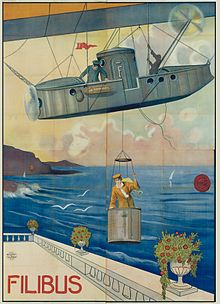 Filibus (Dir. Mario Roncoroni, It, 1915) (76mins) Filibus (the first of thirty films directed by Roncoroni) featured as a protagonist a roguish female lead character,
  the
Baroness Troixmonde, who is a respectable member of society by day, but
by night in the guise of “Filibus” she terrorizes Sicily from her
zeppelin, which is full of technologically-advanced equipment and
weaponry. The zeppelin is manned by a staff of mask-wearing,
black-skin-suit-clad male assistants who obey the Baroness’ commands
instantly. The airship is her headquarters and her home, and she
descends to land only to rob or to hobnob with the rich socialites and
to dance with other women in the guise of the tuxedo-wearing dandy
Count de la Brieve ( a full 15 years before Dietrich’s famous
cross-dressing scene in Morocco). But has Filibus met her match with the renowned Detective
the
Baroness Troixmonde, who is a respectable member of society by day, but
by night in the guise of “Filibus” she terrorizes Sicily from her
zeppelin, which is full of technologically-advanced equipment and
weaponry. The zeppelin is manned by a staff of mask-wearing,
black-skin-suit-clad male assistants who obey the Baroness’ commands
instantly. The airship is her headquarters and her home, and she
descends to land only to rob or to hobnob with the rich socialites and
to dance with other women in the guise of the tuxedo-wearing dandy
Count de la Brieve ( a full 15 years before Dietrich’s famous
cross-dressing scene in Morocco). But has Filibus met her match with the renowned Detective  Hardy
on her trail….. OK, so the ‘special effects’ are laughable by today’s
standards. But this film remains hugely inventive for its time and
still great fun to watch. It ends with a promise of a sequel but sadly
this never materialised. See our own (with spoilers) review here or find out more at silentsplease.wordpress.com . There is a beautiful tinted version of the film here with English translations but sadly no musical accompaniment. Alternatively, the version here
is plain B&W but does have musical accompaniment. And if its your
only way to fully enjoy the film, with a bit of practice it is possible
to sync the two in order to watch one and listen to the other!!
Hardy
on her trail….. OK, so the ‘special effects’ are laughable by today’s
standards. But this film remains hugely inventive for its time and
still great fun to watch. It ends with a promise of a sequel but sadly
this never materialised. See our own (with spoilers) review here or find out more at silentsplease.wordpress.com . There is a beautiful tinted version of the film here with English translations but sadly no musical accompaniment. Alternatively, the version here
is plain B&W but does have musical accompaniment. And if its your
only way to fully enjoy the film, with a bit of practice it is possible
to sync the two in order to watch one and listen to the other!!
 Kid Boots (Dir. Frank Tuttle, US, 1923) ( 60 mins) Samuel
(Kid) Boots (Eddie Cantor) has self image problems and sees himself as a
failure with the ladies. But then he thinks his problems are over when
he meets Clara McCoy (Clara Bow) who says she just wants a reliable guy
rather than one that’s good looking. But he’s sidetracked by becoming
involved as a witness in a messy divorce suit, finds a new friend and
Kid Boots (Dir. Frank Tuttle, US, 1923) ( 60 mins) Samuel
(Kid) Boots (Eddie Cantor) has self image problems and sees himself as a
failure with the ladies. But then he thinks his problems are over when
he meets Clara McCoy (Clara Bow) who says she just wants a reliable guy
rather than one that’s good looking. But he’s sidetracked by becoming
involved as a witness in a messy divorce suit, finds a new friend and  gets
a job in a health resort where he meets up again with Clara. I don’t
normally warm to Eddie Cantor but in this film he is very good and Clara
Bow is her usual t
gets
a job in a health resort where he meets up again with Clara. I don’t
normally warm to Eddie Cantor but in this film he is very good and Clara
Bow is her usual t op
notch self. The result is a very funny 60 minutes with many a
laugh-out-loud moment. The scene with Kid Boots trying to make Clara
jealous by having tea with an imaginary friend is just so clever. And
with Billie Dove and Natalie Kingston also in the cast there is no
shortage of glamour. Find out more at imdb.com. There are any number of versions of Kid Boots on-line but I particularly like the version from the Bill Sprague Collection on Internet Archive here which has a nice piano accompaniment from Arthur Siegel.
op
notch self. The result is a very funny 60 minutes with many a
laugh-out-loud moment. The scene with Kid Boots trying to make Clara
jealous by having tea with an imaginary friend is just so clever. And
with Billie Dove and Natalie Kingston also in the cast there is no
shortage of glamour. Find out more at imdb.com. There are any number of versions of Kid Boots on-line but I particularly like the version from the Bill Sprague Collection on Internet Archive here which has a nice piano accompaniment from Arthur Siegel.
 Salome (Dir. Charles Bryant, US, 1923) (74 mins) For
actor-producer Alla Nazimova, adapting Oscar Wilde’s version of Salome
for the screen was a labour of love. She wrote the screenplay under the
pseudonym Peter M. Winters, reportedly co-directed it and, despite
being way too old at 44
Salome (Dir. Charles Bryant, US, 1923) (74 mins) For
actor-producer Alla Nazimova, adapting Oscar Wilde’s version of Salome
for the screen was a labour of love. She wrote the screenplay under the
pseudonym Peter M. Winters, reportedly co-directed it and, despite
being way too old at 44  (sources
vary), made a pretty good job of starring as the youthful Salome
herself. In the film, Salome tricks her step-father, King Herod, into
beheading the imprisoned John the Baptist after he rejected her
advances. Using much of Wilde’s original text for the inter-titles, the
visual style of the film was heavily influenced by the drawings of
Aubrey Beardsley which illustrated Wilde’s play on its first
publication. The result is an uber-stylised production with exotic
costumes and sets and a highly exaggerated acting style, more a filmed
stage play than a true feature film. On Salome‘s completion, Nazimova
(sources
vary), made a pretty good job of starring as the youthful Salome
herself. In the film, Salome tricks her step-father, King Herod, into
beheading the imprisoned John the Baptist after he rejected her
advances. Using much of Wilde’s original text for the inter-titles, the
visual style of the film was heavily influenced by the drawings of
Aubrey Beardsley which illustrated Wilde’s play on its first
publication. The result is an uber-stylised production with exotic
costumes and sets and a highly exaggerated acting style, more a filmed
stage play than a true feature film. On Salome‘s completion, Nazimova struggled
to find a distributor and, despite some critical acclaim, it made a
huge loss and effectively ended her ambitions as a film producer. But
looking at it today, Salome has an ethereal and
haunting beauty and is an interesting early example of what we would now
call ‘art-house’ cinema. Find out more at loc.gov. There are numerous free to access on-line versions of Salome but I do like the one here on You Tube, largely on account of the modern electronic accompaniment which suits the visuals rather well.
struggled
to find a distributor and, despite some critical acclaim, it made a
huge loss and effectively ended her ambitions as a film producer. But
looking at it today, Salome has an ethereal and
haunting beauty and is an interesting early example of what we would now
call ‘art-house’ cinema. Find out more at loc.gov. There are numerous free to access on-line versions of Salome but I do like the one here on You Tube, largely on account of the modern electronic accompaniment which suits the visuals rather well.
30 April
 A Throw Of Dice ( aka Prapancha Pash) ) (Dir. Franz Osten, Ind, 1929) (74 mins) Inspired by the ancient Sanskrit epic poem The Mahabharata, A Throw Of Dice
tells of royal cousins King Sohat (Himansu Rai) and King Ranjit (Charu
Roy), a pair of inveterate gamblers. But Sohat also has ambitions on
Ranjit’s throne. After a failed attempt by Sohat on Ranjit’s life the
latter is nursed back to health by the beautiful Sunita (Seta Devi) with
whom he falls in love. But Sohat also has designs on Sunita. Knowing
Ranjit’s love of gambling, Sohat challenges him to a winner-takes-all
A Throw Of Dice ( aka Prapancha Pash) ) (Dir. Franz Osten, Ind, 1929) (74 mins) Inspired by the ancient Sanskrit epic poem The Mahabharata, A Throw Of Dice
tells of royal cousins King Sohat (Himansu Rai) and King Ranjit (Charu
Roy), a pair of inveterate gamblers. But Sohat also has ambitions on
Ranjit’s throne. After a failed attempt by Sohat on Ranjit’s life the
latter is nursed back to health by the beautiful Sunita (Seta Devi) with
whom he falls in love. But Sohat also has designs on Sunita. Knowing
Ranjit’s love of gambling, Sohat challenges him to a winner-takes-all  contest
for his throne, for Sunita and perhaps even for his very life. But
just how fair is the ‘throw of dice’! Shot on location in Rajasthan,A
Throw Of Dice features over 10,000 extras and an impressive array of
horses, elephants and tigers. The film is stunning to look at, the
location shooting is breathtaking and the performances exceptional. A Throw of Dice was the third film, after Light of Asia (1925) and Shiraz (1928), in a pioneering trilogy of silent
contest
for his throne, for Sunita and perhaps even for his very life. But
just how fair is the ‘throw of dice’! Shot on location in Rajasthan,A
Throw Of Dice features over 10,000 extras and an impressive array of
horses, elephants and tigers. The film is stunning to look at, the
location shooting is breathtaking and the performances exceptional. A Throw of Dice was the third film, after Light of Asia (1925) and Shiraz (1928), in a pioneering trilogy of silent  films
made in a partnership between German director Franz Osten, Indian
actor-producer Himansu Rai, and writer Niranjan Pal . Together with
actress Devika Rani they would go on to establish the Bombay Talkies
studio in 1934 setting in train the rise of Bollywood. This trilogy of
films made a huge star of Anglo-Indian actress Seta Devi (born plain
old Renee Smith) but she herself failed to make the transition to
‘talkies’. Find out more at silentfilm.org. The version here on You Tube is the beautifully restored version released by Kino with a lovely accompaniment composed by Nitin Sawhney. (PS Don’t worry that the You Tube version gives a running time of 2 hours and 32 minutes, for some reason the film runs twice.)
films
made in a partnership between German director Franz Osten, Indian
actor-producer Himansu Rai, and writer Niranjan Pal . Together with
actress Devika Rani they would go on to establish the Bombay Talkies
studio in 1934 setting in train the rise of Bollywood. This trilogy of
films made a huge star of Anglo-Indian actress Seta Devi (born plain
old Renee Smith) but she herself failed to make the transition to
‘talkies’. Find out more at silentfilm.org. The version here on You Tube is the beautifully restored version released by Kino with a lovely accompaniment composed by Nitin Sawhney. (PS Don’t worry that the You Tube version gives a running time of 2 hours and 32 minutes, for some reason the film runs twice.)
29 April
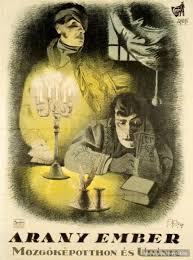 Man Of Gold (aka Az aranyember, aka The Red Half Moon) (Dir. Sándor Korda, Hun, 1918) (85 mins) When
an arrest warrant is issued for a rich Turkish pasha he escapes with
his daughter Kondja (Magrit Makay) and a sack of treasure on a ship
Man Of Gold (aka Az aranyember, aka The Red Half Moon) (Dir. Sándor Korda, Hun, 1918) (85 mins) When
an arrest warrant is issued for a rich Turkish pasha he escapes with
his daughter Kondja (Magrit Makay) and a sack of treasure on a ship  traveling
up the River Danube. But when he is followed by a police spy he
commits suicide after entrusting Timar (Oszkar Beregi) the ship’s
captain with ensuring his daughter’s safety and providing her with money
from the treasure. But Beregi keeps the money becoming a prosperous
titled businessman, eventually marrying Kondja but also continuing a
relationship with peasant girl Noemi. But the police spy is now on his
trail. Man of Gold is a sprawling melodrama, a story of deception,
guilt, blackmail and revenge. It features some stunning
traveling
up the River Danube. But when he is followed by a police spy he
commits suicide after entrusting Timar (Oszkar Beregi) the ship’s
captain with ensuring his daughter’s safety and providing her with money
from the treasure. But Beregi keeps the money becoming a prosperous
titled businessman, eventually marrying Kondja but also continuing a
relationship with peasant girl Noemi. But the police spy is now on his
trail. Man of Gold is a sprawling melodrama, a story of deception,
guilt, blackmail and revenge. It features some stunning  location
photography on the River Danube at the Iron Gate gorge as well as
impressive studio interiors, particularly of the Pasha’s palace. The
film is beautifully restored and some of the scenes, particularly the
red tinted ones are stunningly attractive. Probably still missing some
original footage the plot is occasionally a little tricky to follow
while the overly theatrical acting style reflects the era it was made
in. Director Sandor Korda of course changed his name on leaving
Hungary to Alexander Korda, in the process becoming one of the biggest
names in British cinema. The film is available to watch here courtesy of the Hungarian Film Archive. Unfortunately there is no musical accompaniment.
location
photography on the River Danube at the Iron Gate gorge as well as
impressive studio interiors, particularly of the Pasha’s palace. The
film is beautifully restored and some of the scenes, particularly the
red tinted ones are stunningly attractive. Probably still missing some
original footage the plot is occasionally a little tricky to follow
while the overly theatrical acting style reflects the era it was made
in. Director Sandor Korda of course changed his name on leaving
Hungary to Alexander Korda, in the process becoming one of the biggest
names in British cinema. The film is available to watch here courtesy of the Hungarian Film Archive. Unfortunately there is no musical accompaniment.
 A Trip to Mars (aka Das Himmelschiff) (Dir. Forest Holger-Madsen, Den, 1918) (81 mins) Made near the end of the ‘golden age’ of Danish cinema, A Trip To Mars is probably the first feature length science fiction film ever made. Inspired by his astronomer father, naval captain
  Avanti
Planetaros ( Gunnar Tolnaes) builds a spaceship and assembles a crew
for a long journey to Mars. On arrival he discovers an advanced race of
people, free from the scourges of hunger, disease or violence (and
vegetarian to boot!). Avanti of course falls for the Martian leader’s
daughter (Lilly Jacobson) but trouble looms when the earth men display
their true character (“We come in peace” but they all have guns tucked
in our belts!). This idea of advanced, peaceful alien versus crude,
violent human would of course be a recurrent theme in science fiction
film and TV right up to the present day. The film itself has
considerable production values with a huge cast, impressive costumes and
some giant
Avanti
Planetaros ( Gunnar Tolnaes) builds a spaceship and assembles a crew
for a long journey to Mars. On arrival he discovers an advanced race of
people, free from the scourges of hunger, disease or violence (and
vegetarian to boot!). Avanti of course falls for the Martian leader’s
daughter (Lilly Jacobson) but trouble looms when the earth men display
their true character (“We come in peace” but they all have guns tucked
in our belts!). This idea of advanced, peaceful alien versus crude,
violent human would of course be a recurrent theme in science fiction
film and TV right up to the present day. The film itself has
considerable production values with a huge cast, impressive costumes and
some giant  sets.
While its easy now to laugh at the technology on show (a spaceship with
wings and a propeller which ‘flies’ to Mars, astronauts clad in leather
flying jackets etc) the scientific conception of space travel was not
then even in its infancy. The other interesting theme of the film is
the utopian and peaceful
sets.
While its easy now to laugh at the technology on show (a spaceship with
wings and a propeller which ‘flies’ to Mars, astronauts clad in leather
flying jackets etc) the scientific conception of space travel was not
then even in its infancy. The other interesting theme of the film is
the utopian and peaceful  nature
of martian society, which, despite its obvious naivety, was perhaps
easy to understand in a film made as the slaughter of the 1914-18 war
was drawing to a close and there was an idealistic hope of a better
world to follow. All in all, A Trip To Mars is a
fascinating film, enjoyable despite, or perhaps in part even because of,
some of the worst ‘ham’ acting. It was also good to see the
perpetually doubtful Professor Dubius (gettit!) get his come-uppance at
the film’s conclusion. Find out more at horrornews.net. The film can be watched here in a beautifully restored version courtesy of the Danish Film Archive with English translations and a pleasant piano accompaniment.
nature
of martian society, which, despite its obvious naivety, was perhaps
easy to understand in a film made as the slaughter of the 1914-18 war
was drawing to a close and there was an idealistic hope of a better
world to follow. All in all, A Trip To Mars is a
fascinating film, enjoyable despite, or perhaps in part even because of,
some of the worst ‘ham’ acting. It was also good to see the
perpetually doubtful Professor Dubius (gettit!) get his come-uppance at
the film’s conclusion. Find out more at horrornews.net. The film can be watched here in a beautifully restored version courtesy of the Danish Film Archive with English translations and a pleasant piano accompaniment.
28 April
 Jiraiya The Hero (aka Goketsu Jiraiya) (Dir. Shozo Makino, Jap, 1921 (21 mins) Although indigenous film production had begun in Japan by the late 1890s, for a film made in 1921 Jiraiya The Hero
is a technically crude and simplistic work, with static camera work,
extended long-shot takes, few close ups and minimal editing. Parts of
it are curiously reminiscent of the work of Melies or Segundo de Chomón from well over a decade earlier. Although director Shōzō Makino is regarded as the
Jiraiya The Hero (aka Goketsu Jiraiya) (Dir. Shozo Makino, Jap, 1921 (21 mins) Although indigenous film production had begun in Japan by the late 1890s, for a film made in 1921 Jiraiya The Hero
is a technically crude and simplistic work, with static camera work,
extended long-shot takes, few close ups and minimal editing. Parts of
it are curiously reminiscent of the work of Melies or Segundo de Chomón from well over a decade earlier. Although director Shōzō Makino is regarded as the  first pioneer of Japanese cinema, his forte was period drama or jidaigeki.
Unlike in the west where the new medium of film was seen as
entertainment for the working class, in Japan the reverse was true with
the new medium being championed by the upper classes, who wanted film to
recreate the period Kabuki stage plays they favoured. It was not until
the early 1920s that the rival contemporary film or gendaigeki genre
began to emerge. Jiraiya The Hero certainly falls into
the period drama category. It also lacks much of a narrative plot,
with minimal inter-titles. However, as was common in early Japanese
silent film, it would rely on a benshi narrator to explain and further
dramatise aspects of the plot. Nevertheless, the film is interesting
for its trick photography (the lead character turning into a giant toad
to fight a serpent) and its stylised Samuri sword play. And for all the
hundreds of films Shozo Makino directed this may be one of just two to
have survived. The film can be viewed here at the South Asia On-Line Film Festival website, which also has some more information about the film.
first pioneer of Japanese cinema, his forte was period drama or jidaigeki.
Unlike in the west where the new medium of film was seen as
entertainment for the working class, in Japan the reverse was true with
the new medium being championed by the upper classes, who wanted film to
recreate the period Kabuki stage plays they favoured. It was not until
the early 1920s that the rival contemporary film or gendaigeki genre
began to emerge. Jiraiya The Hero certainly falls into
the period drama category. It also lacks much of a narrative plot,
with minimal inter-titles. However, as was common in early Japanese
silent film, it would rely on a benshi narrator to explain and further
dramatise aspects of the plot. Nevertheless, the film is interesting
for its trick photography (the lead character turning into a giant toad
to fight a serpent) and its stylised Samuri sword play. And for all the
hundreds of films Shozo Makino directed this may be one of just two to
have survived. The film can be viewed here at the South Asia On-Line Film Festival website, which also has some more information about the film.
27 April
 Pass The Gravy (Dir. Leo McCarey, US, 1928) (25 mins) The story of a prize rooster, battling neighbours, an engagement party and a bird roasting in the
  oven.
An almost perfect comedy but then what would you expect from the Hal
Roach studio, direction supervised by Leo McCarey and starring Max
Davidson. Davidson is excellent as is Spec O’Donnell playing his usual
geeky kid but for me its Gene Morgan and Martha Sleeper who steal the
film, especially with their extended ‘charades’ scene. Find out more at loc.gov. A version on You Tube with nice accompaniment is here
oven.
An almost perfect comedy but then what would you expect from the Hal
Roach studio, direction supervised by Leo McCarey and starring Max
Davidson. Davidson is excellent as is Spec O’Donnell playing his usual
geeky kid but for me its Gene Morgan and Martha Sleeper who steal the
film, especially with their extended ‘charades’ scene. Find out more at loc.gov. A version on You Tube with nice accompaniment is here
 True Heart Susie (Dir. D W Griffith, US, 1919) (86 mins) True Heart Susie is probably my favourite film from director D W Griffith. The complete antithesis of his epic productions such as Birth of a Nation or Intolerance, it is an intimate little drama,
  one
of Griffith’s ‘pastoral’ films, a rural poem seemingly harking back to
an earlier age. The plain and simple Susie (Lillian Gish) is in love
with neighbour William (Robert Harron) but he’s too bashful to take
things further. When a lack of funds prevents his going to college,
Susie anonymously sends him the money, hoping that they will be married
on his return. But the William that returns is not the one who went
away and heartbreak is in store for Susie. OK, so the story is
curiously old fashioned, perhaps a little over-sentimental and one or
two of the inter-titles grate with a modern audience but the film is
just so charming. Lillian Gish puts in her usual knock-out performance
but Robert Harron is almost as
one
of Griffith’s ‘pastoral’ films, a rural poem seemingly harking back to
an earlier age. The plain and simple Susie (Lillian Gish) is in love
with neighbour William (Robert Harron) but he’s too bashful to take
things further. When a lack of funds prevents his going to college,
Susie anonymously sends him the money, hoping that they will be married
on his return. But the William that returns is not the one who went
away and heartbreak is in store for Susie. OK, so the story is
curiously old fashioned, perhaps a little over-sentimental and one or
two of the inter-titles grate with a modern audience but the film is
just so charming. Lillian Gish puts in her usual knock-out performance
but Robert Harron is almost as  good,
particularly upon his return from college. Tragically Harron was to
die the following year from a self inflicted gunshot in still unclear
circumstances. A big star at the time, he is now all but forgotten.
And watch out for Clarine Seymore, his flirty wife, who would utter the
word ‘damn’ a full twenty years before Rhett Butler caused such a fuss
when he said it. Find out more at silentsaregolden.com. There is a good quality version on You Tube here
(far better in fact than the version I purchased on DVD!!) which also
comes with the benefit of beautiful accompaniment from…..well, I’d love
to know who!
good,
particularly upon his return from college. Tragically Harron was to
die the following year from a self inflicted gunshot in still unclear
circumstances. A big star at the time, he is now all but forgotten.
And watch out for Clarine Seymore, his flirty wife, who would utter the
word ‘damn’ a full twenty years before Rhett Butler caused such a fuss
when he said it. Find out more at silentsaregolden.com. There is a good quality version on You Tube here
(far better in fact than the version I purchased on DVD!!) which also
comes with the benefit of beautiful accompaniment from…..well, I’d love
to know who!
 Queen Of Sports (Dir. Sun Yu, Chi, 1934) (89 mins) Films
about women’s sport are rare enough now let alone 75 years ago, but
that is what we have here, the story of a high-spirited and talented but
untrained runner, Lin Ying
(Li Li-Li) who arrives in Shanghai to attend a sports academy. Here
Lin Ying excels, much to the annoyance of the academy’s more established
stars, who plot against her. And amidst the high life of the big city
Lin Ying is in
Queen Of Sports (Dir. Sun Yu, Chi, 1934) (89 mins) Films
about women’s sport are rare enough now let alone 75 years ago, but
that is what we have here, the story of a high-spirited and talented but
untrained runner, Lin Ying
(Li Li-Li) who arrives in Shanghai to attend a sports academy. Here
Lin Ying excels, much to the annoyance of the academy’s more established
stars, who plot against her. And amidst the high life of the big city
Lin Ying is in  danger
of loosing her commitment to her athletic ambitions. By the time of
this film actress Li Li-Li was already a major star of Chinese cinema
and this part was written specifically for her and epitomises her own
high-spirited character, reminiscent of a Chinese Clara Bow, not least
at the film’s opening when she climbs the ship’s funnel to get a better
look at Shanghai. Li Li-Li continued to act until the
danger
of loosing her commitment to her athletic ambitions. By the time of
this film actress Li Li-Li was already a major star of Chinese cinema
and this part was written specifically for her and epitomises her own
high-spirited character, reminiscent of a Chinese Clara Bow, not least
at the film’s opening when she climbs the ship’s funnel to get a better
look at Shanghai. Li Li-Li continued to act until the  1940s
after which she taught at the Beijing Film Academy. During the
cultural revolution she was denounced and tortured (and her husband
executed) on the orders of Chairman Mao’s wife Jiang Qing who had been
an acting contemporary of Li Li-Li’s but who had never achieved the same
degree of stardom. Whilst the film is a highly entertaining and well
made fiction it was also intended to carry a propaganda message,
heralding the benefits of physical fitness, sportsmanship, even dental
hygiene! Find out more at vcinemashow.com. The You Tube version hereis
of pretty good quality and, although it is not a bespoke accompaniment
(which at times sounds reminiscent of Philip Glass), it fits quite well.
1940s
after which she taught at the Beijing Film Academy. During the
cultural revolution she was denounced and tortured (and her husband
executed) on the orders of Chairman Mao’s wife Jiang Qing who had been
an acting contemporary of Li Li-Li’s but who had never achieved the same
degree of stardom. Whilst the film is a highly entertaining and well
made fiction it was also intended to carry a propaganda message,
heralding the benefits of physical fitness, sportsmanship, even dental
hygiene! Find out more at vcinemashow.com. The You Tube version hereis
of pretty good quality and, although it is not a bespoke accompaniment
(which at times sounds reminiscent of Philip Glass), it fits quite well.
25 April
 The Musketeers of Pig Alley (Dir. D W Griffith, US, 1912) (17 mins) While
her musician boyfriend is away, the neighborhood gangster, the
‘snapper kid’ (Elmer Booth), tries to make a move on the ‘little lady’
(Lillian Gish). Despite being rebuffed he maintains an interest in her
but has bigger issues to deal with in the form of a rival gang. For
just a 17 minute film, The Musketeers of Pig Alley really does pack a lot in. The central protagonists, particularly the
The Musketeers of Pig Alley (Dir. D W Griffith, US, 1912) (17 mins) While
her musician boyfriend is away, the neighborhood gangster, the
‘snapper kid’ (Elmer Booth), tries to make a move on the ‘little lady’
(Lillian Gish). Despite being rebuffed he maintains an interest in her
but has bigger issues to deal with in the form of a rival gang. For
just a 17 minute film, The Musketeers of Pig Alley really does pack a lot in. The central protagonists, particularly the  Snapper
Kid and the Little Lady are fully fleshed out and believable characters
rather than mere one-dimensional cyphers. Although the build up to the
shoot-out out, as the two gangs stalk each other, lasts perhaps only
three minutes of screen time, it elicits a genuine tension and the
gunfight when it comes is dramatic in both its physical compactness and
its intensity. The film is beautifully shot (by Billy Bitzer) and is
rightly famed for the
Snapper
Kid and the Little Lady are fully fleshed out and believable characters
rather than mere one-dimensional cyphers. Although the build up to the
shoot-out out, as the two gangs stalk each other, lasts perhaps only
three minutes of screen time, it elicits a genuine tension and the
gunfight when it comes is dramatic in both its physical compactness and
its intensity. The film is beautifully shot (by Billy Bitzer) and is
rightly famed for the  dramatic
close up of the Snapper Kid as he creeps along a wall to stare out
directly at the audience. Lillian Gish would of course go on to a
stellar film career but sadly Elmer Booth would die just three years
later, a passenger in a car driven by an intoxicated Tod Browning which
collided with a freight train. Find out more about The Musketeers of Pig Alley at moma.org. There are several versions of the film on You Tube such as the one here,
all seemingly drawn from the same original. Sadly, all of them are let
down by bland and inappropriate accompaniment. You’d be better off
turning the sound down for this one!.
dramatic
close up of the Snapper Kid as he creeps along a wall to stare out
directly at the audience. Lillian Gish would of course go on to a
stellar film career but sadly Elmer Booth would die just three years
later, a passenger in a car driven by an intoxicated Tod Browning which
collided with a freight train. Find out more about The Musketeers of Pig Alley at moma.org. There are several versions of the film on You Tube such as the one here,
all seemingly drawn from the same original. Sadly, all of them are let
down by bland and inappropriate accompaniment. You’d be better off
turning the sound down for this one!.
 The Oyster Princess (aka Die Austernprinzessin) (Dir. Ernst Lubitsch, Ger, 1919) (60 mins)
When Ossi (Ossi Oswaldo), the uber spoilt daughter of Oyster
millionaire businessman Mr Quaker, learns that one of her friends is
marrying a count she throws a mega tantrum and demands that she
immediately be married to a prince. The chosen groom is the destitute
Prince Nucki. But first,
The Oyster Princess (aka Die Austernprinzessin) (Dir. Ernst Lubitsch, Ger, 1919) (60 mins)
When Ossi (Ossi Oswaldo), the uber spoilt daughter of Oyster
millionaire businessman Mr Quaker, learns that one of her friends is
marrying a count she throws a mega tantrum and demands that she
immediately be married to a prince. The chosen groom is the destitute
Prince Nucki. But first,  the
prince sends his valet to check whether his bride-to-be measures up.
And that is where things start to go wrong. Before anyone had ever
dreamed up the phrase ‘The Lubitsch Touch‘ here was a
film positively overflowing with the director’s renowned style. The
story, the sets, the performances, the timing, the fluidity of movement,
its all there and adds up to a riotously funny sixty minutes. Ossi
Oswalde portrays the hyper impatient spoilt teenager to a tee, rarely
more than a heartbeat away from the next
the
prince sends his valet to check whether his bride-to-be measures up.
And that is where things start to go wrong. Before anyone had ever
dreamed up the phrase ‘The Lubitsch Touch‘ here was a
film positively overflowing with the director’s renowned style. The
story, the sets, the performances, the timing, the fluidity of movement,
its all there and adds up to a riotously funny sixty minutes. Ossi
Oswalde portrays the hyper impatient spoilt teenager to a tee, rarely
more than a heartbeat away from the next  destructive
tantrum. Yet as Lubitsch’s career was to soar, hers was to fade even
before the end of the silent era and she died in poverty in Prague in
1947 aged just 50. Find out more at sensesofcinema.com. The version available on You Tube here looks to be the same as that included on the Lubitsch In Berlin DVD collection, with beautiful reproduction and a fine accompaniment.
destructive
tantrum. Yet as Lubitsch’s career was to soar, hers was to fade even
before the end of the silent era and she died in poverty in Prague in
1947 aged just 50. Find out more at sensesofcinema.com. The version available on You Tube here looks to be the same as that included on the Lubitsch In Berlin DVD collection, with beautiful reproduction and a fine accompaniment.
 Passing Fancy (Dir. Yasujiro Ozu, Jap, 1933) (100 mins) On
their way home after a night out two brewery workers, Kihachi (Takeshi
Sakamoto ) and his younger friend Jiro (Den Obinata ), come across a
destitute young woman, Harue (Nobuko Fushimi). Against Jiro’s better
judgement Kihachi finds her somewhere to stay. He has dreams of
marrying her but Harue is interested
Passing Fancy (Dir. Yasujiro Ozu, Jap, 1933) (100 mins) On
their way home after a night out two brewery workers, Kihachi (Takeshi
Sakamoto ) and his younger friend Jiro (Den Obinata ), come across a
destitute young woman, Harue (Nobuko Fushimi). Against Jiro’s better
judgement Kihachi finds her somewhere to stay. He has dreams of
marrying her but Harue is interested  only in Jiro. Although tinged with melodrama, Passing Fancy
is at heart a charming light comedy. While structured around the
Kihachi/Jiro/Harue triangle, the film is as much about the relationship
between the illiterate Kihachi and his cleverer school boy son Tomio
(with another remarkable performance by Tokkan Kozo). The year 1933 saw
director Ozu hit a particular vein of form, making not only
only in Jiro. Although tinged with melodrama, Passing Fancy
is at heart a charming light comedy. While structured around the
Kihachi/Jiro/Harue triangle, the film is as much about the relationship
between the illiterate Kihachi and his cleverer school boy son Tomio
(with another remarkable performance by Tokkan Kozo). The year 1933 saw
director Ozu hit a particular vein of form, making not only  Passing Fancy but also Dragnet Girl and Woman Of Tokyo.
Although Sakamoto had been a regular in previous Ozu films, this was
his first starring role and he would go on to reprise the Kihachi
character in two further films. Tokkan Kozo made his screen debut aged
just six in 1929 and by the time of Passing Fancy was already a forty film veteran. He would eventually appear in over 150 films, the last in 2004. Find out more about Passing Fancy at sensesofcinema.com. The You Tube version of the film here
has some short periods of nitrate damage but is otherwise of very good
quality. Accompaniment is in the form of a compilation of Japanese
songs which, although they don’t always exactly match the tone of the on
screen events, do provide a pleasing background.
Passing Fancy but also Dragnet Girl and Woman Of Tokyo.
Although Sakamoto had been a regular in previous Ozu films, this was
his first starring role and he would go on to reprise the Kihachi
character in two further films. Tokkan Kozo made his screen debut aged
just six in 1929 and by the time of Passing Fancy was already a forty film veteran. He would eventually appear in over 150 films, the last in 2004. Find out more about Passing Fancy at sensesofcinema.com. The You Tube version of the film here
has some short periods of nitrate damage but is otherwise of very good
quality. Accompaniment is in the form of a compilation of Japanese
songs which, although they don’t always exactly match the tone of the on
screen events, do provide a pleasing background.
24 April
 Cosmic Voyage (aka Kosmicheskiy Reys: Fantasticheskaya Novella) (Dir. Vasili Zhuravlov, USSR, 1936) Cosmic Voyage is just such a fun film, in a Gerry
  Anderson/Fireball XL5
sort of way. A silent made well into the sound era, it details the
first manned mission to the moon, piloted by an eccentric scientist, his
glamorous female assistant and a precocious small boy. The film is a
curious mix of escapist entertainment and (for its time) extant
scientific knowledge. Sponsored by the Soviet Komsomol youth league in
order to foster an interest amongst adolescents in space science it
also benefited from technical advice from Konstantin Tsiolkovsky, a
noted Soviet aeronautical theorist and rocket science engineer. The
film is a mix of live action and animation with some impressive special
effects, superb model work and grandiose set design. Sadly, despite
considerable popular success on its initial release, Cosmic Voyage subsequently fell
Anderson/Fireball XL5
sort of way. A silent made well into the sound era, it details the
first manned mission to the moon, piloted by an eccentric scientist, his
glamorous female assistant and a precocious small boy. The film is a
curious mix of escapist entertainment and (for its time) extant
scientific knowledge. Sponsored by the Soviet Komsomol youth league in
order to foster an interest amongst adolescents in space science it
also benefited from technical advice from Konstantin Tsiolkovsky, a
noted Soviet aeronautical theorist and rocket science engineer. The
film is a mix of live action and animation with some impressive special
effects, superb model work and grandiose set design. Sadly, despite
considerable popular success on its initial release, Cosmic Voyage subsequently fell  foul
of Soviet censors and was pulled from circulation. It was rediscovered
in the 1980s but remains little known and rarely screened, which
foul
of Soviet censors and was pulled from circulation. It was rediscovered
in the 1980s but remains little known and rarely screened, which  is
a real shame as it really deserves greater recognition as a significant
way-point in the development of the science fiction film genre. Find
out more at silentfilm.org and 1000misspenthours.com. The version on You Tube here
with English language translations of the inter-titles comes with an
orchestral score that doesn’t seem to have been written for the film but
fits quite nicely. Alternatively, if you’re OK reading cyrillic then the version here has a more atmospheric modern electronic accompaniment.
is
a real shame as it really deserves greater recognition as a significant
way-point in the development of the science fiction film genre. Find
out more at silentfilm.org and 1000misspenthours.com. The version on You Tube here
with English language translations of the inter-titles comes with an
orchestral score that doesn’t seem to have been written for the film but
fits quite nicely. Alternatively, if you’re OK reading cyrillic then the version here has a more atmospheric modern electronic accompaniment.
 Mothers Of Men (Dir. Willis L. Robards, US, 1917) (60 mins) Mothers Of Men
is one of the few surviving suffragist films, made to promote the idea
of women’s suffrage at a time when women in the US were still denied the
vote. In the film, Clara Madison (Dorothy Davenport) is elected first
as a judge and then state governor. When her husband is accused and
then found guilty of a serious crime she has the power as governor to
commute his
Mothers Of Men (Dir. Willis L. Robards, US, 1917) (60 mins) Mothers Of Men
is one of the few surviving suffragist films, made to promote the idea
of women’s suffrage at a time when women in the US were still denied the
vote. In the film, Clara Madison (Dorothy Davenport) is elected first
as a judge and then state governor. When her husband is accused and
then found guilty of a serious crime she has the power as governor to
commute his  sentence
but only at the risk of being accused of using her office for personal
gain. While not a straight plea for women’s suffrage, the film sought
to address the question of whether women had what it took to hold
political office. Although Mothers Of Men poses this
interesting question it plays out more as something of a cloying
melodrama and the finale is a complete cop-out. Nevertheless, made two
years before women even got the vote, its an interesting take on women’s
rights. Additionally, this restoration, from the team at the San
Francisco Silent Film Festival is absolutely stunning. Find out more at silentfilm.org. The film is available here via Vimeo with musical accompaniment from the Mont Alto Motion Picture Orchestra.
sentence
but only at the risk of being accused of using her office for personal
gain. While not a straight plea for women’s suffrage, the film sought
to address the question of whether women had what it took to hold
political office. Although Mothers Of Men poses this
interesting question it plays out more as something of a cloying
melodrama and the finale is a complete cop-out. Nevertheless, made two
years before women even got the vote, its an interesting take on women’s
rights. Additionally, this restoration, from the team at the San
Francisco Silent Film Festival is absolutely stunning. Find out more at silentfilm.org. The film is available here via Vimeo with musical accompaniment from the Mont Alto Motion Picture Orchestra.
 The Battling Butler (Dir. Buster Keaton, US, 1926) (77 mins) Although it may not quite live up to the standards of The General or Steamboat Bill Jr, I’ve got a lot of time for The Battling Butler (and Buster himself apparently regarded it as one of favourites). Buster plays Alfred Butler, milksop son of a rich
  businessman
who sends him on a hunting trip in the hope it will make a man of his
son. But along the way Alfred is mistaken for ‘Battling’ Butler, a
champion boxer and chaos ensues. Buster is as usual on top form,
especially with the more extreme physical
businessman
who sends him on a hunting trip in the hope it will make a man of his
son. But along the way Alfred is mistaken for ‘Battling’ Butler, a
champion boxer and chaos ensues. Buster is as usual on top form,
especially with the more extreme physical  comedy
(and in some of Buster’s boxing scenes the fighters certainly weren’t
pulling their punches) and Snitz Edwards is great as his humourless,
loyal but too-clever-for-his-own-good valet, always ready to “Arrange
it” at a word from his boss. Find out more at moviemovieblogblog.wordpress.com. The version on You Tube here is a nice restoration from the US Library of Congress with an OK organ accompaniment.
comedy
(and in some of Buster’s boxing scenes the fighters certainly weren’t
pulling their punches) and Snitz Edwards is great as his humourless,
loyal but too-clever-for-his-own-good valet, always ready to “Arrange
it” at a word from his boss. Find out more at moviemovieblogblog.wordpress.com. The version on You Tube here is a nice restoration from the US Library of Congress with an OK organ accompaniment.
22 April
 An Inn In Tokyo (Dir. Yasujiro Ozu, Jap, 1935) (80 mins) Director
Ozu’s genius lay not only in turning out one film gem after another but
also in being able to master virtually any cinematic genre, from his
student comedies, to the social drama of I Was Born But… to the gangsterism of Dragnet Girl. And with An Inn In Tokyo
he produces an amazing slice of neo-realism well over a decade before
the likes of Rossellini , Visconti or De Sica believed they had
originated the genre. As the destitute Kihachi and his two sons wander a
grim industrial landscape looking for work, they come across the
equally desperate Otaka and her sick
An Inn In Tokyo (Dir. Yasujiro Ozu, Jap, 1935) (80 mins) Director
Ozu’s genius lay not only in turning out one film gem after another but
also in being able to master virtually any cinematic genre, from his
student comedies, to the social drama of I Was Born But… to the gangsterism of Dragnet Girl. And with An Inn In Tokyo
he produces an amazing slice of neo-realism well over a decade before
the likes of Rossellini , Visconti or De Sica believed they had
originated the genre. As the destitute Kihachi and his two sons wander a
grim industrial landscape looking for work, they come across the
equally desperate Otaka and her sick  daughter
. An act of kindness enables Kihachi to find work but, as always in
neo-realism, further despair is just around the corner. This perhaps
lesser known of Ozu’s silent films is probably also one of his bleakest,
perfectly capturing the despair of poverty and unemployment. As
always Ozu draws out incredible performances for all of his cast, not
least the children, including Tokkan Kozo who was so good in I Was Born But… Playing the part of Otaka, Yoshiko Okada’s life story
daughter
. An act of kindness enables Kihachi to find work but, as always in
neo-realism, further despair is just around the corner. This perhaps
lesser known of Ozu’s silent films is probably also one of his bleakest,
perfectly capturing the despair of poverty and unemployment. As
always Ozu draws out incredible performances for all of his cast, not
least the children, including Tokkan Kozo who was so good in I Was Born But… Playing the part of Otaka, Yoshiko Okada’s life story  itself
had all the makings of film melodrama. Escaping increasingly right
wing pre-war Japan with her left leaning partner they sought refuge in
the Soviet Union but were then caught up in the Stalinist purges. Her
partner was shot as a spy while she spent a decade in the Gulag.
Eventually released she managed to remake a career in Soviet film and
theatre direction before returning to Japan in the 1970s to resume her
acting career. Finally, perestroika allowed her return to Russia where
she died in 1992. Find out more about An Inn In Tokyo at wondersinthedark.wordpress.com. The version available to watch on You Tube here is of reasonable quality, well sub-titled and with an appropriate (albeit somewhat one-dimensional) accompaniment.
itself
had all the makings of film melodrama. Escaping increasingly right
wing pre-war Japan with her left leaning partner they sought refuge in
the Soviet Union but were then caught up in the Stalinist purges. Her
partner was shot as a spy while she spent a decade in the Gulag.
Eventually released she managed to remake a career in Soviet film and
theatre direction before returning to Japan in the 1970s to resume her
acting career. Finally, perestroika allowed her return to Russia where
she died in 1992. Find out more about An Inn In Tokyo at wondersinthedark.wordpress.com. The version available to watch on You Tube here is of reasonable quality, well sub-titled and with an appropriate (albeit somewhat one-dimensional) accompaniment.
 The Sentimental Bloke (Dir. Raymond Longford, Aust, 1919) (68 Mins) Set
in the working class Woolloomooloo district of Sydney, Bill (Arthur
Tauchert ) is a larrikin, a bit of a ne’er-do-well, fond of a drink and a
gamble. But when he meets Doreen
The Sentimental Bloke (Dir. Raymond Longford, Aust, 1919) (68 Mins) Set
in the working class Woolloomooloo district of Sydney, Bill (Arthur
Tauchert ) is a larrikin, a bit of a ne’er-do-well, fond of a drink and a
gamble. But when he meets Doreen  (Lottie
Lyell) he promises to give up the drink and become respectable if she
will marry him. But the road to true love is one that proves difficult
to follow. The Sentimental Bloke was the most
successful silent film made in Australia and its not difficult to see
why. Yes, the story may be sentimental but it never strays into
mawkishness and it is full of humour (in particular Bill’s introduction
to Shakespeare and the stress of afternoon tea with his prospective
mother-in-law) . The acting by Tauchert and Lyell is top notch. This
was only Tauchert’s second film after a long career in vaudeville and he
went on to a hugely successful film career before his death in 1933.
In contrast, Lyell had already achieved considerable success, not only
as actress but as screenwriter, editor and director, working in
partnership (both professional and romantic) with director Longford
(Lottie
Lyell) he promises to give up the drink and become respectable if she
will marry him. But the road to true love is one that proves difficult
to follow. The Sentimental Bloke was the most
successful silent film made in Australia and its not difficult to see
why. Yes, the story may be sentimental but it never strays into
mawkishness and it is full of humour (in particular Bill’s introduction
to Shakespeare and the stress of afternoon tea with his prospective
mother-in-law) . The acting by Tauchert and Lyell is top notch. This
was only Tauchert’s second film after a long career in vaudeville and he
went on to a hugely successful film career before his death in 1933.
In contrast, Lyell had already achieved considerable success, not only
as actress but as screenwriter, editor and director, working in
partnership (both professional and romantic) with director Longford  and
their jointly run Southern Cross Feature Film Co . She is yet another
almost forgotten female pioneer of silent film, about which more can be
found here. Sadly
her career was cut short with her early death from TB in 1925. The
other delight of the film is the use of original text from the source
material, C.J. Dennis’ 1915 poem The Songs of a Sentimental Bloke, with
the inter-titles all written in vernacular ‘Australian’ (and beautifully
illustrated). They can be a bit tricky to read to start with but you
soon pick it up. Find out more here. The You Tube version to watch here
isn’t the best of quality but it is watchable. It also suffers from a
plinkity-plink type piano accompaniment set on repeat which could induce
madness within about 30 minutes if not muted. However, look out for
the UK premier of a stunning new restoration of The Sentimental Bloke at the hopefully soon to be re-scheduled Hippodrome Silent Film Festival.
and
their jointly run Southern Cross Feature Film Co . She is yet another
almost forgotten female pioneer of silent film, about which more can be
found here. Sadly
her career was cut short with her early death from TB in 1925. The
other delight of the film is the use of original text from the source
material, C.J. Dennis’ 1915 poem The Songs of a Sentimental Bloke, with
the inter-titles all written in vernacular ‘Australian’ (and beautifully
illustrated). They can be a bit tricky to read to start with but you
soon pick it up. Find out more here. The You Tube version to watch here
isn’t the best of quality but it is watchable. It also suffers from a
plinkity-plink type piano accompaniment set on repeat which could induce
madness within about 30 minutes if not muted. However, look out for
the UK premier of a stunning new restoration of The Sentimental Bloke at the hopefully soon to be re-scheduled Hippodrome Silent Film Festival.
21 April
 Menilmontant (Dir. Dimitri Kirsanoff,Fr, 1926) (37 mins) How do you categorize Menilmontant?
IMDb summarises it thus, “A couple is brutally murdered in the
working-class district of Paris. Later on, the narrative follows the
lives of their two daughters, both in love with a Parisian thug and
leading them to separate ways”, which barely scratches the surface of
what the film is about. Is it a Vertov like montage or a Parisian ‘city symphony;
a psychological melodrama or a murder mystery; surrealist or avant
garde? Well, it could be all of the above and then none of them. With
an absence of inter-titles, it perhaps tells a story or then again
perhaps
Menilmontant (Dir. Dimitri Kirsanoff,Fr, 1926) (37 mins) How do you categorize Menilmontant?
IMDb summarises it thus, “A couple is brutally murdered in the
working-class district of Paris. Later on, the narrative follows the
lives of their two daughters, both in love with a Parisian thug and
leading them to separate ways”, which barely scratches the surface of
what the film is about. Is it a Vertov like montage or a Parisian ‘city symphony;
a psychological melodrama or a murder mystery; surrealist or avant
garde? Well, it could be all of the above and then none of them. With
an absence of inter-titles, it perhaps tells a story or then again
perhaps  not.
Its a film I think I get more out of with each viewing, with endless
scope to reinterpret and refine the events over and over again. Much of
the film focuses upon the incredible face of actress Nadia Sibirskaïa (Kirsanoff’s then wife), sometimes as a small girl, sometimes a
not.
Its a film I think I get more out of with each viewing, with endless
scope to reinterpret and refine the events over and over again. Much of
the film focuses upon the incredible face of actress Nadia Sibirskaïa (Kirsanoff’s then wife), sometimes as a small girl, sometimes a 
 coquettish
teenager and finally as an apparently suicidal mother. This is a
stunning performance, never better than when she hesitatingly accepts
the food offered to her by the old man. She was equally good as the
doomed consumptive in Au bonheur des Dames
(1930) but never went on to achieve the star status she seemingly
deserved, with few further roles of any substance. Find out more at frenchfilms.org. If you think that such an avant garde film deserves an equally alternative accompaniment then the version on Vimeo here by musicians Paul Mercer and Bruch Bennett might be to your liking although I also like the version on You Tube with accordion accompaniment from Yegor Zabelov here.
coquettish
teenager and finally as an apparently suicidal mother. This is a
stunning performance, never better than when she hesitatingly accepts
the food offered to her by the old man. She was equally good as the
doomed consumptive in Au bonheur des Dames
(1930) but never went on to achieve the star status she seemingly
deserved, with few further roles of any substance. Find out more at frenchfilms.org. If you think that such an avant garde film deserves an equally alternative accompaniment then the version on Vimeo here by musicians Paul Mercer and Bruch Bennett might be to your liking although I also like the version on You Tube with accordion accompaniment from Yegor Zabelov here.
 Barbed Wire (Dir. Rowland V Lee, US, 1927) (67 mins) Pola Negri stars as Mona, the headstrong daughter of a French farmer at the onset of war in 1914. After her brother Andre
  is
drafted her father is forced to turn the farm over to serve as a POW
camp for German prisoners. Mona’s hatred of the Germans is compounded
by the apparent death of Andre in battle. But gradually humanity
overcomes her hatred, particularly when one of the POWs (Clive Brook)
saves her from attack by a French soldier and the two gradually develop a
closer relationship. A film set in war time rather than a war film, Barbed Wire
is in many ways a surprisingly modern film. None of the characters are
without their faults and there is a serious attempt to deal with such
issues as nationalistic hatred and supposed collusion with an enemy.
The ending is overly idealistic but
is
drafted her father is forced to turn the farm over to serve as a POW
camp for German prisoners. Mona’s hatred of the Germans is compounded
by the apparent death of Andre in battle. But gradually humanity
overcomes her hatred, particularly when one of the POWs (Clive Brook)
saves her from attack by a French soldier and the two gradually develop a
closer relationship. A film set in war time rather than a war film, Barbed Wire
is in many ways a surprisingly modern film. None of the characters are
without their faults and there is a serious attempt to deal with such
issues as nationalistic hatred and supposed collusion with an enemy.
The ending is overly idealistic but  no
less moving for that (although even in 1927 British audiences still
considered the film too pro-German). Pola Negri and Clive Brook both
put in well rounded performances. Negri in particular is excellent as
the farm girl, as far from the vamp image as she could get, but no less
determined and self assured for all that. To find out more have a look
at moviessilently.com. The You Tube version here isn’t of particularly good visual quality although it is watchable and comes with an OK live accompaniment on piano.
no
less moving for that (although even in 1927 British audiences still
considered the film too pro-German). Pola Negri and Clive Brook both
put in well rounded performances. Negri in particular is excellent as
the farm girl, as far from the vamp image as she could get, but no less
determined and self assured for all that. To find out more have a look
at moviessilently.com. The You Tube version here isn’t of particularly good visual quality although it is watchable and comes with an OK live accompaniment on piano.
 Noidan Kirot (aka Curse of the Witch) (Dir. Teuvo Puro, Fin, 1927) (89 mins) When
Finnish small-holder Semo arrives back at his remote homestead with
bride-to-be Selma, life looks idyllic. But not everything is as it
should be. Selma learns from Semo’s blind sister of an ancient witch’s
curse affecting the area, Then, when Semo is away, Selma is raped by
one of a gang of itinerant lumberjack workers. Fearful of Semo’s
reaction, she does not tell him, which sets off a spiral of suspicion
and mistrust. Although billed as the first Finnish horror film, Noidan Kirot
doesn’t really fit this bill being more a psychological melodrama with
an element of the supernatural. However, the film is eminently
watchable. The plotting is believable, particularly in Selma’s response
to her assault and the supernatural element is well
Noidan Kirot (aka Curse of the Witch) (Dir. Teuvo Puro, Fin, 1927) (89 mins) When
Finnish small-holder Semo arrives back at his remote homestead with
bride-to-be Selma, life looks idyllic. But not everything is as it
should be. Selma learns from Semo’s blind sister of an ancient witch’s
curse affecting the area, Then, when Semo is away, Selma is raped by
one of a gang of itinerant lumberjack workers. Fearful of Semo’s
reaction, she does not tell him, which sets off a spiral of suspicion
and mistrust. Although billed as the first Finnish horror film, Noidan Kirot
doesn’t really fit this bill being more a psychological melodrama with
an element of the supernatural. However, the film is eminently
watchable. The plotting is believable, particularly in Selma’s response
to her assault and the supernatural element is well  handled,
focusing more on people’s beliefs than on actual ‘happenings’. The
cinematography is stunning and some shots stand out as breathtaking,
such as the witch seeing the reflection of his attacker in the cauldron
or the wonderful water-borne wedding party. Additionally, Noidan Kirot
is incredibly well preserved, beautifully tinted and looks like it
could have been filmed yesterday, The only weak spot is the acting.
With the
handled,
focusing more on people’s beliefs than on actual ‘happenings’. The
cinematography is stunning and some shots stand out as breathtaking,
such as the witch seeing the reflection of his attacker in the cauldron
or the wonderful water-borne wedding party. Additionally, Noidan Kirot
is incredibly well preserved, beautifully tinted and looks like it
could have been filmed yesterday, The only weak spot is the acting.
With the  exception
perhaps of the villain, the acting style is curiously old fashioned and
overly theatrical for a film of its time, which was surprising given
that other films made at the same time by this same studio have a much
more naturalistic acting style. Oh, and its still a bit off-putting
when the leading man is wearing more make-up than his leading lady! Available to watch here via the Finnish Film Archives.
Although well sub-titled, the film does not have musical
accompaniment. If it helps as you watch, just imagine what a master
musician such as Stephen Horne could add to the stunning visuals and
rising tension.
exception
perhaps of the villain, the acting style is curiously old fashioned and
overly theatrical for a film of its time, which was surprising given
that other films made at the same time by this same studio have a much
more naturalistic acting style. Oh, and its still a bit off-putting
when the leading man is wearing more make-up than his leading lady! Available to watch here via the Finnish Film Archives.
Although well sub-titled, the film does not have musical
accompaniment. If it helps as you watch, just imagine what a master
musician such as Stephen Horne could add to the stunning visuals and
rising tension.
19 April
 For Ireland’s Sake (Dir. Sidney Olcott, US, 1914) (39 mins) Set
late in the eighteenth century the film tells the story of Irish
villagers rebelling against British occupation. When Marty O’Sullivan
(Jack Clark), a young Irish blacksmith who forges pikes which are used
as weapons, is spotted by British Soldiers he evades capture thanks to
the quick thinking of his sweetheart Eileen (Gene Gauntier). When they
are both eventually caught, escape comes with the aid of the local
For Ireland’s Sake (Dir. Sidney Olcott, US, 1914) (39 mins) Set
late in the eighteenth century the film tells the story of Irish
villagers rebelling against British occupation. When Marty O’Sullivan
(Jack Clark), a young Irish blacksmith who forges pikes which are used
as weapons, is spotted by British Soldiers he evades capture thanks to
the quick thinking of his sweetheart Eileen (Gene Gauntier). When they
are both eventually caught, escape comes with the aid of the local  priest. In 1910, the New York based Kalem Film Company
became the first American movie studio to travel outside the country to
make films on location, with a production unit arriving in Ireland to
make a string of successful films aimed at the sizeable Irish-American
community back home. The films were so successful, perhaps the best
known being The Colleen Bawn
(1911), that the company was informally known as O’Kalem. Director
Olcott along with writer, director, and actress Gene Gauntier left Kalem
in 1912, forming their own Gene Gauntier Feature Players Company
through which they
priest. In 1910, the New York based Kalem Film Company
became the first American movie studio to travel outside the country to
make films on location, with a production unit arriving in Ireland to
make a string of successful films aimed at the sizeable Irish-American
community back home. The films were so successful, perhaps the best
known being The Colleen Bawn
(1911), that the company was informally known as O’Kalem. Director
Olcott along with writer, director, and actress Gene Gauntier left Kalem
in 1912, forming their own Gene Gauntier Feature Players Company
through which they continued to make pictures on location in Ireland. For Ireland’s Sake
was their last production together, with the two splitting shortly
after for reasons as yet unknown, and was notable for a number of
end-of-an-era reasons. The increasingly anti-British theme of Olcott’s
films was attracting growing reticence from the authorities in Ireland
to continue film-making
continued to make pictures on location in Ireland. For Ireland’s Sake
was their last production together, with the two splitting shortly
after for reasons as yet unknown, and was notable for a number of
end-of-an-era reasons. The increasingly anti-British theme of Olcott’s
films was attracting growing reticence from the authorities in Ireland
to continue film-making  co-operation,
and once war broke out in Europe it would come to a complete halt. The
Kalem company was brought out by 1917, Gauntier (Image, right) had
retired by 1920 (another largely forgotten woman pioneer of silent film –
see here ) and Olcott had also gone soon afterward. In style too, things were changing. Shorts like For Ireland’s Sake
were increasingly giving way to feature length films while the film’s
directorial and acting style must already have begun to feel dated even
for 1914. Nevertheless, For Ireland’s Sake remains an interesting way-point in the evolution of silent film. Find out more at moviessilently.com. The screening here comes from the Irish Film Institute‘s IFIPlayer, on which you can also watch a selection of other Kalem and Olcott/Gauntier films.
co-operation,
and once war broke out in Europe it would come to a complete halt. The
Kalem company was brought out by 1917, Gauntier (Image, right) had
retired by 1920 (another largely forgotten woman pioneer of silent film –
see here ) and Olcott had also gone soon afterward. In style too, things were changing. Shorts like For Ireland’s Sake
were increasingly giving way to feature length films while the film’s
directorial and acting style must already have begun to feel dated even
for 1914. Nevertheless, For Ireland’s Sake remains an interesting way-point in the evolution of silent film. Find out more at moviessilently.com. The screening here comes from the Irish Film Institute‘s IFIPlayer, on which you can also watch a selection of other Kalem and Olcott/Gauntier films.
 In Spring (Dir. Mikhail Kaufman, USSR, 1919) (54mins) In Spring
is more a cinematic poem than a documentary, celebrating the arrival of
spring in nature as well as a new life in a society. With the first use
of hidden camera it also offers a rare glimpse on everyday life in
Soviet
In Spring (Dir. Mikhail Kaufman, USSR, 1919) (54mins) In Spring
is more a cinematic poem than a documentary, celebrating the arrival of
spring in nature as well as a new life in a society. With the first use
of hidden camera it also offers a rare glimpse on everyday life in
Soviet  Ukraine during the New Economic Policy and the Soviet assimilation programme. In Spring
was long considered a lost film until a copy was rediscovered in an
Amsterdam film archive in 2005. Mikhail Kaufman’s reputation has long
been overshadowed by that of his more well known brother Dziga Vertov.
Most of the credit for the era defining classic of montage cinema Man With A Movie Camera
(1929) goes to Vertov but in reality the film was the work of three
people, director Vertov, editor Elizaveta Svilova and cameraman
Kaufman. However, as a result of creative differences while working on
the film, Kaufman decided to go his own way and his debut film as
director and cameraman was In Spring. The film is every bit as striking as Man With A Movie Camera but with a more lyrical feel and is perhaps even more beautifully shot. Find out more at wikipedia.org There is a version of the film here,
with a somewhat conventional (albeit a bit uninspiring) piano
accompaniment. Alternatively, if you want a modern electronic musical
interpretation, try this
(although beware, when the film finishes at around 61 minutes, it
starts over again, in reverse in an increasingly speeded up format!!
I’ve no idea why! But its still a great film.)
Ukraine during the New Economic Policy and the Soviet assimilation programme. In Spring
was long considered a lost film until a copy was rediscovered in an
Amsterdam film archive in 2005. Mikhail Kaufman’s reputation has long
been overshadowed by that of his more well known brother Dziga Vertov.
Most of the credit for the era defining classic of montage cinema Man With A Movie Camera
(1929) goes to Vertov but in reality the film was the work of three
people, director Vertov, editor Elizaveta Svilova and cameraman
Kaufman. However, as a result of creative differences while working on
the film, Kaufman decided to go his own way and his debut film as
director and cameraman was In Spring. The film is every bit as striking as Man With A Movie Camera but with a more lyrical feel and is perhaps even more beautifully shot. Find out more at wikipedia.org There is a version of the film here,
with a somewhat conventional (albeit a bit uninspiring) piano
accompaniment. Alternatively, if you want a modern electronic musical
interpretation, try this
(although beware, when the film finishes at around 61 minutes, it
starts over again, in reverse in an increasingly speeded up format!!
I’ve no idea why! But its still a great film.)
18 April
 L’Hirondelle et la Mésange (aka The Swallow and the Titmouse) (Dir. Andre Antoine, Fr, 1920) (80mins) One of my all time favourite silent films, this was shot
entirely on location on the waterways of Flanders, the story is set on
two canal barges, L’Hirondelle (The Swallow) and La Mesange (The
Titmouse). The drama involves the tensions between the barge captain and
the pilot whom he has hired to steer the coal-bearing ships to areas in
France devastated by the war, but who sullenly lusts after both the
captain’s wife and the contraband they are smuggling.
L’Hirondelle et la Mésange (aka The Swallow and the Titmouse) (Dir. Andre Antoine, Fr, 1920) (80mins) One of my all time favourite silent films, this was shot
entirely on location on the waterways of Flanders, the story is set on
two canal barges, L’Hirondelle (The Swallow) and La Mesange (The
Titmouse). The drama involves the tensions between the barge captain and
the pilot whom he has hired to steer the coal-bearing ships to areas in
France devastated by the war, but who sullenly lusts after both the
captain’s wife and the contraband they are smuggling.  Never
released upon its completion on the grounds that it was not
commercially viable, the unedited film lay in the archives of
Cinémathèque Française until the early 1980s when the perfectly
preserved footage was edited into a completed film using Gustave
Grillet’s script and the director’s detailed notes as a guide. Read our
(with spoilers) review here or find out more at silentfilm.org. The version screened here on You Tube comes with an adequate soundtrack although if you ever get the chance go see it with live accompaniment from Stephen Horne and Elizabeth Jane Baldry,
its magical. Additionally, although there are English translations of
the French inter-titles they run a bit out of sync with the film. But
it doesn’t matter too much, just sit back and soak up the visuals and
the almost imperceptibly mounting tension.
Never
released upon its completion on the grounds that it was not
commercially viable, the unedited film lay in the archives of
Cinémathèque Française until the early 1980s when the perfectly
preserved footage was edited into a completed film using Gustave
Grillet’s script and the director’s detailed notes as a guide. Read our
(with spoilers) review here or find out more at silentfilm.org. The version screened here on You Tube comes with an adequate soundtrack although if you ever get the chance go see it with live accompaniment from Stephen Horne and Elizabeth Jane Baldry,
its magical. Additionally, although there are English translations of
the French inter-titles they run a bit out of sync with the film. But
it doesn’t matter too much, just sit back and soak up the visuals and
the almost imperceptibly mounting tension.
 The Goat (Dir. Buster Keaton/Mal St Clair, US, 1921) ( 27mins) Buster Keaton is probably best remembered now for his feature length films such as The General or Steamboat Bill Jr, but his earlier shorts are no less enjoyable and a fine example is The Goat,
in which Keaton, already on the run from the cops, is then mistaken for
murderer Dead Shot Dan (portrayed, incidentally, by Keaton’s
co-director Mal St. Clair). Having eluded the previous bunch of cops,
he’s now being
The Goat (Dir. Buster Keaton/Mal St Clair, US, 1921) ( 27mins) Buster Keaton is probably best remembered now for his feature length films such as The General or Steamboat Bill Jr, but his earlier shorts are no less enjoyable and a fine example is The Goat,
in which Keaton, already on the run from the cops, is then mistaken for
murderer Dead Shot Dan (portrayed, incidentally, by Keaton’s
co-director Mal St. Clair). Having eluded the previous bunch of cops,
he’s now being  pursued
by ill-tempered, cigar chomping, heavyweight detective Joe Roberts
who’s hot on his trail…or is he? This two reeler is an almost relentless
chase sequence with a myriad of brilliant but punishing physical
stunts and as such is a pleasure to behold. Watch out especially for
Keaton’s perfectly judged escape from the dinner party while the
sequence around the elevator is a joy to behold. A delightful,
fast-moving film. Find out more at wikipedia.org. There are multiple versions of The Goat on You Tube with alternative scores but the one here via Daily Motion has a nice jaunty accompaniment.
pursued
by ill-tempered, cigar chomping, heavyweight detective Joe Roberts
who’s hot on his trail…or is he? This two reeler is an almost relentless
chase sequence with a myriad of brilliant but punishing physical
stunts and as such is a pleasure to behold. Watch out especially for
Keaton’s perfectly judged escape from the dinner party while the
sequence around the elevator is a joy to behold. A delightful,
fast-moving film. Find out more at wikipedia.org. There are multiple versions of The Goat on You Tube with alternative scores but the one here via Daily Motion has a nice jaunty accompaniment.
 Afgrunden (aka The Abyss or The Woman Always Pays) (Dir. Urban Gad, Dk, 1910) (38mins) Denmark’s Asta Nielsen was probably the first big international film star, so famous in fact that she became known simply as Die Asta (The Asta). Making her name first on the stage, Afgrunden
marked Nielsen’s film debut. In it she plays Magda, a piano teacher,
who soon after meeting a mild mannered vicar, is invited by his parents
to holiday with them. But while on holiday Magda is lured away by the
attraction of a traveling circus and in particular Rudolf, one of the
performers. But Rudolf has eyes for
Afgrunden (aka The Abyss or The Woman Always Pays) (Dir. Urban Gad, Dk, 1910) (38mins) Denmark’s Asta Nielsen was probably the first big international film star, so famous in fact that she became known simply as Die Asta (The Asta). Making her name first on the stage, Afgrunden
marked Nielsen’s film debut. In it she plays Magda, a piano teacher,
who soon after meeting a mild mannered vicar, is invited by his parents
to holiday with them. But while on holiday Magda is lured away by the
attraction of a traveling circus and in particular Rudolf, one of the
performers. But Rudolf has eyes for  more
than just Magda and soon tragedy will ensue. Nielsen was noted for
bringing a far more naturalistic style of acting to film work but she
also had a flair for the erotic, as her dance routine in Afgrunden amply demonstrates. Find out more at acinemahistory.com. The screening here comes from the Danish Film Institute but it lacks any musical accompaniment. If you like modern electronic scores with your silent films there is a version here on You Tube with excellent accompaniment by Jiavu. Unfortunately the surviving print of Afgrunden
has some serious nitrate damage although, ironically, not in the dance
scene, which was recovered from the archives of the Swedish Censor after
it was cut from the version released in that country (and why would the
censors keep all the excised material? Echoes of Cinema Paradiso?). Anyway, enjoy.
more
than just Magda and soon tragedy will ensue. Nielsen was noted for
bringing a far more naturalistic style of acting to film work but she
also had a flair for the erotic, as her dance routine in Afgrunden amply demonstrates. Find out more at acinemahistory.com. The screening here comes from the Danish Film Institute but it lacks any musical accompaniment. If you like modern electronic scores with your silent films there is a version here on You Tube with excellent accompaniment by Jiavu. Unfortunately the surviving print of Afgrunden
has some serious nitrate damage although, ironically, not in the dance
scene, which was recovered from the archives of the Swedish Censor after
it was cut from the version released in that country (and why would the
censors keep all the excised material? Echoes of Cinema Paradiso?). Anyway, enjoy.
Reviews




Alphabetised List of Reviews
Annual Reviews
Review of the Year: 2019 – Click here
Review of the Year: 2018 – Click here
Review of the Year: 2017 – Click here
Review of the Year 2016 – Click here
Festival Reviews
A Day at the Yorkshire Silent Film Festival 2016 – Click here
Hippodrome Silent Film Fest. (HippFest) 2016 – Click here
Kennington Bioscope Silent Film Festival 2016 – Click here
Kennington Bioscope Silent Laughter Weekend 2016 – Click here
Kennington Bioscope Silent Film Weekend 2017 – Click here
Kennington Bioscope Silent Laughter Saturday 2017 – Click here
British Silent Film Festival 2017 – Click here
Kennington Bioscope Silent Laughter Weekend 2018 – Click here
Hippodrome Silent Film Festival (HippFest) 2018 – Click here
Kennington Bioscope’s Silent Guns Day (2018) – Click here
Kennington Bioscope Silent Film Weekend 2019 – Click here
British Silent Film Festival 2019 – Click here
On-Line Special Event Reviews
Kennington Bioscope Live Stream Broadcast #2 – Click here
Film Reviews
Ace of Hearts (1921) + shorts – Click here
Alias Jimmy Valentine (1928) – Click here
Alley Cat (1919) – Click here
Amleto (Hamlet) (1917) – Click here
An Old Gangster’s Molls (aka Lovers of an Old Gangster (1927) – Click here
An Unseen Enemy (1912) – Click here
Another Evening of 9.5mm Gems With Kevin Brownlow – Click here
Arabian Nights (1921) – Click here
Assunta Spina (1915) – Click here
Back to God’s Country (1919)- Click here
Ballet Mecanique (1924) – Click here
Battle of the Somme (1916) – Click here
Beauty’s Worth (1922) – Click here
Best Man (1919) – Click here
Bestia (Beast) (aka The Polish Dancer) 1917 – Click here
Big Parade (1925) – Click here
Body and Soul (1925) – Click here
Bride of Glomdal, The (aka Glomdalsbruden, 1926) – Click here
Broken Blossoms (1919) – Click here
Bucking Broadway (1917) – Click here
Call of the Sea (aka Zew Morza) (1927) – Click here
Captain Blood (1924) + other 9.5mm Vitagraphs Part I – Click here
Casanova (1927) and other 9.5mm Vitagraphs – Part III – Click here
Comradeship (1919) – Click here
Common Ground (1916) – Click here
Cruise of the Jasper B (1926) – Click here
City Without Jews, The (aka Die Stadt ohne Juden) (1924) – Click here
Comradeship (1919) – Click here
Diler Jigar (Gallant Hearts) (1931) – Click here
Dumb Girl of Portici, The (1916) – Click Here
End of St Petersburg, The (1927) – Click here
Erotikon (1929) – Click here
Exploring Silent Indian Cinema + Raja Harishchandra (1913) – Click here
Extra Girl, The (1923) + Little Sister of Everything (1918) +Short – Click here
Fantomas – Episode2 – Juve Versus Fantomas – Click here
Fen Du (aka Striving) (1932) – Click here
Filibus (1915) + shorts – Click here
Fille de l’eau (1925) – Click here
Four Just Men, The (1921) – Click here
From Morn To Midnight (1920) – Click here
Gallant Hearts (Diler Jigar) (1931) – Click here
Galloping Gallagher (1924) – Click here
Girl from God’s Country, The (2015) – Click here
Glomdalsbruden (aka The Bride of Glomdal, 1926) – Click here
Glu, La (1927) – Click here
Goat, The (1921) – Click here
Goose Woman, The (1925) + shorts – Click here
Great Victorian Moving Picture Show – Click here
Greed(1924) – Click here
Hamlet (1921) – Click here
Heaven on Earth (1927) – Click here
Hindle Wakes (1927) – Click here
Hungarian Rhapsody (1928) – Click here
In Spring (1929) – Click here
Kleine Veronika, Die (Little Veronika, 1929) – Click here –
Laila (1929) – Click here
Last Of The Mohicans (1920) – Click here
L’Hirondelle et la Mesange (The Swallow and the Titmouse) – Click here
Lime Kiln Club Field Day, The (1913) – Click here
Little Sister of Everything (1918) + The Extra Girl (1923) + Short – Click here
Little Veronika (Die Kleine Veronika, 1929) – Click here
Love Everlasting (Ma l’Amor Mio Non Muore! ) (1913) – Click here
Lovers of an Old Gangster (aka An Old Gangster’s Molls) (1927) – Click here
Ma l’Amor Mio Non Muore! (Love Everlasting) (1913) – Click here
Maciste in Love (1919) – Click here
Man, Woman and Sin (1927) – Click here
Maria Marten (1928) – Click here
Mariage de Mademoiselle Beulemans, Le – Click here
Mating Call (1928) – Click here
Merchant of Venice, The (1923) – Click here
Merveilleuse Vie de Jeanne d’Arc, The (1929) – Click here
Midnight Girl (1919) – Click here
Miserables, Les (1925) – Click here
Monsieur Beaucaire (1924) – Click here
Monte Cristo (1929) – Click here
Musketeers of Pig Alley, The (1912) – Click here
Navigator, The (1924) – Click here
Nell Gwyn (1926) – Click here
Not For Sale (1924) – Click here
Nugget Jim’s Pardner (1916) – Click here
Old Swimmin’ Hole (1921) – Click here
On To Reno (1928) – Click here
Opium (1919) – Click here
Overland Limited, The (1925) – Click here
Oyster Princess (1919) – Click here
Palais de Danse (1928) – Click here
Pampered Youth (1923) and other 9.5mm Vitagraphs Part II – Click here
Pandora’s Box (1929) – Click here
Penalty, The (1920) – Click here
People With No Tomorrow (1921) – Click here
Phantom of the Moulin Rouge (1925) – Click here
Polish Dancer, The (aka Bestia (Beast)) (1917) – Click here
Price of Pleasure (1925) – Click here
Prix De Beaute (1930) – Click here
Pruning The Movies (1914) – Click here
Puppet Man (1921) – Click here
Q-Ships (1928) – Click here
Rails (Rotaie) (1929) – Click here
Raja Harishchandra (1913) + Exploring Silent Indian Cinema – Click here
Regeneration (1915) + David Shepard Tribute – Click here
Robin Hood (1922) – Click here
Runaway Princess (1928) – Click here
Salt For Svanetia (1921) – Click here
Second Fiddle (1923) + shorts – Click here
Seven Footprints to Satan (1929) – Click here
Shiraz: A Romance of India (1928) – Click here
Shkurnik (1929) – Click here
Shooting Stars (1928) – Click here
Silver Lining (1928) – Click here
Sins of Love (1929) – Click here
Sixth Part of the World, A (1926) – Click here
Skinner’s Dress Suit (1926) – Click here
Slave of Phidias (1917) – Click here
Sodom and Gomorrah: The Legend of Sin and Punishment (1922) – Cilck here
Some Say Chance (1934) + shorts – Click here
Song of the Scarlet Flower (1919) – Click here
Souls For Sale (1923) – Click here
Spanish Dancer, The (1923) – Click here
Spring Awakening (1929) – Click here
Stadt ohne Juden, Die (aka The City Without Jews) (1924) – Click here
Stark Love (1927) – Click here
Stone Rider (Der Steinerne Reiter)(1923) – Click here
Student Prince of Old Heidelberg (1927) – Click here
Swallow and the Titmouse (L’Hirondelle et la Mesange) – Click here
Terge Vigen (1917) – Click here
Tesha (1928) – Click here
Toil and Tyranny (1915) – Click here
Toni (1929) – Click here
Tons Of Money (1924) – Click here
Trail of the Law (1924) – Click here
Treasure, The (aka Der Schatz) (1923) – Click here
Underground (1928) – Click here
Underworld (1927) – Click here
Virgin of Stamboul, The (1920) – Click here
When Fleet Meets Fleet (1926) – Click here
Whipping Boss, The (1924) – Click here
Younger Generation (1929) – Click here
Zew Morza (aka Call of the Sea) (1927) – Click here
Festivals
On these pages we present annual listings of silent film festivals or other festivals which include a significant number of silent films. The listings are broken down into national and international events.
Festivals 2017 – Click here
Festivals 2018 – Click here
Festivals 2019 – Click here


Комментарии
Отправить комментарий